Which Garage Door Is Better: A Practical Guide for Homeowners
Explore which garage door is better by evaluating materials, insulation, maintenance, and cost. This analytical guide helps homeowners weigh climate, usage, and budget to choose the right door.


When asked which garage door is better, the answer depends on your priorities: climate, budget, and daily use. In general, insulated steel doors offer durability, security, and value, while wood or fiberglass doors provide aesthetics with varying maintenance needs. Aluminum is a lighter, corrosion-resistant option, best for coastal or humid environments. To make a solid choice, compare materials against climate, energy goals, and maintenance tolerance.
Why the question 'which garage door is better' matters
According to GarageDoorAdjust, homeowners rarely benefit from chasing a single universally 'better' door. The right choice hinges on your local climate, how often you use the garage, and how much you value upfront cost versus long-term performance. This section lays the groundwork for a practical decision by separating needs from preferences. By understanding your priorities, you can narrow options quickly and avoid overspending on features you won’t use. This approach aligns with GarageDoorAdjust's analysis, which emphasizes tailoring solutions to real-world conditions rather than chasing trends.
Material options: steel, wood, aluminum, fiberglass
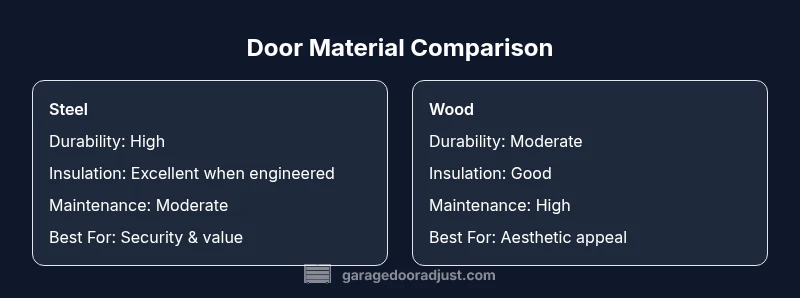
Each material has a distinct balance of cost, durability, maintenance, and aesthetics. Steel doors are famous for strength and security; they handle impacts well and resist dents when properly reinforced. Wood doors offer classic curb appeal but require regular maintenance to prevent warping and weathering. Aluminum doors stay lightweight and resist corrosion, making them good for salty or humid climates, though they can dent easily. Fiberglass doors mimic wood’s look with lower maintenance and better resistance to cracking in fluctuating temperatures. When deciding, consider your climate, local wind loads, and whether you want a traditional or contemporary exterior.
Insulation and energy efficiency: understanding the impact
Insulated doors dramatically affect energy usage, especially in extreme temperatures. The insulation level depends on panel density, core material, and door thickness. A well-insulated door reduces heat loss in winter and keeps heat out in summer, which translates into lower HVAC energy consumption. The energy savings also depend on how well the door seals against the frame, which reduces drafts. If you live in a climate with hot summers or cold winters, insulation becomes a high-priority factor. GarageDoorAdjust's observations show that insulation quality often yields better long-term value than simply chasing aesthetics.
Durability and climate considerations: where you live matters
Durability is not a one-size-fits-all attribute. In windy areas, door construction and frame anchoring are critical; a door that resists wind pressure reduces the risk of damage during storms. In coastal environments, corrosion resistance matters; aluminum or properly coated steel can outperform untreated options. In regions with heavy snowfall, seal integrity and panel rigidity help prevent warping and malfunction. When examining durability, pair material choice with proper installation, corrosion protection, and weather seals to extend life. The GarageDoorAdjust team notes that structural quality often outperforms fashionable design in the long run.
Aesthetics, curb appeal, and design options
Your garage door is a prominent exterior feature. Steel and aluminum doors can be finished in a wide range of colors and textures, while wood doors offer traditional warmth and natural grain. Fiberglass panels can mimic wood while requiring less maintenance. The panel design—from raised panels to contemporary long panels—affects overall style, perceived value, and how the door complements your home’s architecture. If curb appeal is critical, study color-matching options, hardware finishes, and window insert choices to find a look that boosts resale value without compromising function.
Maintenance and long-term costs: balancing upfront vs ongoing care
Maintenance needs vary by material. Steel and fiberglass doors typically require periodic lubrication, weather seal checks, and occasional repainting or refinishing to prevent corrosion or fading. Wood doors demand more frequent staining or sealing and can incur higher refinishing costs over time. Aluminum doors are relatively low-maintenance but can dent and may require cosmetic repairs when hit by impact. When evaluating cost, include installation, potential repairs, and energy savings from insulation. A door with good warranties and accessible service support often reduces lifecycle costs significantly.
Opener compatibility and smart features: value beyond the door itself
The garage door opener, sensors, and smart features influence overall performance and convenience. Look for compatibility with standard openers, anti-sway systems, torque monitoring, and secure remote access. If you plan to integrate a smart home ecosystem, confirm compatibility with your preferred platform and whether the door’s insulation affects sensor reliability. A well-matched opener can improve performance and safety, making the overall system feel more reliable and modern.
Installation considerations: DIY versus professional installation
Professional installation guarantees proper alignment, weather sealing, and adherence to safety standards. It also preserves warranty coverage from door manufacturers. DIY installation can save labor costs but carries risks such as improper track alignment, insufficient spring tension, or misapplied weather seals that cause energy loss. Before deciding, assess your mechanical aptitude, tools, and available time. If you choose DIY, follow manufacturer instructions to the letter and plan for a second pair of hands for heavier doors.
Weather sealing, insulation details, and how to verify quality
Weather seals prevent drafts, moisture intrusion, and pest entry. Check bottom seals, jamb gaskets, and header seals when evaluating a door. For insulation, verify the core type, foam density, and weather-stripping quality. A door with excellent seals and high-quality insulation will outperform a more expensive door with poor sealing. In practice, measure air leakage around the door with a simple smoke pen or feel for drafts around the perimeter after installation to confirm effective sealing.
Safety features and warranties: what to expect
Good garage doors include safety features such as automatic reversal when an obstacle is detected, photoelectric sensors, and tamper-resistant hardware. Warranties vary by material and manufacturer but commonly cover mechanical components for several years and indicate coverage on corrosion or finish. When weighing options, review warranty length, what it covers, and whether professional installation is required for eligibility. Warranties protect your investment and can influence the long-term cost picture.
Cost considerations and value over time: making the math work
Price ranges reflect material, insulation, design, and labor estimates, not brand. Steel doors tend to be more affordable than wood or fiberglass over the long run, particularly when insulation is included. Upfront costs should be weighed against potential energy savings, maintenance needs, and reliability. If you anticipate frequent long-term use or a busy household, investing in insulation, durable hardware, and a quality opener often yields superior value over time.
Practical decision framework: weigh your priorities and constraints
Start by listing climate, garage usage, energy goals, and aesthetic preferences. Then rank factors like cost, energy savings, durability, and maintenance. Use a simple scoring system (1–5) for each material across these criteria. For example, in a cold climate, insulation and airtight seals may score high; in a hot climate, reflective coatings and insulation gain importance. This framework helps you apply a structured approach rather than relying on guesswork or marketing claims.
Common mistakes to avoid when choosing a garage door
Avoid choosing solely on appearance or price; the door should perform consistently across seasons and weather events. Don’t overlook warranty scope or installation requirements, which can dramatically affect long-term costs. Failing to check compatibility with your opener or neglecting safety features can lead to unnecessary risk or future upgrades. Finally, ignore local building codes and wind-load requirements at your peril—noncompliance can invalidate warranties and complicate insurance claims.
Putting it into practice: create your needs assessment
Begin with a simple needs assessment: list climate challenges, desired aesthetics, budget, and maintenance tolerance. Pair each material option with a realistic maintenance plan and a preferred installer approach. Then compare total lifecycle costs, including energy savings, potential repairs, and warranty terms. This disciplined approach, recommended by GarageDoorAdjust, helps ensure you choose which garage door is better for your home rather than the latest trend.
Feature Comparison
| Feature | Steel | Wood | Fiberglass | Aluminum |
|---|---|---|---|---|
| Durability and impact resistance | High with proper reinforcement | Moderate; vulnerable to weather without treatment | Moderate; resistant to cracking but can dent | Moderate; strong corrosion resistance, but dents possible |
| Insulation performance | Excellent when insulated; core options available | Moderate to low depending on core | Good with foam-filled panels | Moderate; often thinner walls |
| Maintenance needs | Low to moderate; repainting may be needed over years | High; regular sealing and staining required | Low to moderate; occasional refinishing | Low; corrosion-resistant frame reduces upkeep |
| Price range | $600-$1500 | $1000-$3500 | $800-$1800 | $500-$1200 |
| Best for | Durability and security with a classic look | Curb appeal with traditional impact | Low maintenance with wood-like aesthetics | Coastal or humid environments; corrosion resistance |
Upsides
- Helps compare long-term value versus upfront cost
- Clarifies climate suitability and maintenance requirements
- Highlights energy efficiency and safety features
- Encourages considering installer quality for reliability
Disadvantages
- Can overwhelm readers with options and jargon
- Requires time to gather climate data and costs
- Might underemphasize regional building codes and wind loads
There is no single universal winner; pick based on climate, budget, and usage.
Overall, insulated steel doors offer strong value for many homes; wood delivers aesthetics with higher upkeep; fiberglass offers a compromise; aluminum suits humid or coastal areas. Pair any choice with proper installation and good seals to maximize performance.
Got Questions?
What is the most durable garage door material?
Durability depends on environment and build quality. Insulated steel and reinforced aluminum offer strong performance against impact and weather, while wood requires maintenance to maintain resilience. Always consider installation quality as a key factor in durability.
Durability varies by environment and build. Insulated steel is typically very durable; wood needs upkeep to stay resilient.
Does insulation really save energy?
Yes. Insulation reduces heat transfer and helps maintain indoor temperatures, lowering HVAC usage. The actual savings depend on climate, door thickness, and seal quality. In extreme climates, insulated doors make the biggest difference.
Insulation helps reduce energy use, especially in extreme weather. The impact depends on climate and installation quality.
Is it cheaper to install a door myself?
DIY installation can cut labor costs but risks improper fit, safety issues, and warranty voids. For most homeowners, professional installation is recommended to ensure safety and warranty coverage.
DIY saves money but may compromise safety and warranties. Consider hiring a pro for best results.
What maintenance does a steel door require?
Regular lubrication of moving parts, inspection for rust, and weather seal checks are key. Address rust spots early and repaint or reseal as needed to maintain performance and appearance.
Lubricate parts, inspect seals, and watch for rust. Repaint as needed.
Can I replace just the door panel?
Panel replacement is sometimes possible but depends on the door model and warranty. Consult the manufacturer or a qualified technician to confirm compatibility.
Panel replacement can be possible; check with the manufacturer.
How long does installation take?
Professional installation typically takes a few hours, depending on door size and system complexity. DIY timelines vary; plan for a half day at least.
Most installs take a few hours with a professional.
Quick Summary
- Assess climate and humidity before choosing material
- Prioritize insulation to reduce energy costs
- Balance upfront price with long-term maintenance
- Verify opener compatibility and safety features
- Consider professional installation to protect warranties