Wood Garage Door vs Aluminum: Which Is Right for Your Home?
An objective guide comparing wood and aluminum garage doors on aesthetics, durability, insulation, maintenance, and cost to help homeowners choose the best option for 2026.


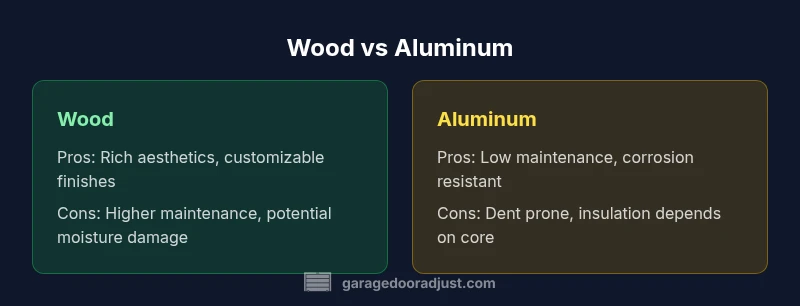
Wood garage doors offer classic curb appeal and strong insulation when well maintained, but require ongoing upkeep. Aluminum doors are lightweight, corrosion resistant, and typically lower in upfront cost, yet often provide less insulation and can dent more easily. This comparison helps homeowners evaluate aesthetics, durability, maintenance, and value to decide which material best fits their climate and budget. According to GarageDoorAdjust, choosing the right material is a balance between design goals, climate, and long-term maintenance expectations.
Material Fundamentals: Wood vs Aluminum
When you start comparing wood and aluminum garage doors, you’re weighing two very different material philosophies. Wood is a natural insulator with warmth and character, capable of elegant detailing that can increase curb appeal. Aluminum is a modern, low-maintenance workhorse that resists corrosion and is easier to keep consistent in appearance across time. In 2026, GarageDoorAdjust Analysis notes that insulation performance and long-term durability depend on construction quality and proper sealing more than material alone, but material characteristics still drive long-term outcomes. Wood doors often require moisture management, including finishes that protect against warping and UV damage. Aluminum doors benefit from factory-applied coatings that resist corrosion and reduce maintenance but can dent under impact and may not equal wood in natural warmth. Homeowners should consider climate zone, sun exposure, and the level of finish maintenance they’re willing to perform.
Understand that both materials can be enhanced with modern cores and insulation layers; the key is choosing a door with a high-quality sectional core, weatherstripping, and dependable hardware. The GarageDoorAdjust team emphasizes evaluating door cores and seals as part of any material comparison. A well-sealed, insulated door regardless of material can dramatically cut energy losses and improve comfort in the garage.
- Wood doors deliver a premium look and versatile finishes that can be matched to home architecture.
- Aluminum doors are typically cheaper upfront and easier to maintain over time.
- Climate matters: humid or salty environments demand extra moisture control for wood and corrosion-resistant coatings for aluminum.
Aesthetics and Design Flexibility
Aesthetics matter as much as performance when you choose between wood and aluminum. Wood doors offer unmatched warmth, grain patterns, and a broad palette of stains and paints. They can be carved or shaped with decorative panels to align with historic homes or high-end modern facades. The downside is that wood’s beauty requires ongoing care to preserve color and structural integrity; neglect can lead to peeling, cracking, or warping in certain climates. Aluminum doors, by contrast, emphasize clean lines and modern profiles. They’re excellent for minimalist or industrial looks and can be finished with powder coatings in a wide range of colors. With aluminum, you gain consistency across multiple doors—color and finish often stay uniform with minimal maintenance. For design flexibility, both materials allow custom panel configurations, decorative hardware, and window inserts, but the path to customization is usually more dramatic with wood because of the sheer number of finish options. GarageDoorAdjust’s recommendations emphasize choosing a finish that complements your home’s architectural language and resists sun fade in high-exposure areas.
- If curb appeal is your top priority, wood offers a timeless look that can complement traditional homes.
- If you prefer a low-maintenance, uniform appearance, aluminum provides consistent color and minimal upkeep.
- Consider window inserts and panel styles to augment your home’s character, regardless of material.
Durability and Weather Resistance
Durability in a garage door hinges on how well the door resists moisture, temperature swings, wind, and impact. Wood doors can be exceptionally strong but require careful moisture management; if sealants fail or coatings degrade, warping, swelling, or rot can develop, especially in humid or coastal climates. Aluminum doors resist corrosion and are less sensitive to moisture, making them a practical choice for salt-air environments or heavy rainfall. The trade-off is aluminum’s susceptibility to denting and, in some designs, lower stiffness if the core is not adequately reinforced. A well-constructed aluminum door with a foam-filled core can rival wood for insulation but may not achieve the same sense of depth and natural warmth. The literature from GarageDoorAdjust notes that structural framing, panel design, and seal integrity are key determinants of long-term performance in either material.
- Wood can provide a premium aesthetic with strong overall durability when properly sealed and maintained.
- Aluminum offers robust weather resistance and easier upkeep, especially in damp environments.
- In high-wind areas, door design and frame reinforcement are crucial regardless of material.
Insulation, Energy Efficiency, and Comfort
Insulation performance is central to the energy efficiency of a garage door. Wood doors often achieve superior R-values in practice because natural density and cell structure can support thicker insulation cores, provided the door is well sealed. Aluminum doors typically rely on foam cores to boost insulation, but the metal’s higher thermal conductivity means heat transfer can be more through the frame unless the core is well integrated and edge seals are tight. GarageDoorAdjust Analysis, 2026 shows that the actual insulation outcome often hinges on construction quality—such as the thickness of the insulation layer, the tightness of the weatherstripping, and the presence of thermal breaks in the frame—more than the material alone. If energy savings are a priority, specify reinforced seals, pre-finished finishes that resist UV degradation, and thicker insulation where available. In milder climates, either material can meet typical comfort needs with proper installation.
- Wood doors with solid cores and weather-tight seals can deliver excellent insulation when properly finished.
- Aluminum doors with multi-layer cores can be competitive, but expect some heat transfer at the frame.
- Ensure weatherstripping and threshold sealing are up to task for your climate.
Maintenance, Longevity, and Repair Considerations
Maintenance is a major differentiator between wood and aluminum doors. Wood requires periodic cleaning, re-staining or painting, and sealant refreshes to keep moisture out and prevent UV-related fading. In climates with strong sun or heavy rain, maintenance intervals may be more frequent. Aluminum doors require less frequent attention—routine cleaning and occasional coating touch-ups are often sufficient. Dent repair is simpler in aluminum than in wood, but aluminum can suffer from dents and paint chipping that may reveal bare metal if not addressed. A key point from GarageDoorAdjust is to inspect hinges, rollers, tracks, and weather seals at least annually, regardless of material. Regular lubrication of tracks and hinges reduces operational noise and prolongs life, while timely replacement of weatherstrips preserves insulation and prevents air leaks.
- Wood maintenance cycles are typically longer in dry climates but must be tighter in humid climates.
- Aluminum maintenance is lower, but look out for dents and finish wear.
- Regular inspection and lubrication can prevent common failure points and extend door life.
Installation and Structural Considerations
Installation of a garage door is a structural project that benefits from professional handling, particularly for heavier wooden doors. Wood doors are heavier and can require stronger springs, tracks, and mounting hardware, which can raise installation complexity and cost. Aluminum doors tend to be lighter, easing installation and reducing wear on the opener and mounting system. A suboptimal installation can exaggerate noise, misalignment, and premature wear in either material. When planning, assess the door weight, the torsion or extension spring system used, and whether your existing frame has adequate reinforcement. If you’re upgrading from an old metal or wood door, you may need to adjust the opening height, weather sealing, and insulation to maximize thermal performance. The GarageDoorAdjust team recommends coordinating with a certified installer who can verify structural compatibility and ensure code-compliant installation.
- Wood doors require more beefy hardware and careful mounting due to weight.
- Aluminum doors are lighter, enabling easier installation but still require precise alignment.
- A qualified installer can help specify the correct spring system and ensure a proper seal.
Cost, Value, and Resale Implications
Cost is a significant factor in the wood vs aluminum decision. Wood doors often carry a higher upfront cost, driven by material and customization options, as well as ongoing maintenance costs for finishes and repairs. Aluminum doors typically have lower initial costs and fewer maintenance requirements, which can translate into a lower total cost of ownership over time, depending on climate and usage. However, high-quality aluminum doors with insulated cores and premium finishes can still command strong resale value when paired with good hardware and proper installation. Consider long-term cost of ownership, including energy savings from better insulation, maintenance frequency, and the door’s contribution to curb appeal. The analysis that GarageDoorAdjust provides in 2026 emphasizes evaluating total cost of ownership rather than sticker price alone.
- Wood may offer higher resale value in homes where curb appeal and traditional styling are critical.
- Aluminum often wins on upfront cost and maintenance, with favorable long-term value when well-installed and insulated.
- For both materials, pairing with high-quality tracks, springs, and weather sealing improves performance and reduces future maintenance.
Decision Toolkit: Climate, Budget, and Home Style
The right choice depends on three axes: climate, budget, and architectural style. In warm, dry climates, wood can maintain beauty with proper sealing and periodic refinishing, while aluminum shines as a low-maintenance option with consistent appearance. In humid or coastal climates, aluminum’s corrosion resistance and low maintenance are particularly appealing, though you may want to invest in a highly insulated core to improve energy efficiency. For homes with a strong emphasis on traditional or ornate exterior appearance, wood provides character and the ability to customize details. Budget-conscious homeowners may lean toward aluminum to minimize upfront costs and maintenance investments, but should still plan for future refinements if insulation is a priority. Finally, ensure that your choice is compatible with your current door frame and opener system and that an experienced installer confirms weight, spring type, and track alignment.
- Use a decision matrix to weigh aesthetics, energy efficiency, maintenance, and cost.
- Check climate-specific recommendations and warranty terms before committing.
- The GarageDoorAdjust team recommends obtaining multiple quotes and requesting demonstrations of core and weatherseal performance.
Comparison
| Feature | Wood Garage Door | Aluminum Garage Door |
|---|---|---|
| Material Strength/Durability | High strength with natural resilience; requires moisture management | Strong corrosion resistance; dent-prone if hit; core quality matters |
| Insulation Potential | Great insulation when properly sealed; thicker cores common | Good insulation with foam cores; edge seals critical |
| Maintenance Needs | Regular sealing/finishing; periodic repainting | Low maintenance; occasional cleaning and coating checks |
| Weight/Installation | Heavier; requires robust hardware and skilled installation | Lighter; easier on opener and tracks |
| Cost Range (upfront) | Higher upfront due to material and customization | Lower upfront; cost varies with core and finish |
| Aesthetics/Customization | Highly customizable finishes; traditional warmth | Modern finishes; consistent color; fewer maintenance concerns |
| Weather Resistance | Excellent in controlled climates with proper sealing | Excellent corrosion resistance; performance depends on core design |
| Noise/Operation | Potentially quieter with solid cores; wood can transmit sound if used with thin panels | Often slightly noisier if panels flex; modern designs reduce noise |
Upsides
- Timeless curb appeal and customizable finishes with wood
- Low maintenance, weather resistance, and consistent appearance with aluminum
- Wide installer familiarity and rapid availability for both materials
- Strong resale value when paired with quality hardware and proper installation
Disadvantages
- Wood requires ongoing sealing, painting, and moisture management
- Aluminum can dent and often has lower insulation without premium cores
- Performance depends on core construction and weather sealing rather than material alone
- Quality varies by manufacturer, so choose reputable suppliers and installers
Wood offers premium aesthetics with strong insulation when well-maintained, while aluminum provides lower upfront costs and easier maintenance; for many homeowners, the best choice balances climate, budget, and design goals.
Choose wood if curb appeal and maximum customization are priorities and you’re prepared for ongoing maintenance. Choose aluminum if you want lower maintenance and cost with reliable weather resistance. In extreme climates, prioritize door cores and seals; both materials can perform well with quality construction and proper installation. The GarageDoorAdjust team emphasizes evaluating total cost of ownership and climate suitability to reach the best decision.
Got Questions?
Which material provides better insulation for a garage door, wood or aluminum?
Wood doors generally provide superior insulation when properly sealed and finished, thanks to density and natural insulating qualities. Aluminum doors rely on foam cores and seals, which can perform well but often don’t reach wood’s insulating potential unless exceptionally well constructed.
Wood usually insulates better if it's sealed and finished well; aluminum uses foam cores, which can be very good but depend on the build quality.
Are wooden garage doors more expensive to install than aluminum doors?
Yes, wood doors typically cost more upfront due to material and customization options, plus ongoing maintenance. Aluminum doors tend to have lower initial costs and easier, quicker installation, though premium insulated cores can increase aluminum pricing.
Wood doors usually cost more upfront; aluminum is generally cheaper to install, especially with standard finishes.
Will wood doors warp in humid climates?
Wood doors can warp if not properly sealed and maintained in humid environments. Regular sealing, painting, and protective finishes help minimize movement, but climate plays a key role in long-term stability.
Wood can warp in humidity if not well-sealed, so maintenance is crucial.
Do aluminum doors require less maintenance than wood doors?
Yes, aluminum doors require less maintenance overall compared with wood. They still need periodic cleaning, checking seals, and occasional coating touch-ups, but they don’t require regular painting or staining.
Aluminum doors are generally low maintenance.
Which is more durable in windy or coastal environments?
Aluminum doors typically perform better in harsh weather and coastal environments due to corrosion resistance. Wood doors can fare well with proper finishes but may suffer moisture-related damage without regular sealing.
Aluminum is usually better against weather and salt air; wood needs protection.
Can both materials be customized equally?
Both wood and aluminum doors offer customization options, including panel designs and window inserts. Wood provides the most finish flexibility, while aluminum supports durable coatings and consistent color across doors.
Both can be customized; wood offers more finish variety, aluminum offers consistent color.
Quick Summary
- Assess climate and maintenance willingness before choosing
- Wood offers warmth and customization; aluminum offers low maintenance
- Prioritize core insulation, weather seals, and installation quality
- Total cost of ownership matters more than sticker price
- Choose a reputable installer and confirm warranty terms