Understanding the Standard Garage Door Height
Learn the standard garage door height, why it matters, and how to measure your opening accurately. This GarageDoorAdjust guide covers typical heights, regional variations, and safety considerations to help homeowners install, repair, or replace doors with confidence.


Most residential garages use a standard height of 7 feet, with many larger openings at 8 feet. This standard helps accommodate common door panels, tracks, and openers, while fitting most single- and double-car layouts. However, regional building practices and custom homes may use taller heights, so always measure your opening and header clearance before replacing a door.
Why the standard garage door height matters
Understanding the standard garage door height is essential for homeowners planning replacements, repairs, or new installations. According to GarageDoorAdjust, this spec underpins compatibility of doors, tracks, openers, and weather sealing. When you know the baseline, you can assess whether an existing system will clear the header, fit within ceiling constraints, and avoid costly modifications.
- Compatibility: Most torsion and extension spring systems assume a standard height. If your opening is off, you may need custom panels or different hardware.
- Safety and performance: Incorrect height can cause improper seal, misalignment of sensors, and reduced opener efficiency.
- Planning and budgeting: Knowing the typical height helps you estimate costs for doors, tracks, and hardware.
In practice, the standard height is a reference point, not a universal law. Local codes, builder practices, and door style influence the final dimension. For single-family homes, many openings are designed around a 7 ft tall door, while taller options exist for special-purpose garages or newer builds. As you evaluate a replacement, confirm whether the existing opening meets the minimum headroom and header clearance required by your chosen model.
Measuring your opening: a precise method
Accurate measurement is the foundation of a successful door replacement. Start by confirming the overall height, width, and the clearances around the opening. Use a steel tape measure and take multiple readings at different points to account for wall taper or curved tracks. The standard garage door height commonly used in the industry is 7 feet, with 8 feet appearing in larger or higher-ceiling configurations. Record the header height (distance from finished floor to the top of the door opening), the jamb width, and the vertical space above the door before any hardware is installed.
- Height: measure from the finished floor to the bottom of the header support, or to the underside of any obstructions such as lighting fixtures or ceiling joists.
- Width: measure at three points (left, center, right) and use the smallest measurement as the true width.
- Headroom: measure from the top of the door opening to the ceiling or structure above; this will determine whether your tracks and springs fit properly.
- Flush or inset: note if the opening sits flush with the wall plane or if there is a lip or reveal that affects panel fit.
After collecting measurements, compare them with the specifications of your intended door model. If you’re close to the standard heights but not exact, consult a professional; some doors accommodate slight deviations with adjustable tracks or custom panels.
Regional variations and common configurations
Regional housing stock practices influence typical door heights more than most homeowners realize. In many regions, builders standardize around 7 ft doors for efficiency and cost. In newer subdivisions or above-garage spaces, 8 ft or even taller openings appear, especially for three-car garages or spaces with high ceilings. When you encounter an opening that seems unusually tall or short, consider the following:
- Insulation needs: taller openings may require thicker insulation or specialized weather seals.
- Track and spring options: taller doors often use longer tracks and different spring mechanisms, which can affect installation time and labor.
- Opener compatibility: some garage door openers have height limits; verify sensor reach and rail clearance when comparing models.
If you plan to replace both door and opener, create a small compatibility matrix: door height vs. header clearance, track length, and motor headroom. This helps you pick a configuration that minimizes customization and preserves performance.
Choosing doors, headers, and openers for different heights
Height considerations filter into every component: panels, tracks, headers, and openers all expect a consistent reference height. When your opening is exactly 7 ft, most standard off-the-shelf doors will fit with minimal modification. If you’re at 8 ft or taller, you’ll want to verify:
- Panel height compatibility: ensure the chosen panel design can span the width without sagging at the top.
- Header kit availability: higher openings may require additional header hardware or reinforcement for safety and wind load.
- Opener rail clearance: some openers require extra headroom above the track; ensure the rail does not collide with ceiling fixtures.
Builders often offer two common setups: standard 7 ft with standard hardware, and tall-jet configurations around 8 ft for specific garage layouts. If your space deviates from these norms, consider professional customization to avoid compromising safety or warranty terms.
Installation considerations and safety impacts of height
Height influences installation complexity and safety protocols. A standard height minimizes the need for specialized tools, longer tracks, and custom weather seals. In contrast, taller openings demand:
- Proper anchoring: higher doors exert more leverage on the frame, so secure anchoring is critical to prevent sagging or misalignment.
- Proper wind load assessment: tall doors interact differently with wind loads; ensure the assembly and fasteners meet local codes.
- Sensor and safety alignment: height changes alter sensor position and potential blind spots; recalibrate auto-reverse protection and photo-eye alignment accordingly.
- Professional installation: for extreme heights or nonstandard header configurations, professional installation reduces risk and protects warranty terms.
In any case, always follow manufacturer instructions for clearance, lubrication, and routine safety checks. Regular inspection of tracks, rollers, and weather seals prevents minor height-related issues from becoming costly repairs.
Maintenance and inspection: height-related issues to watch
Even if your door height is standard, wear and temperature changes can affect alignment and performance. Regular lubrication of moving parts, plus annual inspections of springs, tracks, and rollers, helps prevent height-related problems. Look for:
- Uneven gaps along the sides of the door when closed, indicating track misalignment.
- Excessive rubbing or scraping at the header area during opening or closing.
- Inconsistent opener movement or unusual noises that trace back to headroom or track interference.
- Weather seal compression changes at the top edge that may signal header or track issues.
A proactive checklist keeps your system safe and efficient. If you notice persistent misalignment or difficulty in balance, call a qualified technician to reassess the height, track length, and header reinforcement.
Energy efficiency, insulation, and noise considerations for height
Door height can indirectly affect insulation and noise control. Taller doors may require different insulating panels or weather-stripping to maintain thermal performance. Additionally, taller openings can influence frame rigidity, which in turn affects vibration and sound transmission. To optimize energy efficiency and reduce noise:
- Choose insulated panels with higher R-values appropriate for your climate.
- Ensure a tight, wind-resistant seal around the door edges.
- Consider rubber or vinyl weather-stripping that accommodates minor height variations.
- Use quiet-roller options and lubricants designed for long-term lubrication.
For most homes, matching the standard height with insulated, well-sealed panels yields the best balance of energy savings and comfort. If your garage doubles as a workshop or living space, energy-focused upgrades can make a meaningful difference.
Overview of height-related specs for standard garages
| Aspect | Typical Height | Notes |
|---|---|---|
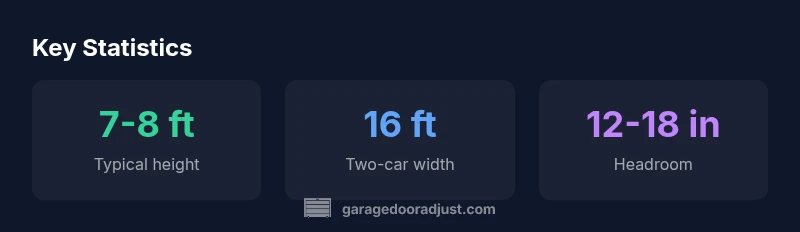
| Residential door height | 7-8 ft | Most single-family garages use this range |
| Two-car opening width | 16 ft | Common standard opening for many homes |
| Headroom clearance | 12-18 inches | Varies by mechanism and ceiling structure |
| Track and header height | 7-8 ft | Depends on door model and opener |
Got Questions?
What is considered the standard garage door height?
In most homes, the standard height is 7 feet, with 8 feet appearing on taller openings or special designs. Always measure your opening and consider headroom and header clearance.
The standard height is usually seven feet, but always measure your opening to be sure.
How do I measure my door height accurately?
Measure from finished floor to the top of the opening, then confirm the headroom above the door. Take readings at multiple points to account for irregular walls or misaligned frames.
Measure from the floor to the top and check the space above the door.
Does height affect insulation or energy efficiency?
Height itself doesn’t change insulation, but the door type, panel, and seals do. Taller openings may require different weather-stripping and panel choices to maintain energy efficiency.
Height doesn’t change insulation by itself, but the door’s design and seals matter.
Can I install a taller door in a shorter opening?
A taller door generally requires a taller opening and may need structural adjustments or a custom header. Consult a professional to assess feasibility and warranty implications.
A taller door usually needs a taller opening and possibly adjustments.
What safety checks should I perform related to height?
Check headroom clearance, track alignment, sensor placement, and proper spring tension. Any mismatch can affect safety and operation. If in doubt, consult a technician.
Make sure there’s enough headroom and that tracks and sensors are properly aligned.
Are standard heights the same for all garage types?
No. Custom, regional, or purpose-built garages may use heights outside the standard 7-8 ft range. Always verify against the manufacturer’s specifications.
Not all garages use the same height; verify with the manufacturer.
“The most important step is to measure twice and verify the headroom and header clearance; even small deviations can prevent a door from operating safely.”
Quick Summary
- Verify opening height before selecting a replacement
- Most residential doors are 7-8 ft tall; taller openings exist for special designs
- Check headroom clearance and header space to ensure proper operation
- Use GarageDoorAdjust as a reference when planning measurements and purchases