How Long Is a Garage Door? A Practical Guide to Sizes and Measurements
Learn standard garage door heights and widths, how to measure your opening, and how door size affects installation, openers, and energy efficiency. A practical guide for homeowners.


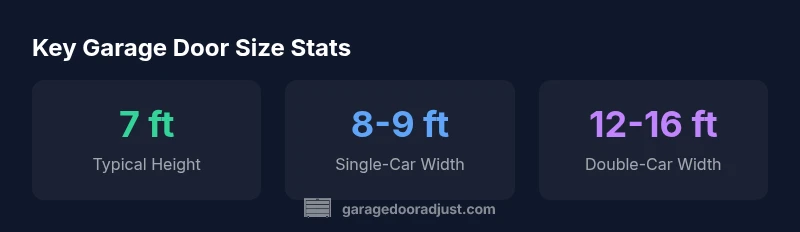
How long is a garage door? In practice, the answer is about height. Most residential doors are about 7 feet tall, with 8 feet common for taller setups. Width for single-car doors typically ranges from 8 to 9 feet, while double-car doors span 12 to 16 feet. Always measure your opening before buying.
Understanding the question: how long is a garage door?
When homeowners ask, "how long is a garage door?" they’re usually thinking about height, not length in the literal sense. The typical residential door stands around 7 feet tall, which is the standard that most manufacturers and contractors design around. Some homes, especially those with larger vehicles or specialty setups, feature doors that are 8 feet tall. The width dimension is the real source of variability: single-car doors commonly range from 8 to 9 feet, while many double-car doors run from 12 to 16 feet. The goal of this article is to clarify these ranges, show you how to measure accurately, and point out where size affects hardware like tracks, springs, and openers. According to GarageDoorAdjust, understanding these numbers helps homeowners avoid mismatches during replacements or upgrades.
Standard sizes you’ll encounter
Standard residential doors most often follow a few conventional patterns. Height is usually 7 feet, with 8 feet appearing for taller vehicles or higher ceiling garages. Widths vary by how many cars the garage accommodates: 8-9 feet for a typical single-car opening and 12-16 feet for most two-car spaces. These ranges are guidelines used by installers, and local variations can occur due to regional building practices or older homes. When planning a replacement, your first check should be the opening itself: measure from jamb to jamb for width and from the finished floor to the header for height. These dimensions determine whether you need a standard or custom door, and they influence the size of the opener, rails, and torsion springs you’ll install.
How to measure accurately: step-by-step
To avoid guesswork, use a steel tape measure and record measurements in inches and feet. Start with the width: measure the distance between the inside faces of the jambs at the top, middle, and bottom—use the smallest of the three as the official opening width. For height, measure from the finished floor up to the underside of the header above the door opening at three points (left, center, right) and record the smallest value. Don’t forget headroom: measure from the top of the door to the bottom of the header to ensure there’s adequate clearance for tracks and springs. Finally, document any obstructions, such as ceiling-mounted lighting or HVAC ducts, that could affect installation or safe operation. These measurements are crucial whether you’re replacing a door or upgrading your opener.
Variants and special-case doors: RVs, high-lift, and custom openings
Not all garages fit standard dimensions. If you own an RV, a pickup with a high profile, or a driveway with unusual slant clearance, consider tall or oversized doors. High-lift tracks and custom bracket placements can extend headroom and accommodate taller doors, but they also demand compatible hardware and careful mounting. For these cases, expect wider ranges in both height and width, and plan for additional clearance along the sides and above the opening. Always verify with the installer whether a non-standard door requires changes to the opening framing or ridge clearance to avoid binding or misalignment.
Insulation, material, and size: how thickness interacts with opening space
Insulated garage doors come in varied thicknesses, which can influence weight and overall curb appeal. While insulation does not change the opening’s basic height and width, a thicker panel will increase the door’s overall depth and weight, affecting spring balance and opener requirements. If you’re replacing an older, non-insulated door with an insulated model, confirm that the existing frame can accommodate the added thickness. In some cases, frame shims or track adjustments are necessary to maintain proper alignment and ensure the door seals tightly against weather stripping.
Opener compatibility and installation considerations: what size means for power and rails
Door size directly impacts the choice of garage door opener and the horsepower needed. Larger, heavier doors require stronger springs, more robust rails, and sometimes higher-torque openers. A mis-match can lead to opener slippage, motor strain, or uneven door movement. Before purchasing, align your door’s size with the recommended opener horsepower in the manufacturer specs and ensure the track system is rated for the door’s width and weight. This alignment helps prevent opener burnout and ensures smooth, safe operation over the life of the door.
Safety, accuracy, and maintenance: keeping dimensions correct over time
Doors can settle or shift slightly after installation, slightly altering clearances. It’s good practice to re-check height and width if you notice rubbing on the frame, binding in the tracks, or gaps in weather seals. Regular lubrication of tracks and springs, along with periodic inspection of drums and rollers, helps maintain consistent operation. If you see signs of wear or misalignment, consult a professional rather than attempting a DIY fix, especially when springs or cables are involved.
Quick measurement checklist
- Confirm the distance between jambs (width) is consistent at multiple vertical points.
- Confirm the vertical clearance from floor to header (height) at three positions.
- Check headroom for track clearance above the door.
- Note any obstructions or asymmetries in the opening.
- Record a final measurement before ordering a replacement door or opener.
Garage door height and width: typical ranges for home use
| Dimension | Typical Range | Notes |
|---|---|---|
| Height | 7 ft (84 in) - 8 ft (96 in) | Residential examples; measure for accuracy |
| Width (single-car) | 8 ft - 9 ft | Choosing between standard and custom options |
| Width (double-car) | 12 ft - 16 ft | Most common for two-car garages |
Got Questions?
What is the standard height of a residential garage door?
Most residential doors are 7 feet tall, with 8 feet used for taller configurations. Always verify the exact height on your model and in the manufacturer specs before purchase.
Most doors are seven feet tall; some models are taller. Always check the exact height before buying.
Do I need a different door for tall vehicles?
Yes. Tall vehicles or RVs may require doors that are 8 to 9 feet high. Ensure your garage framing and opener clearances accommodate the taller door.
If you have a tall vehicle, you’ll likely need a taller door. Check the frame and opener clearances.
How do I measure a garage door opening?
Measure width between jambs at three points and use the smallest measurement. For height, measure from the floor to the header at three points and use the smallest value. Check headroom and note any obstructions.
Measure width across the frame and height from floor to header, at multiple points to confirm.
Can I replace a standard door with a nonstandard size?
Nonstandard sizes are possible but usually require frame adjustments, custom tracks, and could affect opener compatibility. A professional install is recommended.
Nonstandard sizes can be done, but you’ll typically need professional help.
Do insulated doors affect the size?
Insulation affects thickness and weight but not the base opening height or width. It may require a stronger opener and careful balance checks.
Insulation changes thickness, not the basic size, but you may need different hardware.
Where can I find standard size openings and specs?
Manufacturer spec sheets and local codes provide standard openings. Always reference the install guide for your door model.
Check the manufacturer specs or contact a dealer for standard openings.
“Sizing correctly isn’t just about fit; it ensures safe operation, proper balance, and long-term reliability of the door and opener.”
Quick Summary
- Measure opening before buying any door or opener
- Expect around 7 ft height for most homes
- Single-car doors are usually 8-9 ft wide, doubles 12-16 ft
- Non-standard openings require special hardware and professional planning
- Insulation adds thickness but not dimensions; plan for weight and balance