Seal a Garage Door: Step-by-Step Weather Sealing Guide
Learn how to seal a garage door with a homeowner-friendly, step-by-step guide. Discover seal options, install bottom and edge weatherstrips, and test for a draft-free, energy-efficient door.


According to GarageDoorAdjust, sealing a garage door reduces energy loss by blocking drafts. Seal to stop drafts, conserve energy, and prevent pests. Start by measuring the bottom gap, selecting a compatible bottom seal and side weatherstrips, and installing with the door closed. This guide assumes a standard residential garage door and does not require professional tools. Ensure safety by disconnecting the door opener if you need to reach the tracks.
Assessing draft risk and why sealing matters
Drafts around a garage door can waste energy, make your garage uncomfortable, and invite pests. Proper sealing reduces air leakage, helps maintain temperature, and minimizes dust infiltration. According to GarageDoorAdjust, effective sealing starts with a clear understanding of the door gaps and the floor condition. Inspect the bottom gap where the seal will sit and identify any irregularities in the concrete or subfloor. By mapping these factors, you can choose the correct seal profile and thickness for a tight fit and long-lasting performance.
Where gaps form and what to seal
Gaps around a garage door occur primarily at the bottom, along the vertical jambs, and at the header above the door. The most noticeable leaks are at the floor line when the concrete is uneven or has cracks. Even a small gap can let drafts through during cold months or hot air during the summer. In many cases you only need to address the bottom edge, but for older or misaligned doors you may also seal the sides and top edge to achieve a complete seal.
Selecting seal materials
Seal materials for garage doors range from flexible vinyl edge seals to rubber and foam weatherstripping. For concrete floors with minor irregularities, a compressible vinyl bottom seal often provides a good balance between compression and longevity. If you live in a climate with wide temperature swings, consider silicone or closed cell foam seals that resist compression over time. The choice depends on your door type, whether it is a sectional or one piece, and how permanent you want the solution to be. The goal is a tight seal that preserves door function without binding.
Tools and materials you'll need
Before you start, assemble the necessary tools and materials. A bottom seal kit designed for your door width is essential. You will also need edge weatherstripping for the sides, foam weatherstripping for the jambs, a tape measure, a utility knife, scissors, and a caulk gun with silicone or acrylic sealant. Optional items include masking tape, a straightedge, and a ladder if your door is tall. Having these ready prevents mid project trips to the hardware store and helps keep the work safe and efficient.
Step-by-step overview for bottom-edge sealing
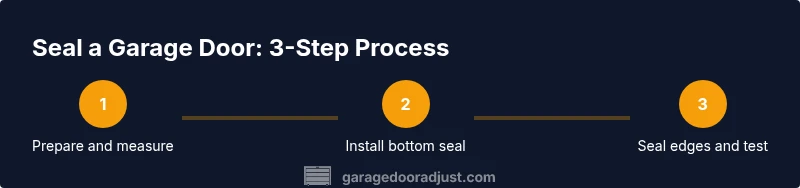
This overview focuses on the bottom edge, which is the most common source of drafts. You'll measure the gap, cut the seal to fit, and secure it to the door so that it compresses slightly against the floor. Alongside the bottom seal, you may add edge weatherstripping on the sides for a snug fit. Finally, you will test the door to ensure it opens and closes smoothly without catching on the new seal.
Step-by-step: install bottom seal
Step 1: Prepare the door by cleaning the bottom edge and removing any old seal. Step 2: Cut the bottom seal to the exact length of the door width. Step 3: Attach the seal to the bottom edge using screws or the seal's built-in fasteners. Step 4: Check that the seal sits evenly along the entire length and does not extend past the door edge. Tip: Use a marker to mark the cut line before you start cutting to avoid overcuts.
Step-by-step: seal side gaps and threshold
Step 5: Apply vertical edge weatherstripping to the jambs to seal side gaps. Step 6: Install a floor threshold seal if your floor is uneven or if there is a larger bottom gap. Step 7: Use silicone caulk to fill any gaps along the wall where the door meets the frame. Step 8: Recheck alignment and make sure hardware does not interfere with the new seals. Step 9: Wipe away excess sealant and test the door operation. Pro tip: Work slowly and verify the seal stays in contact as the door moves.
Testing and adjustments after installation
With the door closed, run the opener to test the seal in action. Use a flashlight to inspect for light leaks along the bottom and sides. If you find gaps, adjust the seal by trimming the edge or repositioning the fasteners. Check for binding by opening and closing several times, then lubricate moving parts if needed. A proper seal should be comfortable to operate and noticeably reduce drafts near the door.
Maintenance tips to extend seal life
Inspect seals every six to twelve months for cracks, tears, or compression that reduces effectiveness. Clean seals with mild soap and water to remove dirt that can cause wear. Replace worn seals promptly and store spare parts in a dry place. Consider seasonal checks in winter and summer to ensure the seal remains flexible and effective against weather changes. Regular maintenance saves energy and reduces annoyance from drafts.
Safety warnings and common mistakes
Never work on a powered garage door or with the opener engaged. Disconnect the opener and secure the door to avoid unintended movement. Common mistakes include cutting seals too short, overcompressing the bottom seal, and failing to seal edges where drafts originate. Take measurements carefully, follow manufacturer instructions for your seal kit, and test the door after each adjustment to prevent binding and potential damage.
Tools & Materials
- Bottom seal kit (garage door seal)(Choose a length that matches your door width)
- Edge weatherstripping (vinyl or rubber)(For sealing vertical jamb gaps)
- Foam weatherstripping for jambs(Compressible to seal irregular gaps)
- Measuring tape(Measure in inches and millimeters for accuracy)
- Utility knife(For cutting seal material to length)
- Scissors(Trim seals and stripping cleanly)
- Caulk gun(Apply silicone or acrylic sealant)
- Silicone or acrylic sealant(Seal small cracks and joints)
- Masking tape(Helpful to mask edges before caulking)
- Straightedge or level(Assist in aligning seals)
- Ladder(Useful for tall doors)
- Gloves(Protect hands during cutting and sticky tasks)
- Rags or sponge(Clean up excess adhesive or caulk)
Steps
Estimated time: 60-120 minutes
- 1
Measure the bottom gap
With the door closed, measure the gap at the bottom for both the left and right sides. Record the widest gap to determine the seal length and thickness. This ensures the new seal will compress correctly without binding the door.
Tip: Measure twice, cut once. - 2
Remove old seal and clean edge
If an old seal exists, detach it carefully and clean the door edge so the new seal adheres properly. A clean surface improves seal contact and longevity.
Tip: Wipe away dust with a dry cloth before applying new materials. - 3
Cut bottom seal to length
Unroll the bottom seal and cut it to the door width using a straight cut, leaving a small margin for compression. Mark the cut line before cutting to avoid mistakes.
Tip: Leave a tiny overhang to allow compression at the ends. - 4
Attach bottom seal to door
Secure the bottom seal along the door edge using the method provided by your kit, whether screws, clips, or adhesive. Ensure the seal sits evenly and does not protrude beyond the edge.
Tip: Avoid overtightening screws to prevent warping. - 5
Seal the vertical edges
Apply edge weatherstripping to the left and right jambs, ensuring a continuous contact with the seal. Trim to fit and press firmly to activate the adhesive.
Tip: Press firmly for a strong bond and true alignment. - 6
Install a floor threshold (optional)
If your floor is uneven or there is a larger gap at the bottom, install a threshold seal along the floor. This creates a continuous barrier with the bottom seal.
Tip: Choose a threshold height that clears the driveway surface. - 7
Fill small wall gaps with caulk
Use silicone caulk to seal any small cracks along the wall where the door frame meets the wall. Smooth the bead for a clean finish.
Tip: Pipe a steady bead and smooth with a damp finger. - 8
Recheck alignment and clearance
Open and close the door several times to check that the new seals do not rub or bind. If rubbing occurs, trim the seal slightly at the contacting area.
Tip: Make incremental adjustments to avoid over-trimming. - 9
Clean up and final test
Wipe away excess sealant and ensure the door closes fully with a tight seal along all edges. Look for daylight gaps using a bright flashlight.
Tip: Perform a daylight test at dusk for best results. - 10
Plan maintenance
Set a routine to inspect the seal every 6–12 months and replace worn components as needed. This keeps the system efficient long term.
Tip: Keep spare seals on hand for quick replacements.
Got Questions?
What is the quickest way to seal a garage door?
The quickest approach is to install a bottom seal and edge weatherstripping on the jambs, then test the door for smooth operation. This minimizes drafts without needing a full replacement.
Install the bottom seal and side weatherstrips, then test the door to confirm it closes cleanly with less draft.
Can I seal my door without removing it from the tracks?
Yes. You can apply weatherstripping and seals while the door is in place, especially for vertical gaps along the jambs and the bottom edge. Avoid working near the springs or tracks when the opener is powered.
Yes, you can seal while the door is in place, just be careful around tracks and springs and disconnect power first.
Do I need to seal both sides or just the bottom?
Sealing the bottom reduces drafts from the floor, while sealing the sides handles vertical gaps at the jambs. For best results, seal both bottom and sides, especially on older doors.
Seal both bottom and sides for a tighter, draft-free seal.
How long does a door seal last?
Seal life varies with climate and usage but typically lasts several years. Inspect for cracks or compression and replace as needed to maintain energy savings.
Seal life depends on climate and use; check periodically and replace worn seals.
Will sealing affect door balance or opener operation?
If seals are too thick or misaligned, they can cause binding near the floor. Install seals according to manufacturer instructions and test with the door when the opener is off.
Install per instructions and test operation to avoid binding.
What maintenance is required after sealing?
Check seals annually for wear, clean them with mild soap, and replace worn components as needed. Regular checks keep drafts low and energy costs down.
Inspect seals every year and clean or replace as needed to keep drafts out.
Watch Video
Quick Summary
- Measure gaps before choosing seals
- Choose climate-appropriate seal materials
- Seal edges and bottom for a full draft barrier
- Test door operation after installation to ensure smooth movement