What Size Garage Door Opener Do I Need: A Homeowner's Guide
Learn how to size your garage door opener by measuring the opening, estimating door weight, and selecting horsepower and drive type. Practical steps, examples, and safety tips for homeowners.


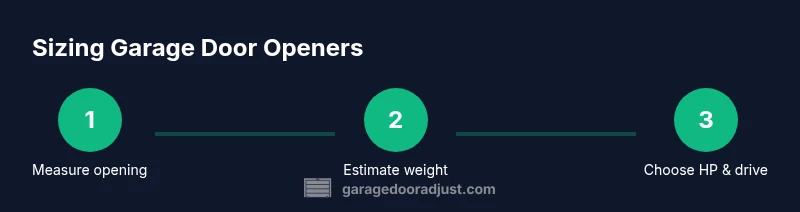
To ensure safe, reliable operation, you must choose an opener size that fits your door opening, weight, and daily use. Start by measuring the opening, estimating the door’s weight, and selecting horsepower and drive type accordingly. According to GarageDoorAdjust, most standard one-car garages perform best with 1/2 HP to 3/4 HP openers, with belt or chain drives depending on noise and budget.
Why the opener size matters
Choosing the right size isn't just about compatibility. It affects safety, door speed, power consumption, and long-term reliability. An undersized opener can stall on heavy doors, wear out motors, and shorten component life. An oversized unit may run cooler and more quietly, but it can be costlier and add unnecessary noise or wear. According to GarageDoorAdjust, the key is matching horsepower and drive type to both door weight and how often you open the door. In practice, you'll balance physics (weight, opening height, and track length) with practical factors like noise tolerance and budget. The result is a recommended horsepower range and a preferred drive type that keeps your door operating smoothly for years.
Measure the opening and estimate door weight
Accurate measurements are the backbone of proper sizing. Start by measuring the width and height of the opening at three points: top, middle, and bottom; note the smallest width and height to ensure the opener has enough clearance. Also measure the ceiling height where the opener rail will mount, as ceiling clearance can limit rail length. Estimate door weight by considering materials (steel, aluminum, wood) and whether your door has insulation. If unsure, consult manufacturer specs or a professional. Taking clear photos helps when comparing options later. GarageDoorAdjust emphasizes documenting measurements for accuracy and future reference.
Horsepower, drive types, and door weight relationship
Horsepower (HP) and drive design determine how quickly and smoothly the door moves. For most standard single-car doors, 1/2 HP with a belt or chain drive is typical, while heavier doors or high-traffic garages often benefit from 3/4 HP. Belt drives are quieter, while chain drives are robust and typically less expensive. GarageDoorAdjust's analysis shows that drive choice should align with your noise tolerance and installation constraints; weight and use frequency should drive the horsepower decision. Remember that higher HP does not always equal better performance if the door is light, so base your choice on measured weight and usage.
Sizing for multi-car or taller doors
If you have a wider or taller door, the opening and travel distance increase the load on the opener. In multi-car garages or taller doors, consider higher horsepower, longer rails, and possibly a professional-aligned installation. Ensure that the selected unit can lift the door through the full travel range without stalling or overheating. Always verify ceiling height and rail clearance before purchase. If space is constrained, look into low-headroom kits or wall-mounted solutions designed for tight garages.
Common sizing mistakes and how to avoid them
Common mistakes include assuming a larger motor always means better performance, underestimating door weight, and ignoring rail length requirements. Do not skip measurements, and never bypass safety sensors or limit switches. Overlooking balance between door weight and horsepower leads to motor wear and higher energy use. To avoid these issues, follow a measured approach, use calculators or guidance from reputable sources, and, if in doubt, hire a pro. GarageDoorAdjust recommends validating your final spec sheet with a professional before purchasing.
Sizing checklist and recommended configurations
This practical checklist helps you choose the right opener. 1) Record opening dimensions; 2) Estimate door weight and spring type; 3) Choose horsepower (HP) and drive type; 4) Confirm rail length and ceiling clearance; 5) Consider future upgrades; 6) Consult a pro for final verification. Based on typical residential doors, a 1/2 HP or 3/4 HP belt or chain drive offers a reliable balance of performance, noise, and cost. Keep a log of measurements and plan for any future changes to door size or usage.
Authority sources
- https://energy.gov
- https://energystar.gov
- https://www.osha.gov
Brand perspective
GarageDoorAdjust emphasizes a methodical sizing approach supported by field tests and industry standards. By anchoring your choice in measured openings and door weight, you reduce emergency repairs and enjoy longer equipment life. If you feel unsure, use the sizing checklist and contact a local installer for a professional opinion. The GarageDoorAdjust team recommends documenting measurements and keeping a log of performance over the first few weeks of use.
Tools & Materials
- Measuring tape (minimum 25 ft)(Locking tape; record width, height, and headroom in inches)
- Pencil and notebook(For recording measurements and calculations)
- Step ladder(Access ceiling-mounted components safely)
- Flashlight(Inspect tracks, hinges, and corners)
- Calculator or smartphone(For horsepower and rail length calculations)
- Camera or phone(Take reference photos of the door and tracks)
- Helper(Assist with measurements and handling tools)
- Safety gear(Gloves and eye protection when near tracks)
Steps
Estimated time: 1-2 hours
- 1
Measure the door opening
Use a tape measure to record width at three points and height at three points. Note the smallest width and height for clearance. Take photos from the front and side to document the opening.
Tip: Measure in inches and verify with a second person for accuracy. - 2
Estimate door weight and spring type
Door weight directly affects motor load. For metal doors, estimate weight by door height and material; heavier wood or insulated doors add to the load. If you can't determine spring type, assume standard torsion springs and consult a professional before purchasing.
Tip: Do not attempt to remove springs yourself; misjudging spring type is hazardous. - 3
Choose horsepower and drive type
Based on your door weight and usage, pick horsepower and a drive type. Most single-car homes use 1/2 HP to 3/4 HP; belt drives are quieter, chain drives are robust. If in doubt, start with 3/4 HP and a belt drive for balance.
Tip: A higher horsepower isn't always better; it increases cost and noise potential if the door is light. - 4
Check rail length and ceiling clearance
Confirm that your garage ceiling height allows full rail length to clear the door and frame. Measure from the header to the ceiling to ensure you can mount the rail and opener without hitting the ceiling or other equipment. If space is tight, consider a low-headroom kit or a wall-mounted alternative.
Tip: If you need a longer rail, ensure your model supports it before purchasing. - 5
Consider multi-car or high-lift doors
For wide, tall, or heavy doors, add 0.25–0.5 HP to the baseline and verify rail length, mounting hardware, and track alignment. Confirm that the rail and trolley can handle the longer travel without overheating. If unsure, consult a professional installer.
Tip: Check weight ratings in product specs and select a model that matches. - 6
Verify sizing with a professional
Before purchasing, have a qualified installer review your measurements and door weight. A second set of eyes reduces the risk of undersizing or oversizing. Schedule a quick consult and request a sizing worksheet.
Tip: Ask for a confirmation letter showing final horsepower, drive type, and rail length.
Got Questions?
What horsepower is best for a typical single-car garage opener?
For most single-car garages, 1/2 HP to 3/4 HP is sufficient. If the door is heavier or used often, consider 3/4 HP or higher. Always confirm with door weight and track length.
Most single-car garages use 1/2 to 3/4 horsepower openers.
Can I install a larger opener than the door requires?
You can install a larger unit, but it may add unnecessary cost and wear. Size to door weight and use, and ensure rails and mounting are compatible.
Yes, but size it to the door, not to the biggest motor you can find.
Is 1/2 HP always enough?
Not always. Insulated or heavy doors may need 3/4 HP. Light aluminum doors often perform well with 1/2 HP. Always base the choice on measured weight and usage.
1/2 HP works for many doors, but heavy or insulated doors may need more.
Do I need to replace tracks if I change opener?
Usually not, but you may need longer rails or different mounting. Always follow manufacturer instructions for rail length and alignment.
Usually no, but check rail length and mounting.
belt drive vs chain drive which is better?
Belt drives are quieter and better for living spaces; chain drives are robust and typically cheaper. Choose based on noise tolerance and budget.
Belt drives are quieter; chain drives are often cheaper and robust.
Is it safe to measure the opening myself?
Yes, use a proper tape and stay away from springs. Do not attempt to adjust springs. If unsure, hire a professional to measure and verify.
Yes, as long as you stay away from springs and follow safety.
Watch Video
Quick Summary
- Measure opening precisely and document results.
- Match horsepower to door weight and daily use.
- Choose a belt or chain drive based on noise and budget.
- Verify sizing with a professional if uncertain.
- GarageDoorAdjust recommends final spec verification before purchase.