Side Mount Garage Door Opener: Step-by-Step Installation
A practical guide for diagnosing and installing a side mount garage door opener. Learn compatibility, safety considerations, required tools, and a clear installation flow to save ceiling space and simplify maintenance.


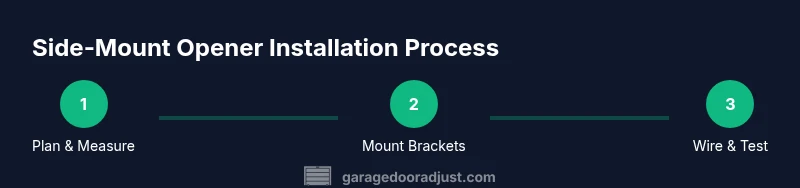
A side mount garage door opener is installed on the wall beside the door to free ceiling space and simplify access for wiring and maintenance. This guide helps homeowners assess compatibility, safety requirements, and a clear installation flow, plus practical tips for a smooth setup. Plan for a 60–120 minute project depending on door type and wall conditions.
What is a side mount garage door opener and when to choose one
A side mount garage door opener is a wall-mounted unit that drives the door via a belt or chain connected to a rack on the door, instead of the traditional ceiling-mounted trolley. This configuration is ideal when ceiling space is obstructed, when you have high doors or unusual torsion springs, or when you want to simplify service access to the opener and tracks. Side-mounted systems can reduce overhead clutter and provide enhanced clearance for ceiling-mounted insulation or lighting. According to GarageDoorAdjust, homeowners often choose side mount openers to resolve space constraints and improve accessibility for future maintenance. However, not every garage door suits a side mount installation; it depends on door height, track type, and the quality of the wall structure. Assess your door’s balance and track alignment before committing to this setup.
Key benefits include improved headroom for lighting or storage, easier wiring access, and a potentially quieter operation when mounted on the wall with proper vibration isolation. On the downside, side mount units may require a sturdier wall bracket and careful torque management to avoid binding the door. The right unit also needs a compatible rail length and mounting kit designed for side-mount operation. If your door uses unusual track configurations or inverted sections, consult the manufacturer’s compatibility chart before purchasing a side-mount model.
Compatibility, safety, and code considerations
Installing a side mount garage door opener hinges on several safety and compatibility factors. First, verify the opener is rated for your door weight and spring type, and confirm the mounting bracket will fit your wall studs with adequate support. Electrical safety matters: ensure a dedicated, grounded circuit, GFCI protection if required by local code, and proper conduit routing to prevent wear or damage. Safety sensors must align with the door’s bottom edge and be tested after installation; misalignment can cause nuisance reversals or failure to detect obstructions. Noise and vibration reduce with proper anchoring, vibration isolators, and balanced tracks. Always disconnect power during mounting and testing, and never work beneath a moving door.
Local codes often require specific clearance around the unit and explicit labeling of the electrical box. If you’re unsure about electrical work or mounting security, consult a licensed professional. The goal is a secure, compliant installation that provides reliable door control without compromising safety or warranty terms.
In our testing and field observations at GarageDoorAdjust, keeping the unit within the recommended mounting zone and using manufacturer-approved brackets reduces the risk of misalignment and service calls. Always refer to the installer’s guide for torque specs and rail length, and avoid freehand drilling that can weaken the mounting surface.
Pre-installation planning and measurement checklist
A successful side mount installation starts with careful planning. Measure door width, door height, and the wall space to confirm the mounting location has room for the opener, rails, and the wall bracket. Check wall studs for load-bearing capacity; you may need reinforcement if the wall is hollow or made of non-standard materials. Determine the power source location and ensure a clean route from the electrical panel to the opener, with a protected conduit and proper strain relief. Inspect the tracks for smooth operation and note any misalignment that could complic mounting. Finally, prepare the mounting kit: brackets, bolts, and the rail system designed for side-mount operation.
Before you buy, compare the side-mount kit's rail length and hardware to your door’s travel range and the ceiling clearance. If you have a high-lift or unusually tall door, confirm the rail accommodates the required travel. Document measurements and assemble components on a cleared work surface, labeling parts to simplify reassembly.
When in doubt, consult the manufacturer’s compatibility matrix or ask a pro. A well-planned install minimizes late-night trips back to the hardware store and reduces rework.
Common installation challenges and how to avoid them
Common wall-mount installation challenges include improper wall bracket support, misaligned safety sensors, and insufficient rail length for full door travel. To avoid these issues, ensure the wall bracket is firmly anchored to solid framing, not just drywall. Double-check sensor positions before finalizing mounting, as misaligned sensors cause false openings or failure to detect obstacles. If the door binds during test operations, recheck the track alignment and ensure the rail is fully seated in the trolley carriage. Grounding and electrical protection are often overlooked; verify the circuit is dedicated, properly grounded, and that the wiring is secured away from moving parts. Finally, test the system in stages: verify manual operation, test the wall-mounted opener’s response, and perform a full safety-reversal test at close and open positions.
With a methodical approach, most homeowners can achieve a reliable, safe side-mount setup that preserves overhead space and yields smooth operation.
Authority sources and references
For additional safety standards and installation guidelines, refer to authoritative sources:
- Occupational Safety and Health Administration (OSHA): https://www.osha.gov
- National Institute of Standards and Technology (NIST): https://www.nist.gov
- University Extension resources: https://extension.illinois.edu
Additional considerations and long-term care
After installation, schedule periodic inspections every 6–12 months. Check mounting brackets and wall anchors for signs of loosening, inspect the rail for wear, and replace safety sensors if they show persistent misalignment. Lubricate moving parts per the manufacturer’s recommendations and keep the door balanced; a door in balance requires less torque and reduces wear on the opener. If you notice unusual noises, seek professional assessment before continuing use to prevent long-term damage.
Tools & Materials
- Side-mount garage door opener kit (wall-mount compatible)(Includes rails, brackets, and mounting hardware)
- Cordless drill/driver(Various bit sizes, including wood and metal bits)
- Torque wrench or adjustable wrench(Used to tighten mounting bolts to spec)
- Measuring tape(Accurate measurements of wall space and door travel)
- Level and square(Ensure rails and brackets are plumb)
- Pliers and side-cutters(Wire management and quick adjustments)
- Screwdrivers (flat and Phillips)(General hardware assembly)
- Drill bits for anchor installation(Masonry or wood anchors as needed)
- Electrical tester or multimeter(Check circuit continuity and grounding)
- Safety goggles and gloves(Personal protective equipment during mounting)
- Step ladder or stable platform(Safe height for wall mounting)
Steps
Estimated time: 60-120 minutes
- 1
Prepare the mounting area
Clear the work area, inspect the wall for studs, and gather all components from the side-mount kit. Verify you have enough clearance for the rail path and the door’s travel range. Dry-fit brackets to confirm alignment before drilling.
Tip: Mark stud locations and use a level to transfer accurate alignment lines. - 2
Mount the wall brackets
Attach the main wall brackets to the studded wall using appropriate fasteners. Make sure brackets are plumb and evenly spaced to align with the door’s rack. Tighten bolts to manufacturer-specified torque.
Tip: If you hit hollow wall, use longer anchors or reinforce with additional framing. - 3
Install the rail and trolley
Position the rail along the wall and connect the trolley assembly. Ensure the rail sits flush against the wall and rotates smoothly. Secure with the included fasteners and double-check the alignment with a level.
Tip: Do not force the rail; any binding indicates misalignment that must be corrected before continuing. - 4
Attach the door rack to the door
Mount the rack to the door according to the kit instructions. Confirm the rack sits at the correct height to engage the trolley during movement. Tighten all fasteners securely.
Tip: Use a clamp to hold the door rack in place during fastening to prevent misalignment. - 5
Wire the opener and sensors
Route power wiring to the opener, install any needed conduit, and connect the safety sensors per manufacturer guidelines. Ensure wiring is secured away from moving parts. Ground the system and verify polarity where applicable.
Tip: Label wires and avoid running power and signal lines together to minimize interference. - 6
Test the system and adjust limits
Power up the unit and perform a controlled test: door movement, reversing on contact, and sensor calibration. Adjust travel limits and force settings as needed to ensure reliable operation without overloading the opener.
Tip: Test multiple cycles at different door heights to confirm full travel and safety reversal.
Got Questions?
Do side mount openers fit all garage doors?
Not every door supports a side mount installation. Door height, track type, and wall conditions matter. Check the manufacturer's compatibility chart and measure carefully before purchasing.
Not every door supports side-mount installations. Check compatibility charts and measure carefully before buying.
Is wiring dangerous when installing a side mount opener?
Electrical work should follow local codes and safety practices. If you’re unsure, hire a licensed electrician. Always disconnect power before handling live wires and use proper strain relief.
Electrical work should follow local codes. If unsure, hire a pro. Always disconnect power before handling wires.
Can I install a side mount opener myself, or should I hire a pro?
If you have basic carpentry, electrical basics, and the right mounting kit, a skilled homeowner can install a side-mount opener. Complex doors or uncertain wall conditions may warrant a professional.
You can do it if you’re comfortable with basic carpentry and electrical work; otherwise, hire a pro.
What maintenance is required after installation?
Periodically check bracket tightness, rail alignment, sensor calibration, and door balance. Lubricate moving parts per the manual and replace worn components promptly to extend life.
Check bolts, alignment, sensors, and balance. Lubricate parts and replace worn pieces as needed.
Will a side mount affect door balance or spring stress?
A proper installation maintains door balance and does not increase spring stress if the opener is correctly aligned. Improper mounting can cause uneven force distribution and wear.
If installed correctly, balance isn’t affected; misalignment can cause extra wear.
Watch Video
Quick Summary
- Plan and measure carefully before mounting.
- Choose a compatible side-mount kit for your door and wall material.
- Align rails and sensors precisely to prevent nuisance trips.
- Test in stages and follow torque specs for a safe, lasting install.