Garage Door Replacement: A Step-by-Step How-To
Learn how to safely plan and execute a garage door replacement, from choosing materials to final adjustments. Practical, step‑by‑step guidance with safety tips and budget considerations.


You're about to complete a safe, code-compliant replacement for a garage door. According to GarageDoorAdjust, this project starts with a needs assessment, proper door and opener selection, precise measurements, and strict safety checks. This guide walks homeowners through planning, installation, and avoiding common missteps.
Understanding replacement for garage door: scope and goals
A replacement for a garage door is more than swapping an old panel for a newer model. It involves evaluating opening dimensions, choosing a door style and insulation level, and planning for a compatible opener and safety devices. The goal is a door that fits precisely, functions smoothly, and seals against weather while keeping your family safe. In this section, we establish the scope: assess existing framing, weigh options between sectional vs. tilt-up designs, and determine whether you’ll handle installation yourself or hire a pro. Good planning reduces surprises during delivery and minimizes downtime for your garage.
Within this planning phase, consider how a new door will affect energy use, noise, and curb appeal. An insulated door with weatherstripping improves comfort and lowers heating or cooling loads. If you live in a windy area, you may want a door with reinforced panels and stronger tracks. In all cases, align your door choice with the size of your opening, the weight you can safely manage, and the compatibility with your existing opener or planned upgrade. This foundational step sets the tone for a successful replacement.
Assessing opening measurements and door options
Before ordering a replacement, measure the width and height of the door opening at three locations (top, middle, bottom) and across the jambs to confirm a truly square frame. Note any nonstandard widths, raised thresholds, or warped support members. Select a door style that complements your home and accounts for regional weather. If you’re unsure about a correct fit, consult a professional designer or a garage door installer. GarageDoorAdjust emphasizes double-checking measurements and confirming clearances for tracks, torsion springs, and the opener rail. A precise fit reduces noise, stops binding, and improves longevity.
Key decision points include insulation R-value, panel composition (steel, wood, or composite), window presence, and color/finish. For most homeowners, a mid-range insulated steel door with thermal breaks provides durability and energy efficiency without the maintenance demands of wood. If you plan to do the install yourself, pick a door with pre-painted panels and straightforward mounting hardware to minimize field adjustments.
Materials, insulation, and energy considerations
The door itself is just part of the equation. Insulation matters for attached garages and rooms above the garage, where heat transfer creates comfort and energy savings. When evaluating materials, weigh steel vs. aluminum frames, steel skins with composite overlays, and foam core thickness. A higher R-value typically equates to better temperature control and lower utility costs, but it also may add weight. The opener compatibility and track system must match the door’s weight and construction. For doors with windows, consider UV protection and glazing to reduce heat gain while preserving natural light. In this section, we also cover weather sealing: proper bottom seals, jamb weatherstripping, andan air gap to prevent drafts.
GarageDoorAdjust analysis shows that proper insulation and a good seal significantly reduce energy loss and noise transmission. It also notes that poorly matched springs or misaligned tracks can undo the benefits of a new door, causing wear and frustration over time.
Safety, codes, and permits you should know
Replacing a garage door involves moving heavy components and potentially high-tension springs. Always review local building codes and homeowner association rules before starting. In many jurisdictions, door replacements require permits if structural framing is involved or if a new opener is installed. Safety features such as auto-reverse sensors, manual emergency release, and secure fasteners must be installed and tested per the manufacturer’s instructions. Do not skip the safety checks; a misstep can cause serious injury or damage. If you’re unsure about electrical connections or spring systems, consult a licensed installer. This section highlights required PPE, lockout-tagout practices for spring systems, and how to verify compliance with local rules.
By understanding these requirements up front, you reduce the risk of costly rework and ensure your new door meets safety standards.
Planning the installation: tools, helpers, and timeline
A successful replacement requires careful organization: confirm delivery windows, prepare the workspace, and assemble required tools and parts. Create a step-by-step plan with milestones such as removing the old door, preparing the opening, assembling the new door, mounting tracks, installing springs, wiring the opener, and testing operation. Allocate a realistic timeline, recognizing that some steps (like spring assembly) may require a professional. Having a designated helper can speed up handling heavy sections and allow you to work safely and efficiently. This section also covers lighting, ventilation, and ensuring the garage interior remains protected from dust and debris during the process.
Step-by-step overview (high-level) for planning and safety
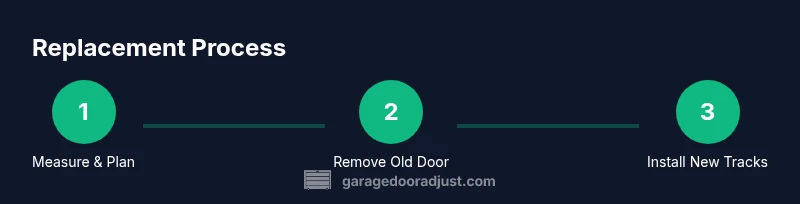
The replacement workflow, at a high level, includes: 1) confirm opening dimensions and order a compatible door; 2) prepare the opening by removing debris and ensuring a square frame; 3) install vertical tracks and horizontal sections with careful alignment; 4) install springs, balance the door, and set spring tension (note: springs can be dangerous; hire a pro if in doubt); 5) mount the opener and safety features; 6) perform a comprehensive test of operation, safety reverse, and weather sealing. This overview is designed to accompany the detailed step-by-step instructions and is not a substitute for vendor guidelines.
Maintenance after replacement: lubrication, adjustments, and weatherproofing
After installation, perform a thorough inspection and set up a maintenance schedule to maximize longevity. Lubricate moving parts sparingly, focusing on hinge points, rollers, and track joints. Check balance by testing whether the door stays in the open position when released from a few inches above the floor. Inspect weatherstripping and seals for wear and replace as needed to prevent drafts. Schedule a professional inspection at least once per year if you rely on a torsion-spring system, which benefits from periodic tension checks and safety verification. A proactive maintenance plan reduces the risk of breakdowns and helps preserve door performance.
Cost considerations and budgeting strategies (planning without exact prices)
Budgeting for a replacement involves estimating door cost, hardware, and labor, plus potential upgrades to the opener and safety features. Prices vary by material, insulation, and features, but you can plan for common scenarios by prioritizing core needs like insulation, enhanced security, and track quality. Remember to factor in delivery, disposal of the old door, and any permitting or inspection fees. If you’re comparing contractor quotes, request a detailed breakdown that includes hardware, labor hours, and any required modifications to framing or electrical work. This approach helps you compare value rather than just upfront price.
Tools & Materials
- Tape measure(Minimum 8 ft for door width and frame clearance)
- Cordless drill/driver(Battery charged, with 1/4-inch hex bit)
- Socket set (metric and standard)(Sizes for mounting hardware)
- Wrenches and pliers(For securing brackets and removing fasteners)
- Level(Ensure tracks are plumb and doors sit true)
- Safety gear (gloves, goggles)(Protect hands and eyes from debris)
- Ladder(Stable, tall enough for reaching tracks)
- Caulk, weatherstripping, sealant(For weatherproofing gaps around frame)
- Helper or assistant(Heavy doors are safer with an extra pair of hands)
Steps
Estimated time: 6-10 hours
- 1
Measure opening and plan
Measure width, height, and jambs at multiple points to confirm a square opening. Record anomalies and compare with available door sizes. This prevents ordering errors and reduces on-site adjustments.
Tip: Verify both sides and top clearance; use a level to confirm squared corners. - 2
Remove old door components
Disassemble and remove older panels and hardware from the opening. If torsion springs are present, do not attempt to release them without professional help. Label hardware for reassembly and set aside in organized containers.
Tip: Take photos during disassembly to guide the new installation. - 3
Prepare the opening
Clean the opening, repair damaged framing, and ensure surface is dry. Install any necessary framing shims to square the opening and provide solid anchor points for tracks.
Tip: Use shims as needed and recheck plumb and level after any adjustment. - 4
Mount tracks and panels
Position vertical tracks and install horizontal sections per manufacturer instructions. Ensure tracks are parallel and the door panels align along the tracks.
Tip: Work with a helper to avoid binding or misalignment during panel placement. - 5
Install springs and balance
Attach springs according to the door’s design (torsion or extension). Balance the door by testing its weight and ensuring it stays in place when released from a short height. If you are unsure, consult a professional.
Tip: Never adjust spring tension by hand; consult a professional if you lack experience. - 6
Install opener and safety features
Mount the opener rail, connect electrical and sensor wiring, and set safety reversal thresholds. Calibrate limits for opening and closing so the door stops at the correct height.
Tip: Test auto-reverse feature with a small object under the door to verify safety sensors function properly. - 7
Test and finalize
Operate the door through several cycles, listen for unusual noises, and verify weather seals. Make any final adjustments to alignment or weatherstripping as needed.
Tip: Document any adjustments for future maintenance and keep a copy of the user manual.
Got Questions?
What is the most challenging part of replacing a garage door?
The most challenging aspect is safely handling and balancing the springs, which store a lot of energy. Missteps can cause serious injury. If springs are present, plan to hire a professional for spring work and only attempt non-spring tasks if you have proper training.
The hardest part is safely handling the springs. If you're unsure, hire a pro for that portion.
Do I need a permit to replace my garage door?
Permit requirements vary by location and whether structural framing or wiring changes are involved. Check your city or county building department before starting and obtain any needed approvals.
Check with your local building department to see if a permit is required.
Can I install a new opener with a replacement door?
Yes, but ensure compatibility between the door weight and the opener’s horsepower. You may need to upgrade to a higher-capacity opener and integrate safety sensors.
Yes, but verify opener compatibility and safety sensor requirements.
Is it safe to replace a garage door by myself?
DIY is feasible for select tasks like removing old panels and mounting tracks, but springs and electrics are hazardous. If you lack experience, hire a licensed technician for those steps.
DIY is possible for basic parts, but avoid springs and electrical work if you’re not trained.
How long does a typical replacement take?
A typical door replacement spans a day or two depending on logistics, access, and whether professional help is used for springs and electrical work.
Most replacements take a full day or two, depending on specifics.
Watch Video
Quick Summary
- Plan with safety as a priority and verify measurements twice.
- Choose insulation and material suited to your climate and use.
- Have a helper for handling heavy panels and aligning tracks.
- Test safety features and weather sealing after install.
- Schedule professional help for springs and wiring if unsure.