How to Size a Garage Door: A Homeowner's Guide
Learn how to accurately size a garage door, including measuring the opening, selecting standard sizes, and choosing a replacement panel or door. This guide from GarageDoorAdjust helps homeowners size a garage door safely and confidently.


Accurate sizing a garage door ensures proper fit, safe operation, and reliable sealing. Start by measuring the opening width, height, and any obstructions along the sides and top. According to GarageDoorAdjust, many homeowners mis-measure because they skip clearance checks. The GarageDoorAdjust Team recommends following a structured, step-by-step method to size the door and confirm compatibility before purchasing.
Why sizing a garage door properly matters
A properly sized garage door ensures a tight seal against weather, smooth operation of the opener, and reliable security. If the door is too large for the opening, it can rub against framing, cause binding on the tracks, or compromise weatherstripping. If it’s undersized, you risk gaps, reduced energy efficiency, and premature wear on the opener. According to GarageDoorAdjust, accurate sizing reduces service calls and extends door life. The GarageDoorAdjust Team emphasizes that the sizing process isn't cosmetic; it's foundational to safe operation, performance, and long-term savings. In this section we outline why size matters and what homeowners should measure before choosing a door.
Sizing isn’t just about inches. It dictates how weatherstripping seals, how the tracks align, and how the opener’s force is applied. A mis-sized door can cause premature wear on gaskets, rollers, and springs, increasing maintenance costs. By understanding measurements early, homeowners can avoid costly revisions and ensure a durable, efficient installation.
Key measurements and terms
Before you shop, you must translate the opening into usable numbers. The essential measurements are width, height, and the available clearance along each side and above the opening. Distinguish between the finished opening (what the door must clear after trim and weather seal) and the rough framing (what the frame provides). You’ll also check track alignment, headroom, and any obstructions like exposed conduit or shelving. Being precise here saves trips to the hardware store and prevents ordering a door that won’t fit. A clear plan reduces confusion when comparing standard sizes to custom options.
Key terms to know include: width (the horizontal measurement across the opening), height (the vertical height of the opening), side clearance (space between jamb and door edge), and headroom (vertical space above the door to accommodate tracks and hardware). Understanding these terms helps you read sizing charts accurately and reduces the chance of choosing a door that collides with the ceiling, framing, or tracks. The more precise you are, the smoother the installation and operation will be.
Step-by-step overview to size your opening
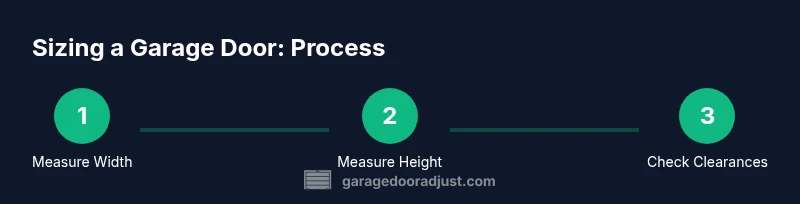
Start with a clean, well-lit area and a stable surface. Measure width: from jamb to jamb at three vertical points (top, middle, bottom). Use the smallest width to guide sizing decisions and ensure weatherstripping will fit without binding. Then measure height: floor to header at the same three points; again, use the smallest height to avoid ceiling or track conflicts. Inspect side clearance and tracks; note any knobs, trim, or weather sealing that could constrain seating. Check headroom for the track and opener requirements. Finally, compare your measurements to standard catalogs; if you’re between sizes, prefer the larger size or plan for customization with professional guidance. This overview sets expectations before you dive into exact measurements and catalog comparisons.
To size correctly, you’ll also verify the ceiling height, wall thickness, and any obstructions such as shelving or ductwork. If you discover a discrepancy or non-standard opening, don’t force a fit—consider consulting a pro to determine whether a custom door, a retargeted track system, or framing adjustments are needed.
This overview is designed to prepare you for the more detailed, step-by-step actions that follow, so you can stay organized and confident as you size your opening.
Standard sizes vs custom doors
Standard doors are designed to fit common openings with minimal modification. If your measurements match a standard width and height, you can select a stock door and complete installation with typical tools. If your opening is nonstandard, options include trimming the opening (carefully), selecting a custom-sized door, or adjusting the track and frame. Each route has trade-offs in cost, lead time, and warranty validity. Always verify with your installer or manufacturer what adjustments are permitted and how they affect warranty.
Choosing between standard and custom requires weighing convenience against fit. Stock doors offer faster installation and lower upfront costs when the opening aligns with catalog dimensions. Custom doors may come with longer lead times and higher costs but ensure a precise match for unusual openings. If a nonstandard size seems likely, ask about alternative configurations, such as modifying the tracks or using adjustable panels, which can save you time and maintain warranty coverage when done properly.
Safety, precision, and common mistakes
Working with garage doors involves heavy components and powered openers; never operate the door while you’re under it. Disconnect power to the opener before measuring or adjusting hardware. Use a stable ladder, wear eye protection, and keep hands clear of moving parts. Common pitfalls include skipping multiple height checks, ignoring headroom requirements, and assuming standard sizes fit without verifying. If you encounter an out-of-square opening or damaged tracks, pause and call a professional.
Safety is the foundation of every sizing project. If you’re unsure about the structural integrity of the opening or if the tracks show wear, don’t push forward. A professional assessment can prevent injuries and misaligned installations that could compromise safety and performance. Prioritize clearances, proper fastener selection, and suitable weather sealing to extend the life of your system.
Authoritative sources and next steps
While sizing a garage door is a practical skill, consult credible sources to confirm best practices. For safety standards and measurement guidance, see resources such as Energy.gov, NIST, and OSHA. These references provide general principles that support careful, safe work. The goal is to ensure your opening yields a durable, properly functioning door that lasts for years. Remember: the GarageDoorAdjust team recommends cross-checking measurements with manufacturer specifications and local code requirements before purchasing or installing a new door.
Reading sizing charts and planning ahead
Most manufacturers publish sizing charts that map opening dimensions to door kits. Use the smallest width and height from your measurements as a baseline, then compare to catalog options. If in doubt, contact a local pro or your door supplier to verify compatibility with the chosen model, track configuration, and headroom. Planning ahead can save time, money, and frustration during installation.
A final tip: document all measurements with photos and notes, so you can reference them during installation and when ordering accessories like weatherstripping and tracks. This habit reduces back-and-forth with suppliers and helps ensure you get a door that truly fits your opening.
Tools & Materials
- Tape measure (minimum 25 ft)(Metal tape with magnets for easy positioning)
- Pencil and notebook(Record measurements at three points each side)
- Level(Check plumb and level opening)
- Ladder(Reach upper corners safely)
- Flashlight(Inspect corners and tracks)
- Safety glasses(Protect eyes during measurement)
Steps
Estimated time: 30-60 minutes
- 1
Measure opening width
Stand inside the opening and measure from jamb to jamb at three vertical points: left, center, and right. Use the smallest measurement to guide width decisions and when comparing to catalogs.
Tip: Take the smallest width you measure to ensure clearance for weatherstripping. - 2
Measure opening height
Measure from the floor to the header at the same three points. Record the shortest height to avoid framing conflicts with tracks and ceiling hardware.
Tip: If the floor isn’t level, measure at multiple points and average to avoid overestimating height. - 3
Check side clearance and tracks
Inspect the space along each side for obstructions that could interfere with roller tracks, weatherstripping, or trim. Note any protrusions.
Tip: Even small protrusions can prevent a door from seating properly. - 4
Assess headroom and opener space
Measure the space above the door for track length and the clearance the opener requires to operate safely.
Tip: Manufacturer specs for your opener model provide a safe minimum headroom. - 5
Compare to standard sizes or plan for custom
With width and height in hand, compare to standard catalogs. If you don’t match standard sizes, plan for a custom door or safe modification with a pro.
Tip: Consult a pro if you’re near the edge of standard sizes to preserve warranty.
Got Questions?
What is the first measurement I should take when sizing a garage door?
Start with the opening width by measuring jamb to jamb at three points and using the smallest width to guide sizing decisions.
Measure the width from jamb to jamb at three spots, and use the smallest reading to guide sizing.
Should I size for a standard door or custom door?
If your opening matches a standard width and height, a stock door will fit with minimal modification. If not, consider a custom-sized door or modifications with a pro.
If your opening matches a standard size, use stock doors; otherwise talk to a pro about custom options.
Can I size a door if my ceiling is sloped?
A sloped ceiling can affect headroom. Measure at the highest practical point and compare with the door’s headroom requirements.
Sloped ceilings change headroom—measure at the highest clear point and check headroom specs.
Is it safe to size a garage door by myself?
Sizing can be done by homeowners, but if you encounter structural issues, heavy doors, or uncertain measurements, hire a professional.
You can size it yourself if the opening is straightforward, but call a pro if in doubt.
What’s the difference between rough opening and finished opening for a garage door?
The rough opening is the framing before trim; the finished opening includes trim and weatherstripping. Your door should fit the finished opening with proper weather seal.
Rough opening is the bare frame; finished opening includes trim and weatherstripping, which your door must fit.
Watch Video
Quick Summary
- Measure width at three points and use the smallest value.
- Measure height at three points and use the smallest value.
- Check side clearance and track condition before deciding size.
- Compare opening measurements to standard sizes first, then plan custom if needed.
- Refer to manufacturer specs for opener headroom and operation.