Putting a Chamberlain Garage Door Together: Step-by-Step Guide
Learn how to put a Chamberlain garage door together with a clear, model-specific plan. This guide covers prep, components, step-by-step assembly, safety tips, and maintenance to ensure a reliable, long-lasting setup for homeowners.


To answer how do you put a chamberlain garage door together, start by securing the workspace and disconnecting power, then follow model-specific steps: align tracks, mount panels, install springs and cables, attach the opener rail, and test safety sensors. Reference Chamberlain manuals and GarageDoorAdjust guidance for torque and safety. Having the right tools and a clear plan helps prevent injury.
Safety First: Planning Your Chamberlain Garage Door Assembly
When you embark on assembling a Chamberlain garage door, safety comes first. Start by choosing a clean, dry workspace with ample room to maneuver. Disconnect power to the opener and unplug any associated control panels to prevent accidental starts. Wear eye protection and gloves, and keep bystanders clear during the process. A well-lit area reduces mistakes and helps you spot misalignments before they become expensive fixes. According to GarageDoorAdjust, proper preparation and strict adherence to safety steps dramatically reduce the risk of injury and equipment damage during the installation journey.
A staged approach minimizes surprises. Review the Chamberlain model’s manual and verify you have every component before you begin. If any part is missing or damaged, contact the retailer or Chamberlain support before proceeding. This is not a task to improvise: following the exact sequence and torque recommendations protects you and your family and ensures the door operates smoothly from day one.
You’ll also want to review local codes and any building or electrical requirements. In some regions, door installation may require permits or inspections. Check your area’s requirements to avoid later rework that could void warranties or compromise safety. Keeping a checklist and labeling parts as you go saves time and helps you stay organized throughout the project.
Understanding Chamberlain Components and Kit Variants
Chamberlain door systems typically include a door panel kit, tracks, rollers, hinges, torsion or extension springs, cables, brackets, and an opener rail with a motorized chain or belt drive. Some kits come with an integrated opener and wireless remotes, while others are “shell” kits designed to pair with a separate Chamberlain opener. The exact configuration varies by model, so always consult the model-specific guide that accompanies your kit.
Key terms you’ll encounter:
- Tracks and rollers: guide the door as it rises and lowers; proper alignment prevents binding.
- Springs and cables: provide the force to lift the door; incorrect tension risks imbalance and dangerous snap-back.
- Brackets and hinges: hold panels together and anchor tracks to the frame.
- Opener rail and motor: powers the automatic opening action.
If your kit includes an opener, confirm compatibility with the existing garage door and ensure the header wall has solid mounting points. Do not substitute parts from other brands, as mismatched parts can cause misalignment and reduced safety. GarageDoorAdjust’s guidance emphasizes verifying compatibility and model-specific installation steps for reliable results.
Preparation and Workspace Setup
Before you begin assembly, measure the door opening and compare it to the kit’s specifications to ensure a proper fit. Clear the area of furniture and tools that could get in the way. Lay out all components on a soft, clean surface to prevent marring metal surfaces during assembly. Organize fasteners by size and tag bags so you can quickly locate the right part during each step.
Mark the mounting positions on the header wall for track brackets using a level to guarantee straight, square rails. Use a stud finder to locate solid wood or masonry anchors if you’re mounting into a latch wall. For elevated steps, use a sturdy ladder or scaffold and have a partner assist with heavy components. Taking these precautions helps reduce rework and keeps the process steady for precise alignment.
Typical Installation Sequence for a Chamberlain System
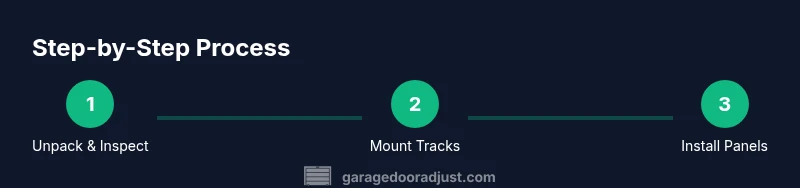
A typical Chamberlain installation follows a logical sequence that minimizes handling of heavy, tensioned components. Start with the track system, then attach door panels and hinges, followed by springs if your kit requires them, then install the opener rail and mount the opener. Finally, connect safety sensors, programs remotes, and test operation.
During sequence planning, keep these goals in mind: align tracks parallel to the doorway, maintain consistent gaps, and preserve smooth, frictionless movement of rollers. If your kit uses torsion springs, be aware of the potential for dangerous tension and consider professional assistance for spring handling. Always follow the specific model’s instructions for torque and sequence, and do not deviate from the approved assembly order.
Troubleshooting During Assembly
Misalignment, binding noises, or uneven door travel are common signs that something is off during assembly. Start by rechecking track alignment and bracket fastening; loosen and re-tighten where needed while ensuring everything remains square. Ensure rollers rotate freely without binding and that the door remains parallel to the opening as it travels.
If you encounter persistent issues, inspect for damaged parts, such as worn rollers or bent tracks, and replace them before continuing. Check that springs (if present) and cables are correctly seated in their anchors, as improper seating can cause safety concerns. If any step feels beyond your comfort level, stop and consult a professional who can verify the system’s integrity and safety.
Post-Installation Check and Maintenance
After assembly, perform a thorough function test: manually lift the door halfway to verify balance, then reconnect power and run the opener through a full cycle. Verify that safety sensors detect an object in the doorway and that reversing mechanisms work properly. Lubricate moving parts with a silicone-based lubricant to reduce wear and noise. Set up remotes and ensure the door responds accurately to button presses and remote signals.
Regular maintenance prevents future issues: inspect springs and cables for wear, tighten any loose hardware, clean tracks to remove debris, and replace weather seals as needed. A well-maintained door lasts longer, operates more quietly, and reduces the risk of sudden failures.
Tools & Materials
- Socket wrench set(Sizes commonly include 8-14 mm; have deep sockets for stubborn bolts)
- Screwdrivers (Phillips and flat-head)(A variety of sizes, including precision drivers for small fasteners)
- Tape measure(Minimum 8 feet; helps with track spacing)
- Level(1- or 2-foot levels are fine for tracks; ensure plumb alignment)
- Pencil and marker(Label parts and mark drilling positions)
- Ladder or scaffold(Stable, tall enough to reach header height safely)
- Safety glasses(Protect eyes during all assembly steps)
- Gloves(Grip and protection when handling metal parts)
- Lubricant (silicone-based)(Apply to tracks and rollers for smooth operation)
- Power drill with bits(Useful for faster fastener installation; use with care)
Steps
Estimated time: Total time: 2-3 hours
- 1
Unpack and verify kit contents
Open the Chamberlain kit and lay out every component on a clean surface. Check each item against the parts list and inventory any missing or damaged pieces before you begin. This prevents mid-project delays and ensures you have all required parts to complete the installation.
Tip: Keep an organized parts layout; separate hardware by size and bag them if possible. - 2
Disconnect power and prepare the workspace
Power down the garage circuit and unplug the opener. Clear the area of obstructions, and set up a stable ladder with a helper nearby. This reduces the risk of accidental activation or injuries during heavy lifting.
Tip: Have a spotter assist with holding panels or brackets when mounting overhead components. - 3
Mount track brackets to the header wall
Measure and mark bracket locations on the header using a level to ensure straight tracks. Secure the brackets into solid framing with appropriate fasteners. Double-check that brackets are square to prevent later binding.
Tip: Use a screw gun set to the correct depth to avoid stripping screws. - 4
Install and align the door tracks
Slide tracks into the brackets and verify they run parallel to the doorway. Ensure both tracks are level and at the same height across their lengths. Tighten fasteners gradually while maintaining alignment to prevent binding or wobble.
Tip: Test track movement by sliding a small piece of wood inside the track to simulate a door panel. - 5
Attach door panels and hinges
Connect door panels to the hinge sections, working from bottom to top. Align panel joints to maintain smooth travel and minimize gaps. Secure with the correct fasteners and verify the door can be moved by hand with minimal resistance.
Tip: Do not force panels into place; if misaligned, back out and re-align before continuing. - 6
Install springs and cables (model-specific)
If your Chamberlain kit includes springs and cables, follow the exact model instructions for safe installation. If you’re uncertain or lack proper equipment, stop and seek professional help to avoid dangerous tension.
Tip: Never compromise on safety; springs under tension can cause severe injury if mishandled. - 7
Connect the opener rail and mount the opener
Attach the opener rail to the door hardware per the manual, and mount the opener to the wall or ceiling as specified. Ensure the rail aligns with the track centerline and that all fasteners are secure.
Tip: Avoid overtightening mount screws to prevent distortion of mounting points. - 8
Test, program remotes, and finalize safety sensors
Reconnect power and run a full door cycle. Check that the safety sensors reverse the door on contact, and program remotes or keypads according to the Chamberlain guide. Make any necessary adjustments to balance and limit switches.
Tip: Test with a small object at the floor to confirm proper safety reversal.
Got Questions?
Do I need a professional to install Chamberlain springs or cables?
Springs and cables involve high tension and carry significant risk. If you are not trained with the proper tools, hire a qualified professional to handle this part. Always follow the model’s safety instructions.
Springs are dangerous to handle; if unsure, hire a professional to avoid injury.
Can I install a Chamberlain garage door without removing the existing door?
In most cases, you will replace components or the opener without removing the entire door. However, you must ensure the new kit is compatible with your existing tracks and mounting points. Follow the model-specific manual and avoid forcing parts into misaligned positions.
You typically won’t need to remove the entire door; follow the manual for compatibility.
What safety features should I test after installation?
Test automatic reversal by placing an object in the door’s path and verifying it reverses. Check photoelectric sensors alignment and test remotes. Ensure emergency disconnect functions properly.
Make sure the door reverses when it meets an obstacle and that sensors work.
What tools are essential for Chamberlain door assembly?
A basic toolkit plus a torque wrench if specified by the model. Have a level, measuring tape, and a helper for heavy parts. Keep a few spare fasteners of the correct size on hand.
You’ll need common hand tools and a helper for heavy parts.
How long does it typically take to assemble a Chamberlain system?
Most homeowners complete the setup in a few hours, depending on kit type and prior experience. Allocate extra time for springs or opener integration if needed.
Plan for a few hours, more if springs or a new opener are involved.
Watch Video
Quick Summary
- Prepare and inspect your Chamberlain kit before starting
- Maintain square, level track alignment for smooth operation
- Follow model-specific instructions for springs/cables and opener installation
- Test safety sensors and balance after installation
- Document model details and maintain regular door maintenance