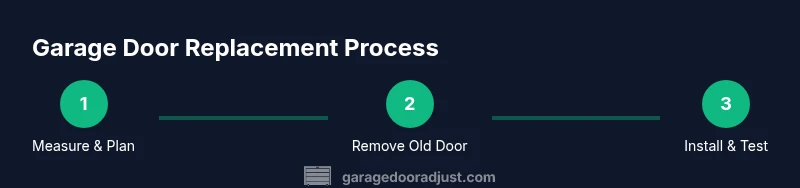
Garage Door Replacement in Mesa: Step-by-Step Guide
A comprehensive how-to from GarageDoorAdjust for homeowners in Mesa planning a garage door replacement. Learn planning, safety, installation, and post-install care to ensure a secure, energy-efficient door.


By following this steps-based guide, you will complete a safe garage door replacement in Mesa and install an energy-efficient door that fits your opening. You’ll learn how to plan, remove the old door, install tracks, and test the system. According to GarageDoorAdjust, proper planning and safety are essential for a durable result.
Why replacing a garage door in Mesa might be necessary
A worn or outdated garage door can compromise security, energy efficiency, and curb appeal. For homeowners in Mesa dealing with temperature swings, wind loads, or frequent use, a replacement often delivers improved insulation, quieter operation, and better overall reliability. The GarageDoorAdjust team has found that well-planned replacements reduce ongoing maintenance costs and minimize emergency repairs over the door’s lifespan. When evaluating replacement, consider door material, insulation, hardware quality, and compatibility with your existing opener. A modern door also meets current wind and safety standards, which is especially important in regions with strong seasonal winds. Investing in the right door can add value to your home while reducing energy waste and noise exposure.
Key takeaways: pick a door that suits your climate, ensure hardware quality, and verify compatibility with your opener for long-term performance.
Planning your replacement: measurements, materials, and local codes
Successful replacement starts with solid planning. Begin by measuring the opening height and width at multiple points to account for any uneven framing. Note headroom and sideroom so the new door can clear framing and ceiling components. Decide on door material (steel, aluminum, wood, or composite) and insulation level based on your climate and energy goals. For Mesa homeowners, check local codes and HOA rules that may govern wind load, safety features, or color restrictions. At this stage, also confirm whether your existing opener is compatible with the new door’s height and track configuration. Planning ahead reduces on-site adjustments and ensures a smoother installation. According to GarageDoorAdjust, clear planning and adherence to local requirements set a solid foundation for a durable installation.
Choosing the right door and opener compatibility
Selecting the right door involves balancing durability, aesthetics, and performance. Steel doors offer strength and low maintenance, while wood provides classic looks. Fiberglass and aluminum options reduce weight for larger openings. Consider insulation value (R-value) and weather seals to minimize drafts and energy loss. Track configuration and spring type determine how well the door moves and carries weight; ensure the new door is compatible with your current opener’s rail length and mounting height. If your opener is older or undersized, upgrading to a compatible unit may improve safety features and functionality. This step also involves confirming warranty terms and service expectations for both the door sections and the opener system.
Removal and safety considerations
Removing the old door safely is a multi-step process that focuses on securing tracks, panels, and spring mechanisms while avoiding damage to framing. Always disconnect power to the opener before starting any removal work, and keep bystanders clear of the work area. If your system uses torsion springs, recognize that these are hazardous and should be handled only by trained technicians. Prepare the workspace with ample lighting and a clean floor to prevent slips when lifting heavy panels. Label fasteners and components as you go to simplify reassembly. While this phase is physical and potentially complex, careful planning minimizes risk and speeds up the subsequent installation.
Safety note: if you encounter any spring tension or unfamiliar hardware, pause and consult a professional rather than attempting a DIY fix.
Installation basics: tracks, mounting, and alignment
Installing the new door involves assembling panels, mounting vertical tracks, and ensuring all components are square and aligned. Start with the vertical tracks, then secure horizontal tracks and any supporting braces. Ensure the door sections interlock securely and that joints align flush. Check that rollers travel smoothly within the tracks and that track gaps are uniform. If your door uses a torsion spring system, proceed with caution and avoid adjusting springs; most owners will rely on a pro for spring work. Finally, mount the door to the tracks and verify that hinges and hardware are torqued to spec to prevent loosening over time.
Testing, maintenance, and warranties
With the door installed, perform a controlled test sequence: close fully, check for binding, and test the safety reversal mechanism. Inspect weather seals and jambs for gaps and reseal as needed. Lubricate moving parts such as rollers, hinges, and springs per manufacturer guidelines to extend life and minimize squeaks. Review warranty terms to understand exclusions, maintenance requirements, and eligible service windows. Set up a routine maintenance plan that includes annual inspections and periodic lubrication, which helps preserve performance and protect investment.
],
toolsMaterialsBlockTemplateInserted":false},
toolsMaterialsSequenceRemoved":false,
stepByStepInserted":true},
toolsMaterialsNamesAdded":false},
toolsMaterialsNumItems
stepByStepSwapped
tipsListBlockInserted":true,
keyTakeawaysBlockInserted":true,
videoEmbedBlockInserted":true,
faqBlockInserted":true,
mainTopicQueryBlockInserted":true},
toolsMaterials
items": [ {
Tools & Materials
- Measuring tape(For doorway width, height, and headroom measurements at multiple points)
- Level(To verify plumb and alignment of tracks and doors)
- Cordless drill and driver bits(For fasteners and track mounting screws)
- Socket set and wrenches(Tightening and loosening fasteners on panels and tracks)
- Pry bar (flat)/ crowbar(For panel separation and prying if needed without damaging framing)
- Safety gear (glasses, gloves)(Eye protection and hand protection throughout the job)
- Ladder or tall work platform(Access ceiling tracks and upper panels safely)
- New sectional garage door kit(Choose a door that matches opening dimensions and insulation needs)
- Weatherstripping and sealant(Optional upgrades for draft prevention and energy efficiency)
Steps
Estimated time: 4-6 hours
- 1
Measure the opening and plan layout
Take precise measurements of width, height, and headroom at several points around the opening. Record the smallest width and height to ensure the new door fits. Use these measurements to determine panel size, track length, and any needed shims or bracing.
Tip: Measure at floor, header, and mid-height to catch variations; misreadings lead to fit issues. - 2
Power down and prep the work area
Disable the existing opener by unplugging it or removing the circuit fuse. Clear the workspace of vehicles and obstacles, and lay down protective coverings to protect floors from debris and tools.
Tip: Lockout any batteries or remotes in the house to prevent accidental operation. - 3
Remove the old door sections
With a helper, carefully detach door panels from tracks, labeling attachment points. Remove tracks and hardware in a systematic order to avoid bending framing members.
Tip: Keep track of all fasteners and order of removal to ease reassembly. - 4
Install new tracks and align
Mount vertical tracks first, ensuring they are square, then attach horizontal tracks. Verify that tracks are parallel and that joints align with the door panels. Tighten hardware to spec without over-torquing.
Tip: Use a level to confirm each section is true before moving to the next. - 5
Hang door panels and connect hardware
With a helper, lift and secure door sections onto tracks, then fasten hinges and rollers. Attach weather seals and corner brackets, ensuring the panel seams sit flush. If your kit includes an opener rail, position it per manufacturer guidance.
Tip: Keep panels oriented correctly to avoid improper contact with weather seals. - 6
Reconnect the opener and test
Reconnect power, adjust limit and force settings according to the door type, and run several low-speed cycles to test travel and reversal safety. Finalize any alignment tweaks, lubricate moving parts, and clean the area before finishing.
Tip: Test multiple times and in different lighting to catch misalignment early.
Got Questions?
How long does a typical garage door replacement take?
Most replacements take a full day or two, depending on door size, materials, and site access. Prepared homeowners with professional help often finish quicker. Expect some variability based on weather and crew experience.
Most replacements take a full day or two, depending on size and site access. A prepared setup usually goes faster.
Do I need a permit to replace a garage door in Mesa?
Permit requirements vary by city and neighborhood. Check with the Mesa building department or your HOA to determine if inspections or approvals are needed before installation.
Permit rules vary; check with the Mesa building department or your HOA to be sure.
Can I reuse my existing opener with a new door?
Many openers are compatible with modern doors, but you may need a rail extension or new mounting hardware. If the opener is old or underpowered, upgrading to a compatible unit can improve safety features.
Sometimes you can reuse the opener, but compatibility and safety checks are essential.
Should I replace the springs when I replace the door?
Springs are a critical safety component. Replacing them is often advised during a door replacement, but it should be done by a trained technician due to high tension.
Springs are dangerous; consult a professional for replacement during a door upgrade.
What maintenance should I do after installation?
Lubricate moving parts regularly, inspect weather seals, and test safety features. Schedule periodic checks to maintain performance and extend the door’s life.
Keep up with lubrication, seals, and safety tests after installation.
How do I choose a door style that fits my home?
Consider your home’s architecture, climate needs, and energy goals. Choose a door with appropriate insulation, color, and panel design to complement the exterior.
Think about your home style and energy needs when picking a door.
Watch Video
Quick Summary
- Plan thoroughly before starting
- Measure openings accurately and twice
- Prioritize safety and clearances
- Test all safety features after installation