Garage Door Barn Doors: Install, Convert, and Maintain
Learn how to install and maintain barn doors on a garage opening. This step-by-step guide covers hardware, safety, design, and maintenance for a durable, stylish solution.


Installing barn doors over a standard garage opening is feasible with a sliding track system, proper mounting, and compatible hardware. This concise guide gives steps, safety checks, and space calculations to help homeowners complete the project confidently.
What are garage door barn doors?
Barn doors on a garage opening blend rustic style with modern space-saving design. Instead of a swinging door or a standard overhead door, you install a sliding track system mounted to the header, and the door panels slide along the wall, neatly tucking to one side. According to GarageDoorAdjust, barn doors can transform a garage's look while saving space, making it easier to park, move gear, and reclaim wall real estate for storage. This approach works well when you want an exterior-style entrance for a workshop, studio, or home gym that sits behind a traditional garage door. It also avoids the bulk of full overhead doors in tight spaces. When chosen and installed correctly, barn doors provide reliable operation with minimal floor disruption. In this block, you’ll learn how to plan your project, select hardware, and execute a safe, durable installation that respects your home's structure and local codes.
Planning and design considerations
Before you buy hardware or start cutting panels, map out the space and understand how a barn door will interact with surrounding elements. Check wall framing, header integrity, and any protrusions like light fixtures or HVAC components. Consider headroom for the door’s track, wall space for when the door is fully open, and floor clearance to avoid snagging. The design should balance aesthetics with function: lighter panels for a smaller opening, or sturdier lumber if you store heavier equipment nearby. The goal is smooth, quiet operation and a look that complements the rest of the home. Remember to coordinate with contractors or local building departments if you are modifying structural components.
Hardware options and selection
Sliding barn door hardware comes as kits that include a track rail, rollers, hangers, and a floor guide. You’ll want hardware rated to support the weight and width of your door panels, plus matching finishes to fit your interior or exterior style. If your wall is plaster or drywall, you may need additional backing or stud reinforcement. Match the door thickness and panel width to ensure the door rides evenly along the track. High-quality, moisture-resistant materials are preferable in garages, where temperature swings and humidity occur. In short, choose a reputable kit, verify weight capacity, and ensure the hardware aligns with your opening dimensions.
Safety and code considerations
Garage projects require attention to safety and local regulations. Confirm that mounting points hit structural members (studs) and are far enough from electrical lines or pipes. If you’re relocating a door opening or modifying electrical fixtures, obtain any necessary permits and inspections. Always use personal protective equipment when drilling or lifting heavy panels. Plan for adequate ventilation if you’ll be cutting or sanding lumber. Following code-compliant methods reduces risk and ensures long-term reliability of the barn-door installation.
Aesthetic and finish options
Barn doors offer numerous finishes—from natural wood tones to painted or stained surfaces. You can also customize the hardware finish to match hardware elsewhere in the home. Consider adding weatherstripping and a proper door seal to the bottom edge for energy efficiency. If your garage doubles as a workshop or living space, choose a finish that resists humidity and wear. The overall visual impact should balance the rustic barn-door vibe with the rest of your interior design for a cohesive look.
Maintenance and troubleshooting
Regular maintenance keeps barn doors sliding smoothly for years. Clean tracks to remove dust and debris, lubricate rollers (with manufacturer-approved lubricant), and check mounting screws for tightness. If the door drags, recheck the track alignment and ensure floor guides are properly installed. If you experience unusual noises, inspect for loose hardware or bent rollers. GarageDoorAdjust analysis shows that proactive checks and routine lubrication reduce wear and keep operation quiet and reliable over time.
GarageDoorAdjust verdict
The GarageDoorAdjust team recommends a measured approach: plan thoroughly, choose a track kit with appropriate weight capacity, and ensure proper wall backing for mounting. Use weather-resistant materials in garages exposed to the elements, and verify compliance with local codes. When done correctly, barn doors over a garage opening deliver space-saving convenience, rugged durability, and a distinct aesthetic that can elevate your home’s value and curb appeal.
Tools & Materials
- Sliding barn door hardware kit(Includes track rail, rollers, hangers, and floor guide)
- Stud finder(Locate studs to anchor the header and track brackets)
- Drill with appropriate bits(Pilot holes and mounting screws into studs)
- Level(Ensure the track is perfectly plumb for smooth operation)
- Tape measure(Accurate opening measurements and panel dimensions)
- Pencil or marker(Mark drilling points and alignment lines)
- Screws and wall anchors(Choose corrosion-resistant hardware suitable for wall type)
- Safety glasses(Protect eyes during cutting and drilling)
- Wood shims(Optional for leveling and minor adjustments)
Steps
Estimated time: 60-120 minutes
- 1
Measure opening and plan
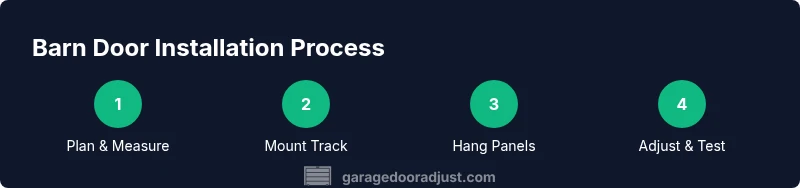
Measure the opening width and height, and decide where the track will mount. Confirm there is no obstruction on either side that would prevent full door travel. Verify weight capacity of the chosen hardware and ensure the wall can support it.
Tip: Double-check door width against the planned track length to prevent rubbing on trim. - 2
Prepare opening
Clear the space, remove existing trim if needed, and clean the surface where the track will mount. Use a stud finder to locate solid anchors and mark the header line for mounting.
Tip: Protect floors with a mat to avoid scuffs during installation. - 3
Mount header and track
Attach the header hardware to the wall studs, ensuring it is level and plumb. Secure the track along the header, following the kit instructions for bracket spacing.
Tip: Use a level to keep the track perfectly horizontal; misalignment causes binding. - 4
Hang door panels
Attach rollers or hangers to the door panels, then lift and hang them on the track. Keep doors balanced so they slide cleanly without dragging.
Tip: Have a helper assist with lifting heavy panels safely. - 5
Install floor guides and stops
Install floor guides to prevent door swing, and set bumper stops so the door closes and seals properly. Check that guides align with the door’s wheels for smooth travel.
Tip: Place guides on both sides of the door to ensure stability on uneven floors. - 6
Test operation and tune
Slide the door back and forth to check for smoothness and clearance. Adjust roller height or track alignment as needed, and tighten any loose screws.
Tip: Lubricate track and rollers with manufacturer-approved lubricant after testing.
Got Questions?
What is a barn door hardware kit and what does it include?
A barn door hardware kit includes the track rail, rollers, hangers, and a floor guide. Some kits also come with bumper stops and wall brackets. Always verify weight capacity matches your door and read the installation instructions before starting.
A barn door kit includes the track, rollers, hangers, and floor guide. Check weight capacity and read the instructions first.
Do I need a professional to install barn doors on a garage?
Professional installation is recommended if you are modifying structural elements or not confident with power tools and level measurements. For simple retrofits on non-structural walls, a careful DIY approach with proper safety can be sufficient.
If you're comfortable with tools and measurements, you can DIY; otherwise, hire a pro for safe, code-compliant results.
Will barn doors help with noise and energy efficiency?
Barn doors can reduce space and noise transfer when paired with proper seals and weatherstripping. Insulation and door panel selection also influence energy performance.
They can help with noise and energy if you add weatherstripping and good insulation.
How much space do barn doors require when open?
Space for a barn door depends on panel width and track length. Ensure there is wall space on one side to accommodate the door when open and enough clearance along the floor for the guide.
Make sure you have wall space for the door to slide and floor clearance for the guide.
Can I install barn doors over an insulated garage?
Yes, but plan for proper sealing and moisture control around the track. Use moisture-resistant panels and ensure the header mounting doesn’t compromise insulation.
Yes—just plan for sealing and choose moisture-resistant materials.
What maintenance does a barn door require?
Regularly clean tracks, lubricate moving parts, and check fasteners. Periodic inspection helps prevent misalignment and prolongs door life.
Keep tracks clean, lubricate parts, and tighten screws routinely.
Watch Video
Quick Summary
- Plan measurements before buying hardware
- Choose hardware rated for door weight
- Ensure track is level for smooth operation
- Install floor guides to prevent derailment
- Perform regular maintenance for longevity