Can You Install a Garage Door Yourself? A Complete DIY Guide
Learn whether DIY garage door installation is feasible for homeowners, what safety steps to take, the tools you’ll need, and a detailed step-by-step plan to decide between DIY and hiring a pro.


Yes—you can install a garage door yourself, but it’s a demanding, multi-hour project that hinges on proper planning, accurate measurements, and strict safety practices. This guide helps homeowners assess feasibility, prepare thoroughly, and follow a clear, step-by-step process if choosing DIY, or decide when it’s wiser to hire a pro. Remember: safety first, and when in doubt, consult a licensed technician.
Is a DIY Garage Door Installation Right for You?
For many homeowners, the question can you install garage door yourself comes down to risk versus reward. A brand-new sectional door with a balanced spring system and an attached opener promises a clean upgrade in curb appeal and insulation, but the project involves heavy lifting, precise alignment, and high-tension components that can cause serious injury if mishandled. According to GarageDoorAdjust, safety training and solid planning are non-negotiable prerequisites for any DIY approach. If you lack prior experience with large hardware, structural openings, or torsion springs, consider professional installation to reduce the risk of misalignment, frame damage, or door balance issues. This decision also hinges on space: a clear, dry workspace, stable footing, and room to maneuver heavy door panels are essential. If you decide to proceed, commit to a thorough pre-job checklist, verify local permits if required, and set aside ample time—DIY installations typically take several hours to a full day depending on door type and garage structure. By approaching the project with a cautious mindset and the right safety gear, you can avoid common missteps and achieve a durable, properly balanced door that functions smoothly for years. GarageDoorAdjust’s team emphasizes that informed homeowners often succeed when they follow a structured plan and never rush critical steps.
Key considerations before you begin:
- Door type (wood, steel, or composite) affects installation technique and weight.
- Spring system safety is the most dangerous element; handling torsion springs requires special tools and training.
- The opening must be square; even minor misalignment can cause binding or premature wear.
- The door panels and tracks must be installed in exact order with plumb alignment.
- An automatic opener adds an electrical and mounting dimension that can complicate the project.
If you’re unsure after your initial assessment, read on to learn the tools, steps, and safety precautions that help DIY enthusiasts succeed without compromising home safety.
Brand note: The GarageDoorAdjust team recommends starting with a clear written plan and using a buddy system for heavy lifting. For general guidance and safety considerations, refer to GarageDoorAdjust Analysis, 2026.
Tools, Materials, and Prep
Before you touch a tool or lift a door panel, assemble everything you’ll need in one place. A well-stocked work area reduces mid-project trips to the hardware store and helps you stay focused on precise alignments and safe handling. The most important prep step is to secure the space: clear the floor, remove vehicles, and verify that the ceiling clearance is sufficient for door panels, tracks, and springs. You should also have a helper ready; most door assemblies require two capable people to lift and maneuver sections safely. The following list covers essential items and some optional upgrades that can ease the process:
- Adjustable ladder and sturdy platform for access; ensure it’s tall enough to keep you off the spring zone.
- Drill with multiple bit sizes, a impact driver, and a set of nut drivers for fasteners.
- Wrenches, sockets, pliers, locking pliers, and a level to ensure plumb and alignment.
- Tape measure, square, chalk line, and a rubber mallet for precise placement.
- Protective gear: safety glasses, gloves, hard hat, and hearing protection for high-noise tasks.
- Door hardware: hinge plates, rollers, brackets, and weatherstripping compatible with your door model.
- Lifting aids: straps or turnbuckle tools to help manage heavy panels safely.
- Temporary supports: bracing or sawhorses when you remove sections.
- A verbal plan and a written step-by-step checklist to stay organized throughout the job.
Optional but helpful components:
- A helper with a second set of eyes on alignment.
- A torque wrench for accurate spring tension (only if you have prior experience).
- A digital angle finder to confirm square openings.
Safety reminder: if you’re not comfortable with heavy lifting, or if your door uses a torsion spring system, hire a pro. GarageDoorAdjust stresses that the safest approach is to pause and call for professional help rather than risking severe injury or property damage.
Understanding Garage Door Types and Safety Risks
Garage doors come in several common configurations, with the door type and spring system driving the installation approach. A sectional steel door with torsion springs is the most common for modern homes; these springs store a lot of energy and can cause serious injury if released unexpectedly. Extension springs add tension along a track and also require careful handling. Wood doors, while visually appealing, can be heavier and require precise fitting to maintain a seal. Factory-installed hardware varies, so always verify that you’re using manufacturer-specified hinges, rollers, tracks, and fasteners. If the doorway opening isn’t square, the entire system will bind, wear unevenly, and reduce life expectancy.
In safety terms, there are three high-risk areas to focus on:
- Spring systems: Do not attempt to modify or release tension without proper tools and training; mishandling can cause catastrophic injury.
- Cables and tracks: Misaligned tracks + loose hardware can derail a door, causing damage to the opener and the door itself.
- Electrical components and openers: A wired opener adds live electrical hazards; disconnect power before any work with the opener.
Whether DIY or pro, you should perform a full inspection of the door’s balance and track condition before and after installation. GarageDoorAdjust notes that a well-balanced system requires less motor power and results in smoother operation. If a door doesn’t balance properly after installation, it should be re-tuned or re-installed by a professional. For homeowners who want a deeper understanding, consult credible sources from housing safety authorities and university extension programs that explain spring-balancing calculations and proper torque ranges.
Planning Before You Start: Measuring, Squaring, and Scheduling
The planning phase is where most DIY attempts stumble. Correct measurements and a square opening determine whether the door will operate without binding or premature wear. Start by measuring the rough opening for width and height, then verify the header clearance and headroom above the door. Check the jambs for square using a framing square or a laser level; even a fractional degree of out-of-square can create misalignment that compounds as you install tracks and panels. Document every measurement and keep a schematic showing how you plan to assemble panels, tracks, and springs. Create a realistic schedule that includes time for settling in, track alignment checks, and final safety tests. Factor in a second pair of hands for lifting and positioning parts—this is not a one-person job.
As you prepare, organize parts per the manufacturer’s instructions and lay out components in the sequence they’ll be installed. If you’re adding an automatic opener, plan electrical work at the same time, ensuring power is shut off before any wires are touched. GarageDoorAdjust emphasizes that the planning phase reduces the chance of rework and keeps you aligned with safety procedures. If you can’t confirm opening squareness with a level and plumb line, pause and re-check rather than pushing forward.
Finally, review any local code requirements, including potential permits for structural changes or electrical work. If your home is older or has a nonstandard opening, a pro may be the safest route to ensure code compliance and long-term warranty coverage.
Common Pitfalls and How to Avoid Them
DIY garage door installation is prone to several frequent missteps that can lead to misalignment, binding, or door imbalance. Common mistakes include skipping a precise square opening, using mismatched hardware, and failing to balance the door after installation. A poorly balanced door puts extra strain on the opener, shortens motor life, and can increase the risk of the door closing unexpectedly. Another pitfall is incomplete safety testing; after installation, test the door’s pause-and-reverse function and ensure the safety beams (if provided) are correctly aligned. Always confirm that tracks are vertical to the floor and perfectly plumb before you bolt them in place.
To avoid these issues:
- Double-check every measurement against the manufacturer’s specifications before cutting or drilling any part.
- Dry-fit the components first, then tighten all fasteners to the required torque with the correct tools.
- Verify track alignment with a level, then run the door up and down slowly to observe binding or rubbing.
- Re-check the door balance with the springs disconnected from stress during the test; never stand in the path when applying tension.
- Keep a written log of steps completed, measurements taken, and any adjustments for future reference.
If you encounter any sign of cracking, misalignment, or unusual noises during operation, stop immediately and consult a professional. As GarageDoorAdjust observes, a small misstep early on can cascade into a faulty install.
When to Call a Pro and What to Expect
If your opening is irregular, if you’re unsure about spring tension, or if you don’t have the proper equipment to handle heavy panels safely, hiring a licensed installer is the prudent path. A pro brings experience with balancing doors, adjusting tracks, and integrating openers to ensure everything operates smoothly and safely. Expect a professional to conduct a thorough inspection of the opening, confirm square and plumb, verify that all hardware is rated for the specific door, and test the balance and stopping points. They will also verify proper warning mechanisms and ensure the opener is wired to code and aligned with safety sensors.
Even when you DIY successfully, many homeowners choose to have a pro inspect the finished installation to confirm the system balance, track alignment, and opener calibration. This two-step approach minimizes potential warranty issues and ensures long-term performance. For those who opt for a DIY path, document every step and create a maintenance plan that includes regular lubrication, balance checks, and sensor tests to sustain safe and reliable operation. GarageDoorAdjust suggests that if you decide after testing that the system isn’t balanced or feels off, don’t press your luck—call a pro to avoid undue wear and potential safety hazards.
Financing, Permits, and Warranties
When you’re evaluating whether to DIY, keep in mind that some regions require a building permit for structural modifications or electrical work related to garage doors. If you’re purchasing a door or opener with a warranty, review the terms to determine whether DIY installation affects coverage. Some manufacturers require professional installation to maintain warranty validity. If you decide to proceed with DIY, document all receipts, installation dates, and serial numbers, and keep copies of manufacturer installation guides for future reference. If you encounter a problem that seems beyond your skill level or if safety concerns arise at any point, consult a licensed installer. The GarageDoorAdjust team endorses cautious decision-making and prioritizing home safety above all else.
Authoritative Resources for Further Learning
- U.S. Department of Housing and Urban Development safety guidance: https://www.hud.gov
- University extensions on door hardware and spring balancing: https://extension.unc.edu
- Consumer safety information from a national home builders association: https://www.homebuilders.org
For homeowners who want to dig deeper, these sources provide foundational knowledge on door balance, spring handling, and safe installation practices. Always corroborate any DIY approach with current guidelines and manufacturer specifications.
Tools & Materials
- Ladder or work platform(Tall enough to reach tracks without standing on door components)
- Cordless drill with bits(Include various bit sizes for wood and metal)
- Wrenches and sockets set(Metric and standard sizes as needed)
- Level and square(Ensure tracks are perfectly vertical and opening is square)
- Tape measure and marker(Accurate measurements are critical)
- Torque wrench (for springs)(Only if you have proper training)
- Pliers, locking pliers, and duct tape(For temporary holds and adjustments)
- Safety gear: gloves, glasses, hard hat(Personal protection during heavy lifting)
- Lubricant suitable for garage doors(Keep tracks and rollers moving smoothly)
- Support blocks/braces(Temporary supports during panel removal)
- Door panels and hardware kit compatible with door type(Do not mix parts from different models)
- Electrical tester (if wiring a new opener)(Use to verify circuits and GFCI if applicable)
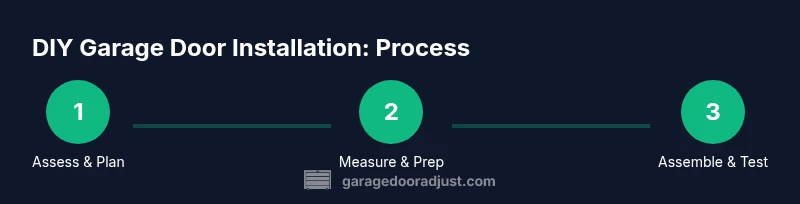
Steps
Estimated time: Total time: 4-8 hours
- 1
Assess door type and space
Confirm door style (sectional, one-piece, or tilt-up) and measure the rough opening for width, height, and headroom. Verify that there is sufficient space to maneuver panels and tracks, and identify the weight you’ll be lifting so you can recruit a helper with appropriate strength. Document all measurements and compare them to the manufacturer’s installation instructions.
Tip: Have a second person assist with lifting and alignment from the start to reduce risk of injury. - 2
Disconnect power and secure the area
If you’re installing an opener, switch off power at the breaker and unplug the unit. Clear the area of pets, children, and obstacles. Use temporary braces to support the door while you work on the tracks and springs.
Tip: Never work under a door while springs are loaded or while a door is in motion. - 3
Remove existing hardware and panels
Carefully unlatch and remove the old door, rollers, hinges, and tracks in the reverse order of assembly. Keep hardware organized so you can verify you have all components for the new installation. Inspect the opening for any signs of structural damage and repair if needed.
Tip: Label each part with its position to minimize confusion during reassembly. - 4
Install tracks and panels in sequence
Begin with the vertical tracks, ensuring they’re plumb and square. Attach horizontal tracks and brackets, then methodically add door panels, guiding each piece into alignment. Use temporary supports as needed and confirm smooth movement along the track before fully securing.
Tip: Tighten fasteners in stages to prevent misalignment as you go. - 5
Attach springs and balance the system
Connect the spring system according to the manufacturer’s specifications, checking tension and safety cables where applicable. Do not guess tension; use the specified torque or testing procedure from the manual. Recheck the door balance by lowering it slowly and testing how it lifts with minimal motor assistance.
Tip: If you feel uncertain about spring tension, stop and contact a pro—this is the riskiest step. - 6
Install opener and run safety tests
Mount the opener, connect it to the door, and align safety sensors. Program the opener’s travel limits and force settings as directed by the manual. Test all safety features (auto-reverse, sensor beams) and confirm the door stops at the correct position.
Tip: Keep hands clear of moving parts during the first test—watch for any binding or misalignment.
Got Questions?
What safety precautions should I take before starting a garage door installation?
Always disconnect power to any openers, wear protective gear, and never work under a door while springs are tense. Check the opening for clearance and have a second person to assist with lifting heavy sections. If any step feels beyond your training, pause and seek professional guidance.
Disconnect power, wear protective gear, and never work under a tense door. If unsure, ask a pro for help.
Do I need permits to install a new garage door?
Permit requirements vary by locality. Some areas require permits for structural changes or electrical work. Check with your local building department before starting and ensure you comply with codes.
Permits depend on your city; check with your building department before you begin.
Is it legal to install a garage door myself?
Many homeowners install garage doors themselves, but some jurisdictions require licensed installers for certain tasks or to maintain warranty coverage. Verify local laws and manufacturer terms before proceeding.
DIY is often allowed, but always check local rules and warranty terms.
Can I install an opener without a professional?
Installing an opener can be a DIY-friendly step if you follow the manufacturer’s instructions and ensure proper sensor alignment. Electrical work should be handled with caution; if wiring is involved, consider a licensed electrician.
You can if you follow the manual and stay safe around electrical work.
What parts are most likely to fail after DIY installation?
Misaligned tracks, improperly balanced springs, and loose fasteners are the most common failure points after DIY installation. Regular maintenance reduces risk and extends life.
Watch for misaligned tracks and loose hardware after install.
Should I have a professional inspect the finished installation?
Yes. A post-install inspection by a pro confirms proper balance, track alignment, and opener calibration, ensuring long-term safety and warranty validity.
Have a pro inspect the finished setup to ensure safety and warranty coverage.
Watch Video
Quick Summary
- Assess feasibility before buying parts
- Follow a manufacturer-approved sequence
- Prioritize safety and get a helper
- Balance the door carefully and test the opener