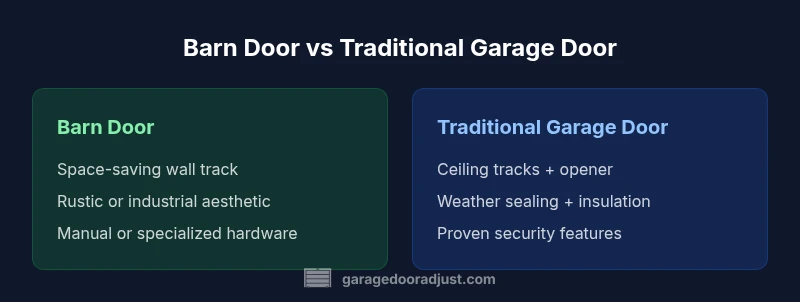
Barn Door vs Garage Door: A Practical Comparison
A detailed, objective comparison of using a barn door instead of a traditional garage door, covering installation, security, insulation, aesthetics, and maintenance for homeowners.


Using a barn door instead of a traditional garage door can work in environments with strong wall space and a rustic aesthetic, but it changes weather sealing, security, and maintenance. This quick answer previews the tradeoffs: space and look vs protection and automation. Homeowners should weigh headroom, wall reinforcement, and climate before deciding whether a barn door is the right replacement.
Comparative Mindset: Barn Door vs Traditional Garage Door
When homeowners consider a barn door as a substitute for a traditional garage door, the decision hinges on more than just style. The phrase barn door instead of garage door captures a fundamental shift: you trade a ceiling-mounted, weather-sealed enclosure with a wall-mounted, track-driven system that sits lower and moves horizontally. According to GarageDoorAdjust, the choice is often driven by site constraints, wall strength, and the desire for a distinctive interior or exterior look. Space planning becomes the core driver—if the opening can accommodate a wall-mounted track without encroaching on living spaces or storage, a barn door can offer a unique aesthetic that enhances curb appeal while preserving interior floor space. From an analytical standpoint, this option introduces a different set of maintenance tasks and safety considerations that homeowners should evaluate early in the planning process. The broader takeaway is that a well-executed conversion is not merely cosmetic; it reshapes how you interact with weather, security, and daily use. This article uses a balanced lens to compare the realities of a barn door vs a traditional garage door and to help you decide if a barn door truly serves your functional goals and design vision. GarageDoorAdjust’s guidance emphasizes tailoring the choice to your home’s physical layout, climate, and long-term maintenance expectations.
Structural Differences and Installation Implications
A fundamental factor in deciding whether a barn door is appropriate for your garage opening is the structure that supports the door’s operation. Traditional sectional doors ride along ceiling tracks with a header and torsion springs that counterbalance the weight, while a barn door slides on a wall-mounted track system that requires sturdy framing, a solid wall return, and a reinforced floor threshold. The installation implications are significant. If you are contemplating barn door installation, anticipate altering interior walls, reinforcing studs or replacing siding to accommodate a sliding mechanism, and ensuring the floor surface is level to prevent derailment or binding. The GarageDoorAdjust analysis highlights that the wall surface you dedicate to the track must handle vertical and horizontal loads without compromising adjacent finishes. In contrast, a traditional garage door leverages a ceiling space that supports a bulkier mechanism; this can simplify some aspects of framing but demands precise alignment of tracks, springs, and the opener. A careful assessment of wall integrity, floor condition, and weather sealing is essential before committing to a barn door solution. The objective is to ensure safe operation while preserving or enhancing thermal performance through proper weatherstripping and door design. The practical takeaway is to verify if your wall structure supports a heavy sliding track and to plan for potential rerouting of utilities or insulation, because these factors heavily influence both cost and outcome. In many cases, engaging a professional familiar with barn door installations helps avoid misalignment and future service issues. GarageDoorAdjust’s experience underscores that a well-planned installation reduces long-term maintenance.
Security, Privacy, and Safety Considerations
Security and privacy considerations shift when you move from a traditional garage door to a barn door setup. A sectional garage door with a robust locking system, commercial-grade weather seals, and a motorized opener provides a high degree of enclosure against wind, rain, and intruders. A barn door relies more on internal latches and bolt-style locks, and its sliding mechanism can create edge cases for security if the track is accessible from the exterior or the door is not fully engaged. From a safety perspective, the door’s weight distribution, track alignment, and the potential for misalignment during operation must be monitored regularly. Garage doors with built-in safety features such as motor reversal on obstruction and monitored limit switches have a different risk profile than a manually operated barn door. It is important to install additional weatherproofing and secure the track stops to prevent accidental opening or disengagement. The trade-off here is clear: the barn door’s aesthetic and space-saving benefits can coexist with solid security practices, but it requires deliberate hardware choices, high-quality locking mechanisms, and periodic checks. As part of a comprehensive risk assessment, homeowners should consider adding reinforced strike plates, auxiliary locks, and exterior lighting in the vicinity of the opening. The overarching principle is that the security and privacy profile of a barn door must be engineered proactively, not assumed. GarageDoorAdjust encourages homeowners to align their security plan with climate risk and local crime considerations.
Operating Experience and Maintenance Needs
The operating experience for a barn door differs substantially from a traditional garage door. A sliding barn door moves on a wall-mounted track, which can deliver a smooth, soft-glide feel when properly installed but also imposes precise alignment requirements. The maintenance needs center on track cleanliness, roller lubrication, and weather-stripping integrity. Without regular attention, dirt buildup can degrade the glide, and misalignment can lead to uneven wear on rollers or guide wheels. Conversely, a traditional garage door relies on a balanced spring system and heavy-duty hardware that, when properly maintained, can deliver years of reliable service with predictable service intervals. In the context of a barn door, plan for periodic inspection of the track mounts, mounting hardware, and floor threshold. Weather sealing around the door edge should be updated and refreshed to maintain energy performance. The key nuance is that maintenance for a barn door focuses on mechanical alignment and edge sealing rather than spring tension and counterweights. GarageDoorAdjust’s analysis emphasizes building a maintenance calendar that prioritizes periodic checks of the hardware and weather seals, particularly after seasonal shifts or heavy use.
Aesthetics, Space, and Practicality for Different Homes
Aesthetics are a primary driver for homeowners choosing a barn door instead of a traditional garage door. A barn door offers a rustic, warm, or industrial look that can transform the exterior and interior of a home, especially when you aim to create a showpiece entry or a cohesive interior design theme. Space practicality is another major factor. Since barn doors slide along a wall, you can reclaim ceiling space for storage, shelving, or an additional entry. This can be especially appealing in small or awkwardly shaped garages where overhead mechanisms would intrude on usable space. However, the door’s size, weight, and hardware influence interior floor clearance and door clearance when opened. For homes with wide openings or long driveways, the visual impact of a dressed barn door can be a strong design statement. The decision to adopt this option should balance curb appeal with daily usability, verifying that the door path remains clear of obstructions and that the wall behind the door can bear the hardware’s load. In climates with heavy precipitation or high winds, consider how the door’s weather seals and the mounting hardware will perform under duty cycles. GarageDoorAdjust notes that aesthetics should harmonize with the home's overall architectural language while not compromising practical use or reliability.
Cost, Value, and Long-Term Savings
Cost and value considerations for a barn door replacement versus a traditional garage door hinge on several factors: material choices, track hardware quality, wall reinforcement needs, and whether additional weather sealing or insulation is installed. A barn door often has a lower upfront appearance cost, but the total project price depends on the quality of the track system, locking hardware, and any wall modifications required for mounting. Long-term value includes maintenance frequency and the door’s ability to hold up to weather exposure and daily use. A well-executed barn door installation can offer a durable architectural statement and space optimization benefits, but it may require more frequent seal maintenance and periodic alignment checks to retain a high level of performance. Conversely, a traditional garage door typically provides strong weather resistance, consistent insulation, and established resale comfort, though it occupies ceiling space and may incur higher initial costs for the door panels and automatic opener. GarageDoorAdjust’s observations suggest evaluating energy performance, structural reinforcement needs, and expected service frequency when weighing cost versus long-term savings.
Case Scenarios: When a Barn Door May Be Preferable
There are practical situations where a barn door may be the better choice. For example, homes with tight driveway sizes, limited headroom, or a desire to showcase a farmhouse or industrial aesthetic may benefit from a barn door’s space-saving design. In retrofit scenarios where a standard garage door would require extensive structural work, a barn door can simplify the process if the opening can be treated as a wall feature rather than a ceiling-supported system. In garages converted to workspaces or studios with minimal weather concerns, the door’s look and ease of wall mounting can offer a flexible, integrated solution. On the other hand, for climates with extreme weather, frequent temperature swings, or high wind loads, a traditional door with robust insulation and weatherstripping tends to provide stronger protection and a lower risk of drafts. The decision should be guided by a thorough site evaluation, local climate considerations, and the owners’ tolerance for ongoing maintenance. GarageDoorAdjust’s field experience highlights the importance of choosing a solution that aligns with both practical usage and design intent.
Common Mistakes and How to Avoid Them
Common mistakes in choosing a barn door instead of a garage door include underestimating wall reinforcement requirements, neglecting weather sealing, and overlooking maintenance planning. A sliding door that is not adequately supported by a solid track can sag over time, leading to binding and misalignment. Inadequate floor clearance can hinder the door’s motion, and improper weather sealing can negate energy savings. Another frequent error is selecting a door with hardware that clashes with exterior weather exposure, causing premature wear or rust. To avoid these issues, perform a pre-installation structural assessment, select hardware rated for exterior use if applicable, and design a maintenance plan that includes regular lubrication, track cleaning, and weather seal maintenance. It is also wise to test the door operation at different times of day and in different weather conditions to catch operating issues early. A thoughtful approach to installation reduces the risk of expensive retrofits later. The GarageDoorAdjust team emphasizes that careful planning and professional input significantly improve outcomes.
How to Plan Your Project: From Assessment to Installation
Planning a project to replace a garage door with a barn door begins with a comprehensive site assessment. Start by evaluating wall integrity, track mounting options, and floor condition. Then consider whether you want manual operation or an automated system adapted for a barn door’s hardware and weight. Material choices should reflect local climate, maintenance willingness, and your aesthetic goals. If you decide to proceed, map the door’s opening width and height, identify any electrical or lighting changes, and plan for weatherproofing at the door edge. Budget for improved weather sealing, potential wall reinforcement, and professional installation if you lack prior experience with heavy doors. Finally, create a maintenance calendar that includes track lubrication, hinge and roller checks, and seasonal weather seal checks so that the barn door remains reliable over time. The decision to pursue a barn door path should ultimately align with your space constraints, climate realities, and design intent, with professional consultation recommended to ensure safety and long-term performance. GarageDoorAdjust’s practical guidance reinforces the value of committing to a well-supported plan before purchase and installation.
The Practical Path Forward: Making a Reasoned Choice
The decision to use a barn door instead of a garage door is a balance between space, aesthetics, and function. If your primary goal is to reclaim vertical space while achieving a distinctive look, a barn door can deliver a compelling result when paired with proper weather sealing and secure locking hardware. If your priority is weather performance, insulation, or heavy-duty security, a traditional garage door remains a strong, time-tested option. In the end, the most reliable path combines a realistic assessment of your space, climate considerations, and a clear plan for installation and maintenance. The GarageDoorAdjust team recommends documenting all factors, comparing the practical implications of both options, and seeking expert input when measurement or structural changes are required. This balanced approach helps homeowners make an informed choice that aligns with both daily use and long-term value.
]},
]},
comparisonTable
Oops
Comparison
| Feature | Barn Door | Traditional Garage Door |
|---|---|---|
| Space requirements | Requires wall-mounted track and sufficient wall area | Requires ceiling space for tracks and a header; floor space unaffected |
| Operating mechanism | Sliding wall-mounted track; manual or with specialized hardware | Ceiling-mounted tracks with motorized opener and counterbalanced weight |
| Insulation and energy efficiency | Variable insulation; depends on door and seals; relies on edge weatherstripping | Typically higher insulation with multi-panel, weather-sealed construction |
| Security | Locking depends on hardware; potential entry points at side if track exposed | Robust locking options; proven intrusion resistance with proper seals |
| Maintenance | Regular tracking alignment and weather sealing checks | Spring and roller wear along with track and weather seal maintenance |
| Aesthetics and curb appeal | Rustic, warm, and highly customizable; strong design statement | Modern, clean lines; broad material and color options |
| Cost range | Material choices drive cost; often lower upfront for hardware | Higher upfront due to panels, tracks, and potential professional installation |
| Weather sealing and durability | Seals vary; appropriate weatherstripping essential | Integrated seals and proven weather resistance when correctly installed |
| Best for | Smaller spaces, design-focused projects, or rustic themes | High-traffic garages needing weather protection and reliability |
Upsides
- Space-saving design that frees ceiling area for storage or lights
- Distinctive aesthetics that suit rustic or modern interiors
- Potential for lower height obstruction in tight spaces
- Fewer mechanical components than some garage doors when well maintained
Disadvantages
- Weather sealing and security can be weaker if not properly installed
- Requires solid wall framing and precise alignment to avoid binding
- Maintenance can be more frequent due to sliding hardware and weather seals
- Resale value can be affected if buyers prefer conventional garages
Barn doors can be a strong alternative in suitable spaces, but they are not universally superior.
Choose a barn door if space saving and design flexibility matter, and climate and security needs can be met with proper hardware and weather sealing. For harsh weather or high-security needs, a traditional garage door may be the safer bet. The GarageDoorAdjust team recommends a site-specific assessment to maximize long-term value.
Got Questions?
Can a barn door fully replace a primary garage door in harsh climates?
In harsh climates, a barn door can be workable if you install robust weather seals and ensure the wall and track are rated for exterior exposure. It may not perform as consistently as a traditional garage door, so plan for added maintenance.
In cold or storm-prone areas, you’ll want strong weather seals and a track rated for exterior use.
What materials work best for a barn door used as a garage door substitute?
Wood, metal, or composite panels are common, with durability and weather resistance guiding the choice. Reclaimed wood can offer character but may require more maintenance, while metal provides durability with a modern look.
Choose materials that resist weather and fit your style, then add good weather seals.
How does insulation compare between barn doors and traditional garage doors?
Traditional garage doors typically offer stronger insulation due to panel design and weather sealing. A barn door can be insulated, but it depends on the door material, panel construction, and the quality of seals around the edges.
Insulation depends on the door and seals you choose.
Is a barn door easier to install than a new garage door?
Barn doors can be easier to install if you have adequate wall space and framing, but they require precise track mounting and alignment. A new garage door often involves ceiling space and a powered opener, which is a different set of steps.
It can be easier in some cases, but you still need careful mounting.
What maintenance does a barn door require vs a traditional garage door?
Barn doors need track lubrication, alignment checks, and weather-seal upkeep. Traditional garage doors require spring and track inspection, balance checks, and opener maintenance.
Keep the tracks clean, lubricated, and seals in good shape.
How should I measure for a barn door replacement in a garage opening?
Measure width and height accurately, assess wall framing, and plan for hardware mounting. Ensure floor clearance and door path won’t interfere with nearby storage or entryways.
Take precise measurements of the opening and plan for hardware and clearance.
Quick Summary
- Evaluate space and wall strength before choosing a barn door
- Prioritize weather sealing and lock security when replacing a garage door
- Plan for maintenance of tracks, rollers, and seals; pallet-based aesthetics can influence longevity
- Consider resale preferences and climate when weighing options
- Incorporate professional guidance early in the project to avoid costly retrofits