Walk Through Garage Door: A Step-by-Step Troubleshooting Guide
Learn how to perform a thorough walk through garage door inspection, identify common issues, assess safety risks, and safely plan repairs with a detailed, step-by-step guide.


This guide teaches a safe, structured walk through garage door to diagnose common issues and determine the right next steps. You’ll cover essential safety checks, the tools you’ll need, and the exact inspection steps to take before pursuing repairs or calling a pro. The walkthrough helps you isolate causes—from misalignment and damaged tracks to sensor faults and opener problems—without risking injury.
What a comprehensive walk through garage door covers
A thorough walk through garage door focuses on a methodical, safety-first inspection of every major subsystem: tracks, rollers, hinges, springs, cables, balance, opener, sensors, weatherstripping, and the door panel itself. By following a structured walk through garage door, you can quickly spot misalignments, wear, or binding that can lead to bigger problems if left unchecked. According to GarageDoorAdjust, a disciplined, documented inspection reduces misdiagnosis and helps homeowners decide whether a DIY fix is feasible or if a professional service is warranted. Expect to verify door balance, confirm tracks are straight, test safety sensors, and observe how the opener behaves across full travel. A thorough check not only saves time and money but also minimizes safety risks for you and your family.
Throughout this process, keep in mind that the goal is to identify the root cause rather than patch symptoms. The walkthrough should be performed calmly, with the door both opened and closed in a controlled manner. If you discover a potential hazard—such as a frayed cable, a visibly cracked spring, or a door that suddenly shifts when you touch it—stop immediately and seek professional help. This approach aligns with the GarageDoorAdjust Analysis, 2026 guidance on safe, effective home maintenance.
Safety First: Essential Precautions
Safety is non-negotiable when walking through a garage door. Always disconnect the opener before inspecting the door manually to prevent accidental movement. Keep fingers away from pinch points, and never stand under a door in motion. If you encounter high-tension springs, you must treat them as dangerous and avoid adjustments yourself. Use proper PPE: sturdy gloves, eye protection, and a hard-soled shoe. If you’re unsure about a component—like springs, cables, or torsion hardware—do not attempt to modify it. When in doubt, call a licensed garage door technician. The GarageDoorAdjust team emphasizes pre-checks and a conservative approach to avoid injuries or unintended door movement.
Also, ensure the area around the door is clear. Remove vehicles, tools, and pets from the path. If wiring or electronics appear damaged, avoid touching exposed conductors. Instead, switch off power at the breaker and refer to the manual for safe handling. A cautious stance reduces risk while you perform the walk through garage door.
Tools and Prep: What you’ll need
For an effective walk through garage door, assemble a simple, non-specialist toolkit and a notebook to document findings. A prepared setup helps you execute the steps smoothly and track changes over time. The list below is designed for homeowners without professional gear, but you can add more items if you have them.
- Flashlight or headlamp for glare-free visibility
- Clean rag and degreaser for tracks and hardware
- Small pry bar and pliers for light leverage (non-destructive)
- Level and measuring tape to check alignment
- Screwdrivers (Phillips and flat-head) and an adjustable wrench
- Safety gloves and eye protection
- Ladder or step stool for high tracks
- Lubricant suitable for metal-on-metal contact (silicone-based is common)
- Digital camera or smartphone for photos (track wear, misalignment, and labeling)
- Battery tester and voltage detector for sensor checks
If you’re planning a more thorough inspection or suspect a mechanical issue, add a level to verify plumbness and a stopwatch to time cycle tests. Remember: the goal is to gather actionable data, not to disassemble the system.
Visual Inspection Checklist
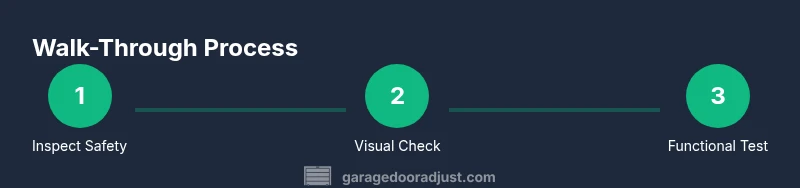
A visual inspection is the first, critical step in any walk through garage door. Look for obvious defects and misalignments before moving to functional tests. The checklist below guides you through the most telling signs of trouble:
- Tracks: Are vertical tracks straight and free of dents? Do they appear loose at mounting points?
- Doors and panels: Are there gaps between sections or warping in panels? Is the door uniformly aligned when closed?
- Hinges and rollers: Do hinges show wear or rust? Are rollers spinning freely without wobble?
- Cables and springs: Do cables show fraying or wear near anchor points? Do you notice any obvious spring damage or gaps in winding? (Important: do not attempt to adjust springs.)
- Weatherstripping: Is the bottom seal intact with no cracks or tears?
- Hardware: Are bolts and screws tight, especially on track brackets and hinge mounts?
- Opener hardware: Is the opener mounting clean and secure? Do you hear any unusual noises during operation?
Take clear photos of any abnormalities and label them for future reference when you decide on next steps. The goal is to capture the scope of the issue without disassembly, especially if you’re unsure about component safety.
Functional Tests: Closed-loop and Safe Operation
This section guides practical tests that help you assess how the system behaves under normal operation while maintaining safety. Use a calm, controlled approach, and avoid forcing movement beyond what you can safely handle. Steps include:
- Test manual operation: With the door closed and the opener unplugged, try lifting the door halfway. A well-balanced door should stay in place or resume movement after a brief pause. If it drops or feels unusually heavy, it may be out of balance or have weak springs.
- Reconnect power and run a full cycle: Reconnect the opener and run a normal open-and-close cycle. Observe if the door stops, reverses, or stalls unexpectedly.
- Test reverse mechanism: Place an object (e.g., a rolled towel) in the door’s path and ensure the door reverses upon contact. If not, the safety reversal system needs adjustment by a professional.
- Check sensor alignment: Verify that photo-eye sensors are level and unobstructed. Misalignment or dirt can cause false readings and improper stopping points.
- Listen for unusual sounds: Squeaks, grinding, or banging often point to worn hinges, misaligned tracks, or dry rollers. Note the sound’s location and frequency for better diagnosis.
Document all observations in your walk through garage door notes, including time of day and weather conditions, as these factors can influence performance.
Troubleshooting Common Issues: Causes and Fixes
Not every problem requires a professional visit, but accurate identification is essential. Here are common symptoms and likely causes, along with safe next steps:
- Door won’t open or close: Check remote battery, wall switch, and safety sensors. If the door moves slowly or stalls, balance or track alignment could be the issue.
- Door drifts or is heavy: Indicates possible balance problems or weak springs; do not attempt to adjust springs yourself. Seek professional evaluation if balance feels off.
- Noisy operation: Lubricate rollers, hinges, and track joints; inspect for loose hardware and worn bearings.
- Openers reverse immediately: Sensor alignment or obstruction may trigger the safety mechanism; clear line-of-sight and clean the sensors.
- Door binding at one end: Misaligned tracks or binding hinges create drag; loosening screws and tightening brackets may help, but avoid forcing.
- Uneven gaps along door seam: Check for warped panels or frame distortions; replacement or professional adjustment may be needed.
Tip: When a symptom persists after basic remedies, record it with timestamps and photos, and consult a pro for a precise diagnosis. Proactive maintenance often prevents recurring issues and extends the life of the system.
When to DIY vs Call a Pro: Making the Right Choice
A walk through garage door can help you decide whether a DIY repair is appropriate or if professional service is required. Simple maintenance tasks, such as cleaning tracks and lubricating moving parts, are generally safe for homeowners with basic tools. However, more complex tasks—like spring adjustments, torsion balance recalibration, or cable repairs—pose significant safety risks and should be handled by licensed technicians. If you notice frayed cables, damaged springs, or unusual door movement that cannot be safely controlled, schedule a professional inspection. The GarageDoorAdjust team emphasizes conservative decision-making to prevent injuries and ensure reliable operation over time.
Document your findings first; this data helps the technician diagnose the issue quickly and implement the correct solution. If in doubt, err on the side of safety and call a pro sooner rather than later.
Maintenance After the Walk Through: Keeping It Safe
After completing the walk through garage door, establish a simple maintenance routine to keep the system performing well. Regular attention minimizes surprises and extends component life. Consider:
- Monthly visual inspections of tracks, rollers, and hinges; look for looseness or wear.
- Biannual lubrication of moving parts with a silicone-based lubricant, avoiding chain-oil or penetrating solvents.
- Seasonal weatherstripping checks and replacement as needed to maintain a proper seal.
- Annual professional inspection if you notice recurring issues or if the door shows signs of wear beyond DIY capability.
- Maintain a repair log to track issues, fixes, and parts replacement over time.
These practices align with industry best practices and help maintain safe operation throughout the door’s life cycle. A consistent routine also makes it easier to identify when symptoms reappear, facilitating faster, more accurate troubleshooting in the future.
Documentation and Next Steps: Turning Findings into Action
A well-documented walk through garage door is a powerful tool when talking to technicians or planning future maintenance. Create a concise report that includes:
- Date, time, and weather conditions during the inspection
- A summary of observed issues and hardware condition
- Photos of misalignments, damaged components, or wear
- Tested functions and results of sensor checks
- Your recommended next steps (DIY fixes vs professional service)
Store this report with your garage door manual and maintenance logs. If you decide to hire a pro, share the report and photos to accelerate diagnosis. This disciplined approach reduces downtime and ensures you receive accurate, cost-effective repairs.
Final Note: Safeguarding Your Home
A cautious, methodical walk through garage door helps homeowners diagnose issues without compromising safety. By combining visual inspection, basic functional tests, and clear documentation, you can differentiate between simple maintenance and responsible professional service. Remember to prioritize safety, avoid risky adjustments, and lean on qualified technicians when needed. The end result is a garage door that operates smoothly, quietly, and predictably, providing reliable access and peace of mind.
Tools & Materials
- Flashlight or headlamp(Bright, focused beam; inspect corners and tracks)
- Screwdrivers (Phillips & flat-head)(For minor hardware adjustments)
- Adjustable wrench(Tighten mounting bolts as needed)
- Ladder or step stool(Safe height to inspect tracks and hardware)
- Lubricant (silicone-based)(Apply to rollers, hinges, and tracks)
- Rags and degreaser(Clean grime from moving parts)
- Measuring tape and level(Check track alignment and door plumb)
- Camera or smartphone(Document wear and misalignments)
- Voltage detector(Safety check for exposed wiring)
- Protective gloves and eye protection(Personal safety during inspection)
Steps
Estimated time: 30-45 minutes
- 1
Power down the opener and prepare safety
Turn off the garage door opener at the wall switch and unplug if possible. This prevents movement while you inspect. Ensure the workspace is clear and you have a planned path away from the door.
Tip: Always verify the door is fully stopped before touching any hardware - 2
Inspect tracks and rollers visually
Examine vertical and horizontal tracks for bends, dents, or loose mounting screws. Check rollers for excessive play and wear. Note any misalignment that could bind movement.
Tip: Take photos of any damage to show a pro later - 3
Check door balance manually
With the door closed and the opener still off, lift the door halfway and release. It should stay put or move slowly; if it drops quickly, balance or springs may be compromised.
Tip: If it’s heavy or sticks, stop and seek pro guidance - 4
Reconnect power and run a full cycle
Plug the opener back in and perform a smooth open-and-close cycle. Observe travel, stopping points, and any hesitations or jerky movement.
Tip: Avoid requiring the door to reach topmost stops; note any gap changes - 5
Test safety reversal and sensors
Place an object in the door path to check auto-reverse. Clean and align photo-eye sensors for proper safety operation; obstruction or misalignment triggers a reversal or stop.
Tip: Keep the sensor area clear of dust and obstructions - 6
Inspect springs and cables from a distance
Look for frayed cables or obvious spring damage from a safe distance. Do not touch or adjust springs.
Tip: If you see any nicks or deformations, call a pro immediately - 7
Check door alignment in the frame
Look for gaps when the door is closed; confirm the door sits evenly in the frame and is level across the sections.
Tip: Use a level along the top edge of the door for accuracy - 8
Test weatherstripping and seals
Inspect the bottom seal for cracks or wear; replace if necessary to maintain energy efficiency and keep out drafts.
Tip: Ensure the seal compresses slightly when closed - 9
Review hardware integrity
Tighten loose mounting screws on hinges, brackets, and tracks. Look for rust or wear that could indicate impending failure.
Tip: Keep a small maintenance log of tightened components - 10
Document findings and decide on next steps
Summarize observations, capture clear photos, and determine whether you can DIY minor maintenance or need a pro for major repairs.
Tip: Share the report with a technician if professional help is needed
Got Questions?
Is it safe to inspect my garage door on my own?
Yes, with proper precautions. Disconnect power, keep hands clear of pinch points, and avoid adjusting springs. If you encounter high-tension components or uncertain conditions, call a pro.
Yes, you can inspect safely, but avoid touching springs and avoid risky adjustments. If unsure, contact a professional.
What tools do I need for a walk through garage door?
Basic hand tools, a flashlight, ladder, level, lubricant, rags, and a camera for documentation are typically sufficient for a homeowner walkthrough.
You’ll want a flashlight, ladder, level, lubrication, and a camera to document issues.
When should I call a pro after a walk through?
If you find frayed cables, damaged springs, persistent misalignment, or if the door is unbalanced after basic maintenance, contact a licensed technician.
Call a pro if you see damaged springs, frayed cables, or persistent misalignment after basic checks.
How often should I perform a walk through garage door?
Perform a quick check monthly and a more thorough inspection every 6–12 months, or after severe weather or an incident listing components.
Do a quick check each month and a deeper inspection every 6 to 12 months.
What are common sensor problems and fixes?
Sensors can be misaligned or dirty. Clean the lenses, realign them so they face each other directly, and ensure nothing blocks the path.
Common sensor problems are misalignment or dirt; clean and realign the sensors.
Can I fix a squeaky door myself?
Yes, usually by lubricating moving parts like rollers and hinges. If squeaks persist after lubrication, inspect for worn parts or loose hardware that may require a pro.
Lubricate moving parts first; if squeaks persist, check for worn parts or loose hardware and call a pro if needed.
Watch Video
Quick Summary
- Conduct a structured walk through garage door before repairs
- Prioritize safety and avoid high-risk adjustments
- Document findings with photos and notes for accuracy
- Differentiate DIY tasks from professional needs
- Maintain a routine to extend door life and reliability