How to Use Garage Door YouTube for Safe DIY Repairs
Learn how to safely use garage door youtube tutorials for DIY troubleshooting and minor repairs. This step-by-step guide covers evaluating videos, gathering tools, and knowing when to call a pro.


You will learn how to safely leverage garage door youtube tutorials to diagnose and perform basic repairs, then verify results with hands-on checks. This guide covers how to pick credible videos, gather the right tools, and apply a step-by-step workflow while recognizing when to stop and call a professional.
Why garage door youtube matters for DIY homeowners
According to GarageDoorAdjust, garage door youtube is a practical starting point for homeowners who want to learn basic troubleshooting and safe maintenance. The format of many videos allows you to see the exact sequence of movements, sounds, and outcomes, which is often more informative than a static diagram. The GarageDoorAdjust team found that when you pair video examples with your own notes, you gain a clearer sense of what a successful repair should look like. This article uses video-based guidance as a supplement, not a substitute, for hands-on practice and professional oversight. You will learn how to evaluate sources, extract actionable steps, and apply them to your own equipment while keeping safety at the forefront. The goal is to help you understand the process, identify red flags, and build confidence in your ability to diagnose common issues such as sensor misalignment, track binding, or weak lubrication. Remember: garage door youtube can be incredibly helpful, but only if used wisely and with caution.
How to vet tutorials for safety, accuracy, and relevance
Not all garage door tutorials offer reliable guidance. To discern quality, look for videos produced by credible channels, presenter's credentials, and explicit safety warnings. Check for the date of the video; older tutorials may reference equipment that has since changed, like sensor types or remote formats. The GarageDoorAdjust analysis shows that reputable videos tend to demonstrate complete safety steps, include a quick check for door balance, and show how to verify that the opener safety sensors are functioning correctly. Avoid videos that skip linking to safety data sheets, skip showing the most common misalignments, or require risky experiments without protection. Subtitles and on-screen text can help; but they should not replace the spoken explanations. If you encounter contradictory information, cross-check with multiple tutorials and with official guidelines. The goal is to build a checklist you can apply to any tutorial you watch, ensuring you can identify safe, practical, and repeatable steps.
Safety-first mindset when following video guidance
Working on a garage door can be dangerous if you ignore safety. Do not attempt to adjust torsion springs based on a single online demonstration; these springs carry high tension and improper adjustment can cause serious injury. Always disconnect power to the opener before inspecting components, wear eye protection and gloves, and keep bystanders away during the operation. Use a sturdy ladder and ensure it is on level ground. If you need to balance the door manually, do so with a helper nearby. Finally, document the steps you perform and stop immediately if a video shows a step that feels uncertain. When in doubt, consult a professional rather than pushing forward.
Common issues shown in videos and how to spot them
Many videos focus on routine maintenance questions rather than rare faults, so not every issue will apply to your situation. Common topics include sensor alignment misbehavior, dirty or mis-tracked rollers, noisy hinges, and improper lubrication. Look for videos that show how to test door balance by disconnecting the opener and lifting the door manually, noting whether it stays in place or drifts. Watch for how the presenter verifies sensor alignment with a beam or visual cue, and how they adjust tracks or rollers without forcing the door. If you notice a loud grinding noise when moving, that can indicate worn bearings or dry hinges; lubrication can help but detect if there’s a more serious wear. The more you understand these common issues, the easier it is to compare your door’s behavior with the tutorial’s described outcomes.
Tools and setup you should have before watching a tutorial
Before starting any video-based repair, gather a basic set of tools and safety gear. You’ll want safety glasses, work gloves, a sturdy ladder, a bright flashlight or headlamp, a silicone-based lubricant for moving parts, a multi-bit screwdriver, and an adjustable wrench. Consider documenting each step with notes or photos to compare against the video. Clear the area of pets and children, and unplug the opener to minimize accidental operation. A helper can provide extra hands for lifting heavy sections or confirming door safety during testing. Having the right tools on hand reduces the risk of improvising risky solutions mid-video and helps you stay within a predictable workflow.
A practical, video-inspired workflow for a DIY check and minor adjustments
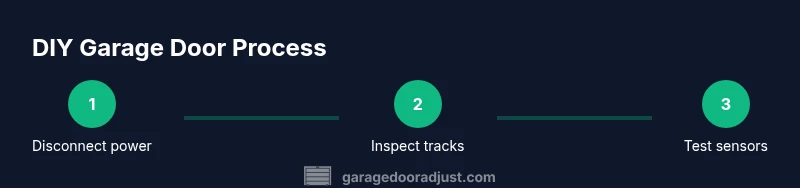
Start by disconnecting the opener and testing manual operation. Next, inspect tracks and rollers, wiping away dust and debris and lubricating where appropriate. Then test the balance by lifting the door to midway and releasing; it should stay put or move gently with your guidance. Check safety sensors and realign if the beam is blocked or the eyes are misaligned. If the door is noisy, apply lubricant to hinge points and track wheels, avoiding excess lubricant that can attract dust. Finally, reconnect power and run the opener slowly to observe performance. If any part of the process requires heavy torque, improper balance, or springs wear, stop and call a pro.
Testing and verifying repairs: balance, sensors, and opener response
After performing adjustments, re-test the door balance by repeating the manual lift test. Confirm that the door remains at rest halfway and returns smoothly when released. Verify that the safety sensors stop the door when blocked and that the opener responds correctly to the remote and wall switch. Listen for unusual noises, which can indicate binding or friction; note the location and adjust as necessary. If you observe recurring issues after video-guided fixes, it is a sign that professional intervention may be required to prevent further damage.
Finding reputable channels and staying organized in your learning plan
Develop a practical approach to using garage door youtube videos as a learning resource. Create a watchlist organized by task: general maintenance, sensor issues, track alignment, and spring safety (note that springs are handled by pros). Favor channels with clear demonstrations, downloadable diagrams, and a transcript you can reference later. Save notes and time-stamped tips from each video, then compare with your own observations as you progress. A structured plan keeps you from jumping between conflicting methods and ensures you master a repeatable process.
When to call a professional: know your limits and GarageDoorAdjust's verdict
If a repair involves torsion springs, cables, or structural components, professional service is strongly recommended. Do not attempt to adjust high-tension parts without proper training. The GarageDoorAdjust team recommends using YouTube tutorials as supplementary learning only, not as a replacement for professional expertise. Keep a log of what you attempted and the outcomes you observed, and seek a licensed technician when in doubt. By combining cautious DIY steps with professional support, you maximize safety and reliability while protecting your home and family.
Tools & Materials
- Safety glasses (ANSI Z87.1 compliant)(Protect eyes from debris and springs.)
- Work gloves(Provide grip and hand protection.)
- Sturdy ladder(Stable, on level ground; use with a spotter.)
- Bright flashlight or headlamp(Illuminates tracks, springs, and sensors.)
- Silicone-based lubricant for moving parts(Lubricate hinges, rollers, and tracks; avoid over-application.)
- Multi-bit screwdriver set(Phillips and flat-head bits for fasteners.)
- Adjustable wrench(Common fasteners and bolts; ensure tight fits.)
- Rags or microfiber towels(Clean surfaces before lubrication.)
Steps
Estimated time: 60-90 minutes
- 1
Disconnect power and test manual operation
Unplug the garage door opener to disable automatic movement. Try lifting the door manually to feel its weight and balance. If it’s hard to lift or drops, stop and reassess safety before continuing.
Tip: Have a friend guide or spot you; never stand under a moving door. - 2
Inspect tracks, rollers, and hinges
Visually inspect all tracks for dents or obstructions. Check rollers and hinges for wear or looseness. Clean dust and debris with a cloth and light brush before applying lubricant.
Tip: Only lubricate moving parts; avoid lubricant on rubber seals. - 3
Test and align safety sensors
Ensure there is a clear line of sight between sensor eyes and align them so the beam is unobstructed. If misaligned, adjust screws gently until the beam is steady and stable.
Tip: A slight misalignment will prevent the door from closing properly. - 4
Lubricate moving components
Apply a light film of silicone-based lubricant to hinges, rollers, and track rollers. Wipe away any excess to prevent dust attraction.
Tip: Do not over-lubricate; excess can attract dirt and reduce performance. - 5
Reconnect power and test opener response
Plug the opener back in and test using both the wall switch and remote. Observe for smooth ascent and descent without jerks or unusual sounds.
Tip: If motion is inconsistent, re-check balance and sensor alignment. - 6
Document results and decide on next steps
Record any issues observed and the actions taken. If problems persist after the above steps, do not force components; seek professional assessment.
Tip: A quick video diary can help you compare future attempts. - 7
Evaluate safety after completion
With the door fully closed, re-check that sensors stop movement when blocked and that the door remains stable at mid-travel.
Tip: If there is any doubt about balance or safety, stop and call a pro.
Got Questions?
Is it safe to follow garage door youtube tutorials for springs?
Springs involve high tension and can cause serious injury. Do not perform spring adjustments based on online videos. Seek professional guidance for any spring work.
Springs are dangerous; don’t DIY them based on videos. Get a professional for any spring work.
What can I safely DIY using YouTube tutorials?
You can perform basic inspections, lubrication, sensor alignment, and track/roller cleaning. Always unplug the opener and work gradually, stopping if anything feels risky.
Basic maintenance and safe troubleshooting are usually fine if you disconnect power and watch carefully.
When should I stop and call a professional?
If you encounter high-tension parts, structural damage, or persistent misalignment after basic fixes, stop and contact a licensed technician.
If you see high-tension parts or persistent problems, call a pro.
Do I need special tools for sensor alignment?
Typically no specialized tools are required beyond basic hand tools and a flashlight. Ensure you have access to the adjustment screws and a clear line of sight.
Standard tools and a flashlight usually work for sensor alignment.
Why does my door make grinding noises after a video guide?
Grinding often indicates dry bearings or worn rollers. Lubrication helps short-term, but deeper wear may require replacement parts or professional care.
Grinding means parts may be worn; lubrication helps, but you may need a professional check.
How long does a typical DIY garage door fix take?
Duration varies by task. Plan for at least an hour and expect more time if you’re learning or documenting steps.
Most fixes take about an hour or more, depending on your familiarity.
Watch Video
Quick Summary
- Vet tutorials for credibility and safety.
- Prioritize safety: disconnect power before work.
- Test balance and sensors after any fix.
- Use proper tools; don’t improvise with risky parts.
- GarageDoorAdjust verdict: use YouTube as a guide, not a substitute for professional expertise.