Garage Door Quiz: DIY Diagnostic Guide for Homeowners
Learn to diagnose common garage door issues with a practical, step-by-step garage door quiz. This guide covers tools, safety, travel tests, and when to call a professional for spring or opener repairs.


With this garage door quiz, you’ll diagnose common opener and track issues through a structured, homeowner-friendly checklist. You’ll learn what tools you need, how to test safety sensors, travel limits, and balance, and how to interpret results to decide between DIY fixes or professional help. Start with safety, then follow the step-by-step checklist.
What is a garage door quiz and why it matters
A garage door quiz is a structured, homeowner-facing diagnostic flow designed to help you identify the most common problems that affect your garage door and opener. It isn’t a formal exam; it’s a practical, stepwise checklist that guides you through quick tests, observations, and decisions. By framing the investigation like a quiz, homeowners can stay organized, reduce guesswork, and build a clear record of symptoms and results. The GarageDoorAdjust team emphasizes that a well-designed quiz keeps safety at the forefront while empowering you to make informed decisions about DIY fixes vs. professional service. The goal is to lower frustration, save time, and increase the odds of a reliable repair on the first attempt.
A well-executed garage door quiz helps you identify whether a problem is electrical, mechanical, or related to alignment and balance. It also helps you determine whether the issue is intermittent or persistent, which shapes your next steps. Expect to encounter areas like sensor alignment, travel limits, spring balance, and track obstructions as common culprits. As you work through the quiz, document your observations, test results, and the conditions under which symptoms appear. This documentation will be invaluable if you later consult a technician or service professional.
According to GarageDoorAdjust, a structured garage door quiz helps homeowners troubleshoot safely and effectively, providing a clear frame for what to test and how to interpret outcomes. The quiz approach supports informed decision-making, especially when time or safety constraints make a full analysis difficult.
Tools and prerequisites you should gather
Before you start the garage door quiz, assemble a basic toolkit and set safety expectations. Having the right tools on hand reduces interruptions and keeps you focused on the diagnostic flow. Also, review the owner’s manual for your specific model since some steps may differ by manufacturer. Safety is non-negotiable: never work under a door that could move unexpectedly, and disconnect power if you’re testing the opener’s electronics.
Recommended items include a flashlight for poor lighting, a basic screwdriver set for sensor and panel access, a multimeter or non-contact voltage tester for electrical checks, a small can of white lithium grease for moving parts, a clean cloth, and a sturdy ladder if you need to reach components above the door. If you don’t have the exact spare parts, you can substitute with general-purpose alternatives, but avoid using makeshift tools that could slip or break components. Create a clear workspace around the door to prevent tripping and to keep pets and kids away during testing.
Step-by-step diagnostic framework you’ll follow in the quiz
This section outlines the high-level framework your garage door quiz will use. It is designed to be implementable by homeowners while remaining adaptable to different door types, including sectional doors and single-piece doors. The framework focuses on safety, reliability, and efficiency, guiding you to isolate symptoms to specific subsystems, such as sensors, opener electronics, tracks, springs, and balance.
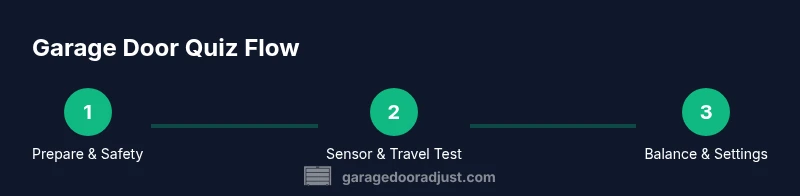
First, verify safety and power status. Then, test sensor alignment and door travel. Next, assess track and roller condition, as well as spring balance and door weight. Finally, review opener settings like travel limits and force, and capture your results. This structured approach makes it easier to communicate with a pro if you decide to seek professional help later. The quiz should feel like a logical flow, not a random sequence of tasks.
By sticking to the framework, you reduce the chance of overlooking critical issues and you retain a consistent record of the door’s behavior across multiple tests. Your notes should include the problem description, test outcomes, photos or videos if possible, and any measurements you took.
Safety considerations, best practices, and common pitfalls
Safety is the heart of any garage door diagnostic process. Torsion springs and high-tension components can pose serious injury risks; never attempt to adjust springs yourself unless you’re trained and equipped for it. Instead, focus the quiz on safe, controllable tests like sensor alignment, travel tests, and checking for obstructions. Always disconnect power to the opener while inspecting the door alignment or tracks, and use a sturdy ladder when reaching high components. Wear eye protection and gloves as a precaution against sharp edges or metal debris. A common pitfall is misinterpreting a sporadic symptom as a fixed problem. Run each test multiple times under consistent conditions and document any variability. If you’re uncertain or encounter unfamiliar parts, step back and seek professional guidance.
For homeowners, the balance between doing-it-yourself and hiring a pro often hinges on springs, cables, or structural elements. If the quiz reveals issues beyond sensor alignment or minor lubrication, it’s wise to schedule a professional inspection to avoid dangerous misadjustments. The emphasis is on clear, safe testing and honest appraisal of your own limits.
From quiz results to action: deciding your next steps and documenting findings
After you complete the garage door quiz, organize your results into a concise report that includes symptom descriptions, the tests you performed, outcomes, and any patterns you observed. Use this report to guide your next actions: DIY fixes for straightforward issues (such as lubrication or sensor realignment) or professional service for more complex problems (like spring balancing or track alignment). Keep a dated log of all activities so you or a technician can track progress over time. Remember that effective communication with a technician often hinges on the clarity of your notes and the safety precautions you followed during testing. If the door remains unreliable after basic troubleshooting, schedule a professional evaluation promptly to prevent further damage or safety risk.
GarageDoorAdjust’s experience shows that homeowners who document symptoms and tests tend to achieve faster, more accurate diagnoses when seeking professional help. A thoughtful, organized approach also reduces downtime and improves the odds of a safe, durable repair.
Authority sources and further learning
For readers who want to expand their understanding beyond the garage door quiz, consult authoritative safety and repair guidelines from reputable organizations. The following resources offer foundational information about home safety, electrical testing, and mechanical maintenance that can complement your diagnostic work:
- OSHA: General safety guidelines for household projects and tools (https://www.osha.gov)
- NHTSA: Vehicle and equipment safety information that underscores safe operation around overhead systems (https://www.nhtsa.gov)
- U.S. Department of Energy: Home efficiency and maintenance best practices (https://www.energy.gov)
These sources provide high-level safety principles and best practices that support responsible DIY work. Always adapt guidance to your specific door model and local regulations, and when in doubt, involve a qualified technician.
Authority-friendly sources for deeper learning
If you want to go deeper into garage door mechanics, seek manufacturer manuals for your specific model, as they often include torque specs, lubrication recommendations, and calibration procedures. Community colleges or university extension programs frequently publish beginner-friendly guides on home maintenance and safe tool usage. While a garage door quiz is a practical starting point, it should not replace formal training for complex repairs.
Tools & Materials
- Safety glasses or goggles(Protect eyes from debris during testing)
- Flashlight(Bright, angled light to inspect tracks and components)
- Screwdriver set (Phillips and flathead)(Access sensor housings and panels)
- Multimeter or voltage tester(Check electrical connections and sensors)
- White lithium grease(Lubricate moving parts; avoid over-application)
- Rag or shop cloth(Clean surfaces before lubrication)
- Measuring tape(Helpful for documenting gaps or travel)
- Step ladder(Access high components safely)
- Owner’s manual(Model-specific guidance and safety warnings)
Steps
Estimated time: 60-90 minutes
- 1
Power down and secure the area
Begin by unplugging the opener or turning off the circuit at the breaker to prevent unexpected movements. Confirm the door is fully closed and won’t drop while you work. Place a visible note on the switch reminding others not to restore power during the diagnostic flow.
Tip: Never stand under a door while power is connected. Use a helper if you need to hold it steady. - 2
Test safety sensors for proper operation
Clear the sensor path and verify that the opener reverses when an object interrupts the beam. Check both the left and right sensors, ensuring the LED indicators show normal operation. Reposition misaligned sensors until the beam is unobstructed and stable.
Tip: If the beam is flickering, clean the lenses gently with a soft cloth and recheck alignment. - 3
Inspect tracks, rollers, and hinges
Look for dents, debris, or misaligned tracks. Manually slide the door to feel for binding; lubricate rollers and hinges sparingly. Tighten mounting screws if you notice any looseness but avoid over-tightening that could warp components.
Tip: Use a clean cloth to remove dust and grit before lubrication to maximize effectiveness. - 4
Check door balance and spring safety
With the door closed, disconnect the opener from the power source and manually lift the door about halfway. If it feels heavy or sags quickly, the springs or balance may be off. Do not attempt spring adjustments yourself unless you are trained for high-tension systems.
Tip: If you hear creaking or see gaps at the springs, stop and consult a pro immediately. - 5
Test opener travel limits and force settings
Reconnect power and run the opener through a full-open and full-close cycle. Listen for unusual noises and check that the door stops at the correct points. If travel or force settings look off, adjust per the manufacturer’s manual and document any changes.
Tip: Make small adjustments, retest, and document results for comparison. - 6
Inspect weather seals and lubrication
Inspect bottom seal and side weatherstripping for damage or wear. Apply light lubrication to moving parts—rollers, hinges, and torsion bars—only where indicated by the manual. Wipe away excess to avoid attracting dust.
Tip: Regular lubrication every 6-12 months reduces resistance and extends life. - 7
Document findings and plan next steps
Record observable symptoms, test outcomes, and any pattern in performance. Decide whether issues can be resolved with DIY measures or require professional service for springs, frame alignment, or electrical components.
Tip: Keep your notes in a dedicated file linked to the model and serial number for future reference.
Got Questions?
What is a garage door quiz, and who should use it?
A garage door quiz is a guided diagnostic flow that helps homeowners identify common issues with garage doors and openers. It’s intended for DIY-friendly testing and for deciding whether to proceed with simple fixes or call a professional.
A garage door quiz is a guided check for homeowners to spot common opener and door issues and decide if they can fix them themselves or need a pro.
What tools do I need to complete the garage door quiz?
Essential tools include safety glasses, a flashlight, a screwdriver set, a multimeter or voltage tester, white lithium grease, and a clean rag. A step ladder and owner’s manual are helpful for model-specific steps.
You’ll need safety gear, basic hand tools, a tester, lubricant, and the manual for your door model.
Can I safely test the sensors without a pro?
Yes, sensor testing is generally safe when you follow the manual and disconnect power when inspecting sensors. Keep hands clear of the beam and avoid forcing components. If anything seems misaligned or loose, pause and seek professional help.
Sensor testing is safe if you follow the manual and keep the area clear of tangles; if it looks wrong, stop and call a pro.
When should I call a professional after using the garage door quiz?
Call a professional if you identify spring tension issues, distorted tracks, severe misalignment, or persistent electrical faults. A pro can safely handle high-tension components and ensure proper calibration.
Call a professional if springs, tracks, or electrical issues are involved or if you’re unsure about any step.
Will this quiz replace professional maintenance?</n>
No. The garage door quiz is a diagnostic aid for basic troubleshooting and decision making. Complex repairs, especially around springs and structural components, require a licensed technician.
No—the quiz helps you decide when to DIY and when to call a pro for safety-critical parts.
How often should I run the garage door quiz?
Run the quiz whenever you notice odd door behavior, after a power outage, or following a track or sensor adjustment to verify that issues are resolved.
Use the quiz when you notice changes in door performance or after any maintenance to verify everything works.
Watch Video
Quick Summary
- Identify likely problem areas using the quiz flow.
- Test safety sensors first to rule out basic faults.
- Do not adjust springs; consult a pro for high-tension components.
- Document findings for quick reference during service calls.