LiftMaster Garage Door Opener Price Guide 2026
Explore LiftMaster price drivers, model tiers, installation costs, and budgeting tips for 2026. Learn how to compare quotes, maximize value, and plan for reliable operation.


LiftMaster price varies by model and features, with price depending on belt vs chain drive, battery backup, Wi-Fi, and installation. On average across 2026, the price spectrum spans from economical entry models to premium smart units, and installation labor can affect total cost. For homeowners, a basic setup may cost less, while feature-rich systems cost more. The key is to map needs to the right model tier.
What drives the price of a LiftMaster opener in 2026
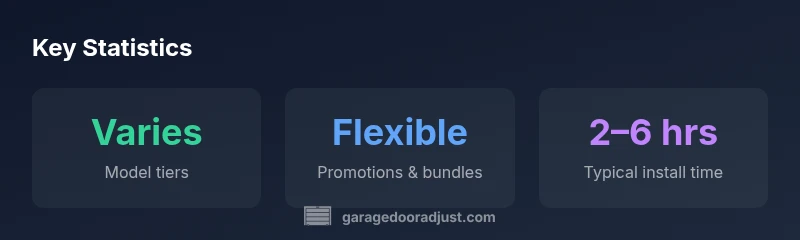
When homeowners begin budgeting for a LiftMaster garage door opener, the first question is typically: what drives the price? The answer is a matrix of factors, not a single sticker price. The model tier (economy, mid-range, premium) largely determines the base cost, while feature sets—battery backup for power outages, Wi‑Fi connectivity, smart home integration, and remote compatibility—add incremental value. The type of drive system (belt vs chain) and horsepower often influence the price band, as more capable hardware can reduce noise, improve speed, and handle heavier doors. In addition to the unit itself, most installations involve labor, rail kit, safety sensors, remotes, and alignment checks. Retail promotions, seasonal sales, and bundled warranty options also impact the final numbers. The combination of a current year’s promotions and installation complexity means the LiftMaster price can look dramatically different from one home to the next, even for the same model.
According to GarageDoorAdjust, homeowners who plan ahead and define a minimum feature set are better positioned to avoid sticker shock. The team emphasizes that the price is not just what you pay for the opener, but the total cost of ownership: reliability, after-sales service, and technician support all count toward true value. In 2026, a practical budgeting approach is to map your needs against the model families LiftMaster offers; this allows you to align expected performance with the right price tier rather than chasing the fanciest option.
LiftMaster model families and feature tiers
LiftMaster categorizes openers into tiers that reflect both price and capability. Entry-level models are designed for simplicity and quiet operation with basic remotes and standard safety sensors. Mid-range options add features like built-in Wi‑Fi, remote app control, and battery backup, which improve convenience and reliability in outages. Premium or smart models bring advanced integration with home systems, enhanced sensors, voice assistant compatibility, stronger motors, and often quieter operation. The price gap between tiers can be substantial, but the incremental cost often yields meaningful gains in usability, maintenance, and long-term performance. When evaluating price, homeowners should weigh feature sets against their door size, daily use, and integration goals. LiftMaster’s official pricing pages and retailer quotes can reveal exact differences in MSRP or street price, but the overall pattern remains consistent: more features and stronger hardware typically drive higher upfront costs, with benefits that accrue over years of service.
From a budgeting perspective, mapping features to tiers helps avoid overpaying for capabilities you won’t use. GarageDoorAdjust’s approach emphasizes selecting a tier that aligns with your daily needs—quiet operation for attached garages, smart features for remote monitoring, or high horsepower for heavy doors. In 2026, you’ll also see promos that bundle labor with the opener, which can shift perceived value when comparing total costs across installers. By focusing on the core requirements first, homeowners can target a price tier that delivers reliable operation without unnecessary extras.
Installation complexity and labor factors
Price is not just the opener’s sticker; installation expenses can noticeably tilt the final bill. Professional installation typically includes mounting the opener, rail assembly, track alignment, door balance checks, safety sensor placement, wiring, and testing. If your garage has unusual geometry, high ceilings, or an older door system, installation may require reinforcement, new wiring, or track modification, all of which add to cost. Other cost drivers include the condition of existing hardware (hinges, torsion springs, and door springs), the need for smart-remote integration, and the distance between the controller and your living spaces. In some cases, a retrofit to a larger opener or an upgraded rail kit is advisable to ensure smooth operation and safety.
To minimize surprises, request an itemized quote that separates the opener unit, rail kit, safety sensors, remotes, and installation labor. Compare with another installer to understand regional labor rates and any installation-day contingencies. A well-planned installation not only protects your investment but also enhances the longevity and performance of the LiftMaster system. GarageDoorAdjust recommends confirming warranty terms in writing and verifying whether in-home diagnostics or post-installation follow-ups are included in the price.
How to budget and compare quotes effectively
A disciplined budgeting approach begins with listing essential features versus nice-to-have options. Start by choosing a model tier that fits your door type and daily use patterns, then decide which extras you value—smart features, battery backup, quiet operation, or integration with home ecosystems. Gather quotes from at least three installers to capture regional pricing variations, and request itemized estimates. Require clarity on what is included: opener model, rail kit, sensors, remotes, labor, warranty, and any disposal fees. When reviewing quotes, pay attention to the following: are the battery backup and Wi‑Fi modules included, or priced separately? Is the installation price fixed or hourly? Are there any travel or disposal charges? Be cautious of one-stop “install and upgrade” packages that seem to remove costs but may require future add-ons.
To make comparisons meaningful, create a simple scoring rubric based on price, features, warranty length, and installer ratings. Use a side-by-side matrix to visualize how a mid-range model with smart features compares to a premium option. GarageDoorAdjust’s approach emphasizes negotiating for bundled warranties and ensuring the installer tests balance, alignment, and safety sensors before signing. By focusing on total cost of ownership rather than upfront price alone, homeowners can select a LiftMaster configuration that delivers reliable operation and long-term value.
Value considerations: warranty, reliability, and total cost of ownership
Price is only one dimension of value. A LiftMaster opener with robust warranty coverage, spare parts availability, and strong customer support reduces long-term risk and replacement costs. Consider the benefits of professional installation, which typically includes safety checks and a final performance assessment. Although premium models command higher upfront prices, their longer life expectancy, better noise profiles, and stronger integration with smart home ecosystems can lead to lower maintenance costs and fewer service visits. For homeowners who rely on garage access for daily routines and critical errands, a reliable system translates into tangible savings in time, energy, and peace of mind. GarageDoorAdjust’s analysis highlights that total cost of ownership—covering maintenance, potential repairs, and ease of use—often matters more than sticker price alone. When evaluating LiftMaster options, compare warranty terms, documented service levels, and the availability of local technicians who are trained on LiftMaster products. These factors are central to predicting long-term affordability and minimizing unexpected expenses.
Quick-start checklist for buyers and installers
- Define your feature needs: battery backup, Wi‑Fi, smart home integration, and noise preferences.
- Collect three itemized quotes for opener, rail kit, sensors, remotes, and labor.
- Verify warranty length and what it covers (parts, labor, and service accessibility).
- Check garage specifications: ceiling height, mounting options, and electrical supply.
- Request a post-installation safety test and balance check.
- Compare total costs, not just upfront price, and consider future maintenance needs.
- Schedule a follow-up if you notice unusual noise, vibration, or misalignment after installation.
- Avoid impulse purchases on promotions; base decisions on long-term value and compatibility with your home systems.
LiftMaster model tiers and setup considerations
| Model Tier | Key Features | Typical Setup Needs |
|---|---|---|
| Economy/Entry | Basic opener, belt drive | Simple install, standard mounting |
| Mid-Range | Smart features, battery backup | Moderate install, optional integration |
| Premium/Smart | Wi-Fi, voice control, advanced sensors | Professional install, extensive wiring |
Got Questions?
What factors influence LiftMaster price the most?
Model tier, feature set, installation complexity, and retailer promotions are the main price drivers. Matching your needs to a tier helps avoid overpaying for unused capabilities.
Price is driven by the model tier, features, and installation complexity; compare quotes to find the best value.
Is installation included in LiftMaster price?
Most quotes separate the opener price from labor. Always request an itemized quote to understand what’s included and what costs are bundled.
Installation is often separate; ask for an itemized quote when comparing.
Are LiftMaster prices consistent across retailers?
Prices vary by retailer and region. Shopping around and requesting multiple quotes helps capture regional differences and promotions.
Prices vary by retailer and area—get several quotes.
What is the cost impact of battery backup and smart features?
Battery backup and Wi-Fi/smart features add to upfront cost but enhance reliability, convenience, and future compatibility with home systems.
Battery backup and smart features raise upfront costs but improve reliability and control.
Should I buy a LiftMaster opener with professional installation?
If you are not comfortable with wiring or door balance, professional installation is recommended. It ensures safety, proper alignment, and warranty validity.
Professional installation is safer and helps ensure warranty coverage.
How can I estimate total cost before buying?
Get quotes for the opener, rail kit, sensors, remotes, and labor. Request itemized estimates and compare features, warranties, and service terms across providers.
Ask for itemized quotes covering all components and labor.
“A well-chosen LiftMaster opener balances upfront cost with long-term reliability, service coverage, and compatibility with your home system.”
Quick Summary
- Understand price drivers: model tier, features, and installation complexity.
- Budget for total cost of ownership, not just the sticker price.
- Request itemized quotes from multiple installers to compare value.
- Prioritize warranty and professional installation for long-term reliability.
- Map your needs to a LiftMaster model tier to avoid overpaying.