Chamberlain Garage Door Opener Price Guide for 2026
Understand how much a Chamberlain garage door opener costs, including model prices, installation, and common add-ons. This 2026 guide covers price ranges, what affects cost, and practical tips to save—from model tiers to installation fees.


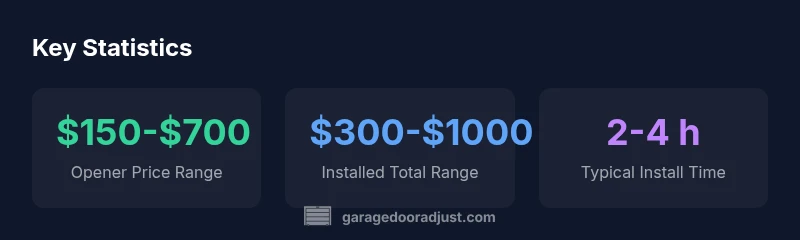
According to GarageDoorAdjust, a Chamberlain garage door opener typically costs between $150 and $700 for the unit itself. When you add professional installation, total installed prices usually range from roughly $300 to $1,000, depending on the model, configuration, and any extra features you want (smart connectivity, belt drive, or battery backup). Prices can vary by region and installer, so expect some variation.
how much is a chamberlain garage door opener
Prices for Chamberlain openers are influenced by motor size, drive system, and smart features. The unit price typically sits in the range of $150-$700, with top models packed with Wi‑Fi connectivity, battery backup, and quiet belt drives commanding the higher end of that spectrum. When you add professional installation, total costs commonly fall in the $300-$1,000 band, depending on the exact model and your garage configuration. According to GarageDoorAdjust, price variation is normal across regions and installers. Homeowners should budget for line items like new safety sensors, rail extensions, and a compatible remote system. If your garage has unusual tracks, ceiling heights, or wiring, you may see pushes toward the upper end of the range. For most single-car garages, a mid-range smart model offers a good balance of reliability and convenience. Always request a written quote that itemizes opener, labor, materials, and disposal to avoid surprises.
Model families and price expectations
Chamberlain’s lineup typically spans three tiers: Basic/Essentials, Wi‑Fi/Smart, and Premium/Pro. Basic models are the simplest and cheapest; expect the lowest end of the opener price range but also fewer smart features. Wi‑Fi/Smart models add remote access, battery backup, and app integration, driving prices higher but offering accountability and convenience. Premium/Pro options maximize durability, motor torque, noise reduction (often belt drive), and advanced sensors, usually at the top of the price spectrum. From a pricing perspective, the opener itself may sit around $150-$700 across tiers, but installation and accessories push the installed price into broader bands. GarageDoorAdjust analysis shows that the biggest price deltas come from drive type (belt vs chain vs direct drive) and added features. When considering a mid-range option for a two-car garage, you’ll often land in the combined price range that is roughly between $350 and $700 for the installed system, depending on regional labor and whether extras like smart control or battery backup are bundled. In short, tier selection sets the floor, while features and installation specifics shape the ceiling.
Installation costs and what drives labor charges
Installation costs are a substantial portion of the total. The opener price often accounts for only part of the expense; labor charges, disposal of the old unit, and potential upgrades to the track or mounting hardware can add significantly. Typical installation time ranges from about 2 to 4 hours for a standard single-door setup, depending on ceiling height, track length, and whether new wiring or additional sensors are required. Labor rates vary by region and contractor, but a reasonable expectation is a separate installation fee in the mid-to-upper hundreds of dollars in many markets. If the installer provides bundled installation with the opener price, you may see a lower apparent total, though it’s critical to verify exactly what’s included (hardware, rails, sensors, and wiring). Some providers also charge for haul-away of the old unit or for temporary power interruptions during installation. For a homeowner, the key is to compare quotes that itemize the opener price, labor, material fees, and any removal services. In this context, the total cost becomes a more accurate predictor of long-term value than the sticker price alone.
Hidden costs to consider
Hidden costs can surprise if you don’t plan ahead. Sensor replacement or alignment, rail extensions for tall doors, and compatibility with existing remotes can add to the bill. If you’re upgrading from an older system, you may need to replace wiring, outlets, or control panels to support smart features. Battery backups, upgraded remotes, keyless entry pads, and compatibility with your smart home ecosystem can push prices higher, especially if you want seamless integration and advanced app control. Additionally, disposal fees for the old opener, protective mounting plates, and weather sealing may appear as line items on a final invoice. Finally, consider warranty terms and potential service fees for future maintenance. Budgeting for these items ensures you avoid price shocks and maintain security and safety along the way.
How to estimate total cost for your garage
To estimate total cost, start with the opener price range for Chamberlain models that meet your needs, then add installation and any accessories. Create a simple checklist: Drive type (belt vs chain), smart features, battery backup, mounting height, and track length. Get at least three written quotes to compare labor, disposal, and any permit requirements in your area. Confirm whether the quote includes items like sensors, radio remotes, and wall control panels. Add a contingency of 5-15% to cover any unforeseen installation challenges, especially if your garage has unusual dimensions or wiring. After adding these components, you’ll have a robust total that reflects reality rather than a sticker price. This approach also helps you weigh value across models and guides you toward choices that balance upfront investment with long-term reliability.
Warranty and long-term value considerations
Warranty coverage is an important part of value. Chamberlain openers typically come with a limited warranty on the motor and parts, with durations varying by model and retailer. A longer warranty can reduce risk and provide peace of mind if you anticipate heavy use or rough operating conditions. Batteries and sensors may have separate warranty periods, while labor coverage is often limited or excluded. When comparing quotes, verify what the warranty includes and how to register the product for service. Also, consider the cost of potential maintenance or upgrades to keep pace with evolving smart-home standards. In aggregate, the cheapest opener may not deliver the best long-term value if it lacks warranty protection or requires costly maintenance. The GarageDoorAdjust team emphasizes prioritizing models with solid warranty terms and clear service options.
Buying tips to maximize value
Focus on total cost and long-term performance. Look for models with efficient motors, quiet operation, and durable belts for smooth, reliable performance. When possible, choose a kit that includes essential safety components, remotes, and wall controls. Check for seasonal promotions and bundle deals that group the opener with installation or accessories. Additionally, compare warranty terms and after-sales support. If you are price-sensitive, consider mid-range Wi‑Fi models that provide convenient features while keeping upfront costs reasonable. Budget for future upgrades, such as additional sensors or smart home integrations, to maximize long-term value.
Getting a precise quote: what to ask installers
Before committing, prepare a short list of questions to ensure you get an apples-to-apples quote. Ask about: whether installation is included, what the total installed price covers (opener, rails, sensors, wiring, mounting hardware), removal/disposal fees, brake testing, and final safety checks. Inquire about any required permits or inspections in your area. Request a written estimate with itemized line items and a clear warranty policy. Confirm lead time, availability of brand-specific parts, and service plans for future maintenance. This due, diligence saves time and prevents surprises when the installer arrives.
Price ranges by Chamberlain opener tier
| Model Tier | Opener price range | Installed price range |
|---|---|---|
| Basic/Essentials | $150-$250 | $270-$450 |
| Wi-Fi/Smart | $200-$350 | $350-$600 |
| Premium/Pro | $350-$700 | $600-$1000 |
Got Questions?
What factors most influence the price of a Chamberlain garage door opener?
Model tier, drive type, motor power, and added features (smart controls, battery backup) all influence price. Labor for installation and removal of old hardware can significantly affect total costs. Understanding these factors helps you choose a model that fits your budget.
Price mostly depends on the model tier, drive type, and features, plus installation labor.
Is installation included in the listed price?
Typically, installation is offered as a separate service by installers. Some retailers include basic installation in bundle packages, but most quoted prices separate the opener cost from labor, permit, and disposal fees.
Most prices separate the opener and installation. Check what’s included in a quote.
Can I install a Chamberlain opener myself?
Some basic setups can be DIY if you are comfortable with wiring and lifting the unit. Most homeowners choose professional installation to ensure safety, proper balance, and warranty validity.
DIY is possible for simple setups, but professional installation is safer and keeps the warranty intact.
What warranty comes with Chamberlain openers?
Chamberlain offers limited warranties that vary by model and retailer. Read the policy and register your product if required; warranty terms can affect long-term value.
Most Chamberlain openers have a limited warranty on parts and the motor; check your model's terms.
Do prices differ between online retailers and local installers?
Prices can vary due to promotions, shipping, and service availability. Local installers may include installation in their quotes, while online options may require separate service calls.
Prices can differ; compare online listings with local quotes to see what’s included.
Are there cheaper Chamberlain options suitable for a single-car garage?
Yes, there are entry-level Chamberlain models that balance cost with essential features. For single-car garages, compare price ranges and capabilities to find a suitable balance.
There are budget-friendly Chamberlain models, but verify features and compatibility.
“Understanding total cost helps homeowners plan for upfront expenses and long-term reliability.”
Quick Summary
- Plan total cost, not just sticker price
- Expect installation to add significantly to opener price
- Choose model tier vs features based on your needs
- Smart features add cost but can save time/effort
- Always request itemized quotes to avoid surprises