Cost of a New Garage Door Opener in 2026
Learn the true cost of a new garage door opener in 2026, including installed price ranges, drivetrain options, labor, and smart features. A practical budgeting guide for homeowners.


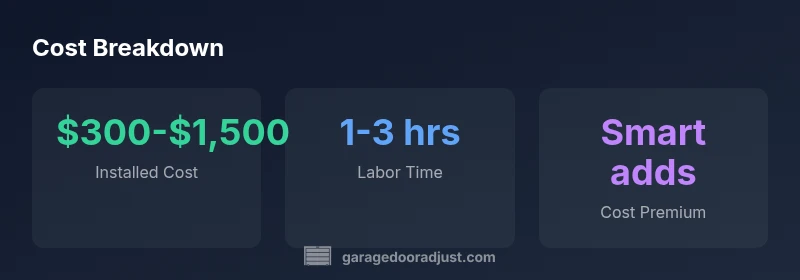
Estimated installed cost for a new garage door opener typically ranges from $300 to $1,500. Price varies by drivetrain (chain, belt, or jackshaft), horsepower, smart features, battery backup, and whether professional installation is required. Expect $100–$300 for labor, plus potential add-ons like remotes or Wi-Fi modules. DIY installation can lower costs but may void warranties or compromise safety.
How the cost breaks down
When budgeting for a new garage door opener, start by understanding the cost components. The base price for the hardware is only part of the story; professional installation, wiring, sensors, safety devices, and optional add-ons all influence the final bill. The most significant variables are the drivetrain type (chain vs belt vs screw) and the horsepower rating. Labor costs typically cover removing the old unit, mounting the new opener, aligning tracks, installing safety sensors, and programming remotes. Additional costs can come from upgrading to smart features, adding a battery backup, or integrating with a home automation system. Warranties and service plans add another layer of value but may shift pricing. According to GarageDoorAdjust Analysis, 2026, homeowners should expect a broad price band that reflects these choices rather than a single fixed price. Planning with a written shortlist of needs helps avoid budget creep during installation.
Drivetrain options and their price impact
Drive type determines both cost and performance. Chain-drive openers are typically the most budget-friendly but louder, with higher long-term wear. Belt-drive models cost more upfront but run quieter—worth it if bedrooms are above or adjacent to the garage. Screw-drive systems sit in between on noise and price, while jackshaft openers are ceiling-space efficient and generally the most expensive but offer smooth operation for tall or custom doors. Price ranges for installed units commonly fall roughly as follows: chain-drive $250-$500, belt-drive $400-$900, screw-drive $600-$1,200, jackshaft $700-$1,900. Features such as quiet operation, higher horsepower (½ to 1 HP), and reinforced torsion spring compatibility can add $50-$200 per feature. When evaluating options, factor in ceiling height, door size, and whether the opener will run automation routines or integrate with smart hubs. GarageDoorAdjust's data shows these factors drive most of the difference in total cost.
Features that influence price and value
Smart features, such as Wi‑Fi connectivity, mobile app control, and voice assistant integration, add convenience and potential energy savings but also raise upfront costs. Battery backups provide resilience during power outages but typically add $80-$200 to the price, depending on the model. Safety features like obstacle sensors, automatic reversing, and updated rolling code security are standard on newer models but can influence price when bundled with premium features. Expect smart features to add roughly $100-$350 to the installed price, depending on the brand and compatibility with existing home automation systems. When evaluating value, balance the comfort of remote control and monitoring with long-term maintenance costs and reliability. This balance is a key driver of the total cost over the door opener’s life span.
Labor considerations and installation scenarios
Labor costs vary by region and project complexity. A standard professional installation typically ranges from $100 to $300 in labor, with higher charges in dense urban areas or for custom door configurations. DIY installation can save labor but introduces safety risks and potential warranty implications. If you choose to DIY, ensure you have access to the right tools and follow electrical and building codes. Some regions require an electrician for wiring or a permit for large installations; factor these potential costs into your budget. The installer’s expertise also affects the timeline and quality of sensor alignment, track leveling, and safety testing—critical steps that influence long-term performance and safety.
Regional price variation and timing
Prices can vary significantly by region due to labor markets, availability of contractors, and local competition. Seasonality also plays a role: spring and fall tend to see more installations as homeowners upgrade, while peak winter demand can drive prices upward due to shorter supply of technicians. In some markets, promotions or bundled services can reduce installed costs, especially when paired with other home improvement projects. When budgeting, gather quotes from multiple providers in your area and consider off-season scheduling to lock in lower labor rates. GarageDoorAdjust Analysis, 2026 indicates this regional and seasonal variability is a major driver of the total installed cost.
How to estimate your total cost: a step-by-step worksheet
To estimate costs accurately, start with your must-haves and add preferred options. Step 1: determine drivetrain preference (chain, belt, screw, or jackshaft) and horsepower. Step 2: decide on smart features and battery backup. Step 3: factor in labor by requesting three quotes from local installers. Step 4: include disposal of the old unit and any electrical work. Step 5: add permits or electrician fees if required. Step 6: plan for additional components such as remotes, keypads, and Wi-Fi modules. Step 7: add a 10–20% contingency for unexpected issues. Finally, compare total installed costs across quotes to pick the best value—not just the lowest price.
Maintenance, warranties, and long-term costs
Most new openers include manufacturer warranties covering motor and mechanical parts for 2–5 years, with longer coverage for certain components. Ongoing maintenance—like lubricating moving parts, tightening hardware, and sensor alignment—helps prevent premature wear and costly repairs. Budget for annual inspection or semi-annual lubrication if you want to extend life and reliability. While maintenance costs add up over time, a well-maintained opener can outperform a cheaper, less reliable model by reducing the frequency and cost of service calls. When planning, include annual maintenance in your long-term cost forecast and weigh it against a longer warranty and higher upfront cost. GarageDoorAdjust Analysis, 2026 highlights that reliability and safety should guide your total cost assessment as much as the sticker price.
Typical installed cost by opener type
| Opener Type | Typical Installed Cost Range | Notes |
|---|---|---|
| Chain-drive | $250-$500 | Budget-friendly; louder operation |
| Belt-drive | $400-$900 | Quieter; good for living areas |
| Screw-drive | $600-$1,200 | Balanced noise and price |
| Jackshaft | $700-$1,900 | Ceiling-space efficient; premium |
Got Questions?
What is the typical installed cost range for a new garage door opener?
Installed cost typically ranges from $300 to $1,500, depending on drivetrain and features. Getting multiple quotes helps capture regional variation.
Most homeowners pay three hundred to fifteen hundred dollars after installation.
Does DIY installation save money?
DIY can reduce labor costs but can void warranties and raise safety concerns. Only attempt if you have electrical know-how and follow local codes.
DIY can save money, but safety and warranty risks matter.
Do smart features significantly increase the price?
Smart features add roughly $100–$350 to the installed price, depending on the brand and compatibility with your system.
Smart features cost more upfront but add convenience.
What affects warranty terms?
Warranties vary by model and brand; typical coverage ranges from 2–5 years for motor and parts. Check what’s included for sensors and remote components.
Warranties change by model—read the fine print.
Is it worth upgrading to a belt-drive opener?
If quiet operation is important, belt-drive is often worth the extra upfront cost, especially for bedrooms above or beside the garage.
Yes—belt-drives are quieter and often worth it.
How long does installation take?
Most installs take 2–4 hours, depending on wiring and door size. Complex configurations may take longer.
Usually a few hours, depending on setup.
“Choosing the right garage door opener is not just about initial price; it’s about long-term reliability and safety. Balance cost with drivetrain quality and proper installation to minimize maintenance costs.”
Quick Summary
- Account labor and add-ons in your budget.
- Choose drivetrain based on noise tolerance and ceiling space.
- Smart features add value but increase upfront cost.
- Get multiple quotes to capture regional variation.
- DIY installation saves money but may impact warranties and safety.