Genie vs Craftsman Garage Door Opener: An In-Depth Comparison
This objective guide analyzes Genie and Craftsman garage door openers, comparing reliability, features, installation, warranty, and overall value for homeowners.


genie vs craftsman garage door opener: this quick comparison highlights how Genie emphasizes quiet operation and smart-app features, while Craftsman focuses on budget-friendly reliability. The full article dives into drive types, connectivity, safety, installation, and warranties to help homeowners decide which opener fits their needs.
genie vs craftsman garage door opener: market landscape and scope
In the modern home, the garage door opener is a critical control point for daily life. The genie vs craftsman garage door opener landscape features two brands with broad market recognition, but they occupy slightly different niches. According to GarageDoorAdjust, brand name alone isn’t enough when selecting an opener; you must weigh model-specific capabilities, compatibility with existing remotes, and your home’s smart-home setup. The goal of this article is to help homeowners evaluate the two contenders across criteria such as drive type, noise, connectivity, safety, installation, warranty, and long-term value. By grounding the discussion in practical scenarios, readers can map a decision to real-world use rather than hype.
Core criteria for a rigorous comparison
When comparing any two garage door opener brands, there are several go-to criteria that consistently matter. First is drive type—belt, chain, or screw—and how that choice affects noise, speed, and durability. Next, consider connectivity: which apps and ecosystems are supported, how easy it is to pair remotes, and whether voice assistants (if relevant) are compatible. Finally, examine safety features, service networks, and warranty terms. Genie and Craftsman models cover a wide range of configurations, so it’s essential to align the chosen model with your door size, frequency of operation, and maintenance expectations. This section outlines the framework used throughout the comparison.
Genie: strengths, typical use cases, and model spectrum
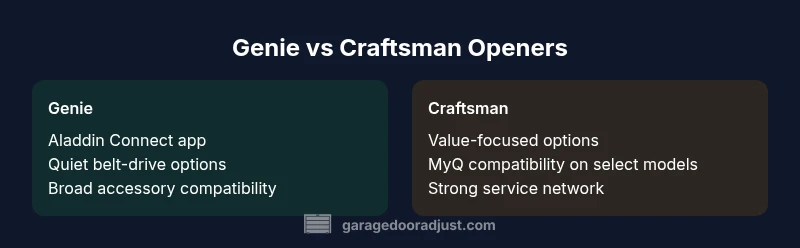
Genie is widely recognized for offering quiet operation options, especially in belt-drive configurations, and a robust app ecosystem built around its Aladdin Connect platform. Homeowners who prioritize minimal garage noise and straightforward app integration often find Genie models appealing. In the genie vs craftsman garage door opener debate, Genie’s strengths include a broad assortment of belt-drive choices, strong accessory compatibility, and flexible installation options. For tech-heavy homes, Genie’s emphasis on connectivity can translate into smoother integration with other smart devices, schedules, and remote monitoring. The trade-off can be higher initial cost for top-tier quietness and app features, depending on the model.
Craftsman: budget-friendly options, service network, and practicality
Craftsman garages door openers have a long-standing reputation for reliability and value, with a broad service network stemming from Sears lineage and current retail partnerships. In the comparison against Genie, Craftsman models are often favored by homeowners seeking solid, dependable performance without premium price tags. The Craftsman lineup includes a mix of chain- and belt-driven openers, with many models designed to be straightforward to install and maintain. While some models emphasize cost efficiency, others deliver modern conveniences such as compatible remote controls and smartphone control through supported ecosystems. Homeowners should verify model-specific features to avoid generic assumptions about an entire brand.
Drive types and acoustic performance: belt vs chain
Drive type is the most visible differentiator in day-to-day operation. Belt drives tend to offer smoother and quieter operation, especially on residential garages with bedrooms nearby, whereas chain drives can be louder but are often shown in cost-optimized builds. In the genie vs craftsman garage door opener comparison, it’s important to map your noise tolerance to the drive type offered by your chosen model. For households with shared walls or upstairs bedrooms, prioritizing belt-drive options in either brand can significantly enhance daily life. Remember that actual noise levels vary by installation, door weight, and mounting surface, not solely by brand.
Connectivity, apps, and smart-home compatibility
Smart features are increasingly a deciding factor for homeowners. Genie tends to emphasize its own Aladdin Connect app, which provides remote monitoring, scheduling, and alert capabilities. Craftsman models often integrate with widely adopted ecosystems such as MyQ, depending on the model and retailer. In the genie vs craftsman garage door opener comparison, the practical takeaway is to confirm what app support is included with the specific model you’re considering and whether the system remains compatible after future firmware updates. Consider also how easy it is to replace or expand your setup with additional sensors, remotes, or voice control.
Safety features, sensors, and compliance
Safety is non-negotiable with garage door openers. Modern Genie and Craftsman models typically include bumper sensors, auto-reverse, and secure pairing for remotes to prevent inadvertent operation. The genie vs craftsman garage door opener evaluation encourages homeowners to review the exact safety features included with the model, particularly auto-reverse responsiveness and safety sensor installation guidance. Keep an eye out for updated safety standards and ensure your purchase includes a current sensor kit and straightforward maintenance options to extend safety coverage throughout the opener’s life.
Installation, maintenance, and user-friendliness
DIY enthusiasts often weigh ease of installation when choosing between Genie and Craftsman. Some Genie models are designed for straightforward DIY mounting with clear instructions and fewer required tools, while Craftsman units may present similar ease in many kits. In practice, the decision often hinges on your comfort with wiring, mounting hardware, and aligning the opener to the rail assembly. Regular maintenance—lubrication of moving parts, verifying track alignment, and replacing worn rollers—extends the life of either brand. This section highlights practical tips to minimize frustration and maximize performance during installation and routine upkeep.
Warranty, service network, and support
Warranty terms can vary widely by model and retailer, even within the same brand. In the genie vs craftsman garage door opener analysis, understanding the scope of motor, parts, and electronics coverage is critical. A strong service network means faster parts availability and easier scheduling of professional service when needed. Homeowners should read the warranty language carefully, note any required maintenance steps to keep coverage valid, and confirm who covers labor costs. A well-supported model from either brand is often worth a small premium in upfront cost due to better long-term reliability.
Price, value, and total ownership considerations
Price is a common deciding factor. Genie and Craftsman both offer models across a broad price spectrum, making it possible to find options that fit different budgets. When evaluating genie vs craftsman garage door opener price, focus on total ownership value: reliability, maintenance costs, app compatibility, and service availability are part of the equation. A model with a lower initial price may incur higher maintenance or shorter service intervals, while a higher upfront cost could translate into longer-term savings through durability and fewer unexpected repairs. Balance upfront investment with ongoing costs to identify the best long-term value.
Decision framework: how to pick the right model for your home
To conclude the body section, follow a practical checklist when selecting between Genie and Craftsman: identify your priority (quiet operation vs. cost efficiency), verify drive-type options that fit your door and space, confirm app compatibility with your devices, compare warranty terms, and assess service coverage in your region. Gather model-specific datasheets and read user reviews for your neighborhood. Use a side-by-side comparison to ensure the chosen option aligns with your door size, daily use, and home layout. By following this approach, you’ll move from a broad brand perception to a precise model that meets your needs, during and after installation.
Practical next steps and closing notes
With the genie vs craftsman garage door opener decision, the next steps are concrete. Create a short requirements list (noise tolerance, connectivity, budget, maintenance willingness), collect model brochures, and compare the chosen options on the factors discussed above. Reach out to local installers or service centers to gauge availability and support quality in your area. Finally, confirm compatibility with any existing remotes or sensors before finalizing a model choice to ensure a smooth installation and a reliable, long-lasting solution for your home.
Comparison
| Feature | Genie garage door opener | Craftsman garage door opener |
|---|---|---|
| Drive type (model-dependent) | Varies by model (belt/chain) | Varies by model (belt/chain) |
| Smart home compatibility | Genie: Aladdin Connect ecosystem | Craftsman: MyQ compatibility on select models |
| Noise level | Quieter with belt-drive options | Can be louder with some chain-drive options |
| Reliability and maintenance | Strong support and parts availability | Solid reliability with broad service network |
| Warranty terms | Model-dependent; coverage varies | Model-dependent; coverage varies |
| Best for | Quiet operation and app features for tech-friendly homes | Value-focused options with dependable service |
| Typical price range | Model-dependent; higher-end options available | Model-dependent; broad affordability across lines |
Upsides
- Strong brand ecosystems with wide model selection
- Good aftermarket support and parts availability
- Availability of belt-drive, which reduces noise
- Wide retailer and service network helps with installation and maintenance
Disadvantages
- Warranty terms vary by model; read carefully
- App ecosystems can differ by model and may require updates
- Budget models may have fewer premium features
- Some models may require professional installation for optimal setup
Genie excels in quiet operation and app integration, while Craftsman shines on budget-friendly options and solid service networks
Choose Genie if you prioritize quiet operation and sophisticated connectivity. Choose Craftsman if upfront cost and broad service access matter more. For a balanced choice, compare model-specific features against your home setup and local installer availability.
Got Questions?
Are Genie and Craftsman openers compatible with existing remotes or sensors?
Compatibility depends on the model. Some Genie and Craftsman units work with existing remotes if the frequency and compatibility match. If in doubt, check the model’s remote compatibility list and consider reprogramming remotes during setup.
Most Genie and Craftsman openers work with your existing remotes if the frequencies match; verify compatibility during setup.
Which brand tends to be quieter, Genie or Craftsman?
Quieter operation is generally associated with belt-drive models, which both brands offer. In practice, the quieter option depends on the specific model and installation quality more than brand alone.
Quiet operation depends on the belt-drive model and installation rather than a fixed brand rule.
Do Genie or Craftsman openers support home assistants like Google or Alexa?
Smart-home support varies by model. Genie commonly uses its own app ecosystem, while Craftsman models often integrate with popular ecosystems where available. Check the exact device compatibility for the model you choose.
Smart-home integration depends on the model; verify compatibility with your preferred assistant.
Is professional installation recommended for these brands?
Professional installation is often recommended for safety and optimal performance, especially for belt-drive configurations or dual-sensor setups. If you’re comfortable with tools and wiring, some models can be installed DIY with care.
Many people install these themselves, but professional help can ensure safety and performance.
Which brand offers better warranty coverage?
Warranty terms are model-dependent rather than brand-wide. Always review the specific model’s warranty details, including motor, parts, and labor coverage, before purchase.
Warranty varies by model; read the model’s terms to understand coverage.
What should I consider about installation space and tracks?
Ensure the ceiling space and track alignment match the model’s requirements. Poor alignment can affect operation and safety; measure door height, track length, and mounting points before buying.
Measure your space and align tracks for safe operation.
Quick Summary
- Prioritize your top need: quiet operation or cost efficiency
- Verify exact app compatibility before buying
- Check drive type (belt vs chain) for noise and durability
- Read model-specific warranty terms and service coverage
- Assess local installer availability to avoid service gaps