Garage Door Opener Genie vs Chamberlain: A Practical Comparison
A rigorous side-by-side review of Genie and Chamberlain garage door openers, covering installation, reliability, features, apps, safety, and value to help homeowners decide which brand fits their needs.


Genie and Chamberlain are two leading garage door opener brands with widely used models. For most homeowners, the choice hinges on compatibility with existing remotes, app experiences, and reliability. In this comparison, we weigh installation ease, smart features, safety, and price to help you decide which garage door opener genie vs chamberlain fits your needs.
Brand Landscape and Core Differences
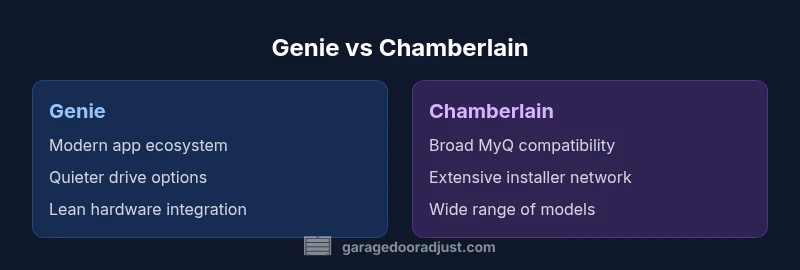
The garage door opener genie vs chamberlain comparison pits two brands that approach home automation from different angles. Genie has focused on compact drives, quieter operation, and a modern app experience aimed at quick setup. Chamberlain emphasizes broad ecosystem compatibility, an established service network, and deeper integration with the MyQ platform. For homeowners, the practical impact is how each brand translates into daily use, long-term service, and future upgrades. This section sets the stage by outlining each brand’s core philosophy, common drive configurations, and the kind of customer who tends to favor one over the other. In short, Genie usually appeals to those chasing a streamlined, smartphone-forward experience, while Chamberlain attracts buyers who want broad compatibility and a robust, interconnected smart-home setup.
Compatibility and Ecosystem Overview
When evaluating the garage door opener genie vs chamberlain, compatibility matters more than it might appear at first glance. Chamberlain’s MyQ ecosystem is widely adopted across smart-home platforms, offering cloud-based remote control, voice assistant integration, and a growing network of partners. Genie, by contrast, emphasizes a newer, sometimes more self-contained app experience and several third-party integration options depending on model. Consider which hubs you already own and which smart-home routines you want to run. This section outlines the practical implications of ecosystem choices for routine tasks, maintenance reminders, and remote monitoring.
Drive Options, Noise, and Durability
Drive type influences noise, vibration, and maintenance. Both Genie and Chamberlain offer belt-drive and chain-drive options, along with occasional screw-drive variants. Belt-drive models tend to run quieter, which is beneficial for bedrooms adjacent to the garage. Chain-drive units typically deliver the best initial torque and durability for older installations. Consider the door weight, rail length, and whether you prioritize smooth, quiet operation or maximum lifting power. In many installations, the difference between Genie and Chamberlain comes down to model-specific compatibility and the rail kit included, rather than brand-wide superiority.
Smart Features and App Experiences
A key differentiator in the garage door opener genie vs chamberlain comparison is the software experience. Genie models often ship with a modern, lightweight app that focuses on quick setup and routine control, with optional cloud-backed features. Chamberlain typically leans into the MyQ app, which is paired with extensive third-party integrations and longer support history. Both ecosystems allow notifications, remote operation, and status monitoring, but the depth of automation and the certainty of ongoing updates can vary by model and region. This section helps you map out which app strategy aligns with your daily habits and future planning.
Safety Features and Security Protocols
Both brands place safety at the forefront of design. Most models integrate photoelectric safety sensors to prevent door closure if an obstacle is detected, auto-reverse mechanisms, and rolling-code remotes to reduce unauthorized access. Genie's newer units may incorporate updated safety logic and easier calibration flows, while Chamberlain devices often emphasize robust remote management and traditional two-factor-style access controls in their apps. Review the model’s compliance with local safety standards and ensure proper sensor alignment to minimize nuisance trips or false positives.
Installation Considerations and Compatibility Snags
Installing a garage door opener can be straightforward or challenging, depending on door type, mounting configuration, and existing hardware. Genie and Chamberlain both provide a range of rail lengths and mounting brackets, but compatibility with a particular door may hinge on wall-mouthed versus ceiling-mounted units and the height of the garage. Before you buy, measure door height, track length, and ceiling height, and verify the rail kit includes all necessary brackets. If you have an older door or unusual spring arrangement, consider professional installation to avoid misalignment and safety concerns. The Genie distribution network and service channels can differ from Chamberlain’s, influencing installation speed and warranty coverage.
Power Backup, Reliability, and Outages
Power outages pose a unique challenge for garage doors. Most modern openers support battery backup, but the extent of backup runtime varies by model and battery quality. Genie and Chamberlain models offer different approaches to maintaining operation during outages. In practice, you should plan for manual operation if needed, confirm that backup power is certified by the unit, and understand how backup affects opening speed and reset procedures. For homeowners, a backup-capable unit can be a smart investment for attached garages or frequently used spaces.
Pricing, Value, and Long-Term Costs
Budget considerations are integral to choosing between garage door opener genie vs chamberlain. Genie models often present lower upfront costs for basic installations, with premium variants adding advanced features and quieter operation. Chamberlain equipment might come with broader ecosystem support, stronger third-party integration, and a preference for larger installation networks, which can influence labor costs. When evaluating value, factor in installation complexity, the availability of compatible accessories, and potential subscription fees for cloud services. Remember that the lowest sticker price doesn't always yield the best long-term value if feature support or service coverage is limited.
Comparison
| Feature | Genie | Chamberlain |
|---|---|---|
| Smart home compatibility | Modern app ecosystem with newer integrations | Broad MyQ compatibility across platforms |
| App experience | Fresh, lightweight Genie app | Established MyQ app with wide ecosystem |
| Drive options and noise | Belt/chain options; belts often quieter | Belt/chain options; noise varies by model |
| Installation ease | Flexible kits; strong DIY options | Wide installer network; strong support |
| Safety and security | Standard safety sensors and auto-reverse | Rolling-code remotes and MyQ security features |
| Price range | $150-$300 for basic to mid-range | $200-$350 for mid-range with MyQ |
| Warranty and support | Model-dependent terms; check warranty | Model-dependent terms; broad service network |
| Best for | Smart-home enthusiasts seeking modern UX | Users requiring broad ecosystem and remote control |
Upsides
- Broad installation and service networks for both brands
- Flexible drive options to balance noise and power
- Strong smart-home integration potential with model choices
- Varying price points to fit different budgets
- Wide availability of parts and accessories
Disadvantages
- Warranty terms vary by model and retailer
- Some advanced features rely on cloud services or subscriptions
- Smart features may require ongoing maintenance and updates
- Finding the exact model with desired features requires research
Genie excels in modern smart features and quiet operation; Chamberlain shines in ecosystem breadth and compatibility.
Choose Genie when you want a streamlined app experience and quieter performance. Choose Chamberlain if you need broad ecosystem support and extensive installer networks. Your final pick should align with existing devices and long-term maintenance preferences.
Got Questions?
Which opener is easier to install, Genie or Chamberlain?
Both brands offer install-friendly kits, but actual ease depends on door type and rails. Genie tends to appeal to DIYers with modular kits, while Chamberlain benefits from a broader installer network.
Genie is often DIY-friendly; Chamberlain usually benefits from professional installation for best results.
Do Genie and Chamberlain support the same smart-home assistants?
Chamberlain commonly uses MyQ compatibility across platforms; Genie supports newer, brand-specific apps and integrations depending on model.
Chamberlain uses MyQ; Genie offers newer integrations on select models.
Which brand is quieter overall?
Quiet operation depends on drive type (belt vs chain) not brand. Belt-drive options from both brands tend to be quieter than chain-drive models.
If you want quiet, choose a belt-drive model from either brand.
What should I budget for a Genie vs Chamberlain setup?
Expect basic models on the lower end and premium models with enhanced features on the higher end; prices vary by drive type and whether you add MyQ or other smart features.
Budget varies by model; compare features and installation costs for both brands.
Is professional installation recommended for these openers?
For most homeowners, especially with older doors or complicated tracks, professional installation ensures safety and proper calibration.
Yes, consider pro installation if your door has unusual hardware.
Quick Summary
- Identify your smart-home priorities before choosing
- Check compatibility with existing devices and hubs
- Consider installation networks and service availability
- Balance upfront cost with ecosystem value
- Review model-specific warranty and support terms