Torsion Spring Garage Door vs Extension Spring: A Practical Guide
A detailed comparison of torsion vs extension garage door springs, covering operation, safety, maintenance, costs, and installation to help homeowners decide the best system.


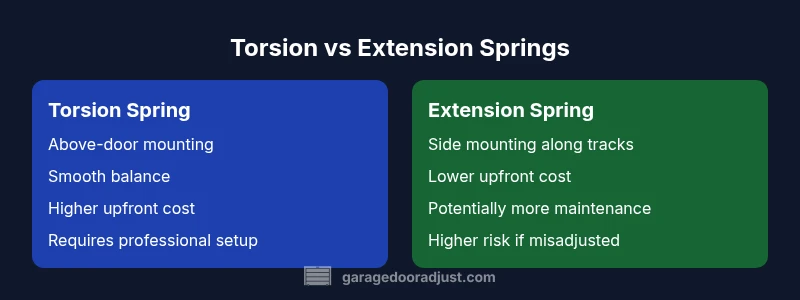
When comparing garage door spring systems, the key decision is torsion spring garage door vs extension spring. Torsion systems use a coil above the door for balanced, quiet operation and generally longer life, but cost more and require specialized installation. Extension springs run along the tracks, are cheaper upfront but require more frequent maintenance and careful safety handling.
Overview of spring systems for residential doors
Choosing between torsion spring garage door vs extension spring hinges on how the door uses stored energy to balance its weight. The decision affects smoothness of operation, long-term reliability, noise levels, and safety requirements. In most homes the choice hinges on door size, frequency of use, and whether you prioritize upfront cost or long-term value. The torsion spring system places a winding mechanism above the door on a torsion bar, while extension springs run on each side of the tracks. The distinction is not merely academic: it translates into different maintenance needs, tensioning procedures, and risk profiles. According to GarageDoorAdjust, the right spring type also interacts with track alignment, safety cables, and balance checks that keep doors reliable over time. This section introduces the core differences and prepares you for a deeper look at performance and practical implications in real-world settings.
What homeowners should know about spring types
Understanding the basic mechanism helps you interpret repair bills, replacement timelines, and warranty terms. Torsion springs store energy in a single wound coil that twists on a bar, delivering even torque as the door moves. Extension springs store energy linearly along the sides and rely on cables to counterbalance the door. Both systems can balance heavy doors, but the path to a properly balanced, safe system differs. From the perspective of a homeowner, the choice influences how often you should inspect the hardware, how complex the service will be, and what kind of professional support is required. The GarageDoorAdjust team emphasizes that choosing between torsion and extension is less about a simple spec sheet and more about door weight distribution, hardware compatibility, and safe handling practices. In short, the decision shapes your routine maintenance, operational noise, and risk exposure when performing repairs or replacements.
How torsion springs work in practice
Torsion spring setups position one or more springs on a horizontal bar above the door. The springs wind and unwind as the door raises and lowers, distributing weight uniformly and providing smooth, controlled motion. The system’s balance is critical: improper tension can cause the door to feel heavy on one side, produce jagged movements, or strain the tracks. For homeowners, this means that a correctly tuned torsion system often feels quieter and more consistent across cycles. Replacement and adjustment typically require a trained technician because high tension is involved, and mistakes can pose serious injury risk. Regular inspection of the winding cone, bars, and cables helps maintain performance without surprises during busy seasons.
How extension springs work in practice
Extension springs attach along the sides of the door and stretch to counterbalance door weight as it moves. Cables run from the springs to the door, so any wear on the cables or misalignment of tracks can impact balance. The simplicity of extension springs can translate to lower upfront costs, and some homeowners find DIY installation appealing when local codes permit it. However, these systems rely on precise spacing and equal spring tension on both sides; any mismatch can cause off-balance operation, uneven door movement, or increased stress on tracks and rollers. Safety considerations include ensuring proper safety cables are installed to contain a broken spring. The overall maintenance cadence is often higher than with torsion systems, especially in climates with temperature swings that affect spring tension.
Safety, maintenance, and daily use
Safety is a paramount concern for any garage door spring system. Both torsion and extension springs contain a lot of stored energy; misadjustment, improper winding, or worn hardware can produce dangerous launches if a component fails. Regular lubrication, track alignment checks, and balance tests are recommended practices. GarageDoorAdjust advises homeowners to schedule professional inspections at least once a year, focusing on spring health, anchor points, and the condition of cables and rollers. In homes with children or pets, extra caution is warranted, and safety practices such as keeping hands away from moving parts during operation should be reinforced. Weather conditions, temperature fluctuations, and door size all influence how springs age, so seasonal checks can help preempt failures between service visits.
Cost considerations and long-term value
Cost is a practical driver in the torsion vs extension decision. Torsion systems typically incur higher upfront costs due to hardware, installation complexity, and the need for precision tuning. Extension systems tend to be cheaper initially, but maintenance and part replacements can accumulate over time with more frequent tension checks and potential cable or track issues. From a long-term value perspective, many homeowners find torsion systems more economical if the door is used frequently, because the smoother operation and more consistent balance can reduce wear on other components. GarageDoorAdjust notes that the total cost of ownership depends on door size, local labor rates, climate, and how well the system is maintained.
Practical decision guide by door type and usage
Door weight, size, and usage frequency should guide your choice. Heavier, taller doors often benefit from torsion springs because the torque distribution remains consistent across cycles. Lightweight doors might perform adequately with extension springs, particularly if you want to minimize initial investment. Climate and temperature shifts can influence spring performance; homes in extreme weather areas may notice more frequent adjustments or replacements. The choice should also consider how comfortable you are with professional service, since torsion systems commonly require expertise for safe handling. Create a maintenance calendar that includes annual inspections, lubrication points, and the inspection of safety cables or secondary devices where applicable.
Installation considerations and troubleshooting common issues
Professional installation is highly recommended for both systems to ensure safe, balanced operation and code compliance. Common issues include misaligned tracks, uneven door travel, or inconsistent tension between sides. For torsion springs, incorrect winding can cause dangerous under- or over-tension conditions; for extension springs, unequal tension can cause the door to bind or drift. Troubleshooting often starts with a balance test: open the door partway and see if it stays put. If the door moves unexpectedly, a technician should re-tension or replace springs and verify cable and track health. Keeping fasteners tight and ensuring the door is balanced after any service are practical steps that prevent future problems.
Maintenance cadence and best practices for homeowners
A proactive maintenance routine benefits both torsion and extension systems. Schedule annual professional inspections that include checking spring wear indicators, track alignment, and hinge integrity. Lubricate moving parts with the recommended lubricant to minimize resistance; avoid over-lubrication which can attract dust and cause buildup. Observe for squeaks or changes in operation speed—these can signal changing spring tension or cable wear. Document service history so when you sell the home you can show a clear maintenance trail. While this article covers general guidance, always follow local building codes and manufacturer recommendations for your specific door model.
Comparison
| Feature | torsion spring garage door | extension spring garage door |
|---|---|---|
| Spring placement | Above the door on a torsion bar | Along the tracks on each side |
| Balance and motion | Typically very smooth and balanced when tuned | Can be precise but sensitive to wear and misalignment |
| Safety considerations | Higher energy with winding; requires careful handling by pros | Risk exists with high tension; safety cables recommended |
| Upfront cost | Higher initial cost due to hardware and installation | Lower initial cost but potentially more frequent maintenance |
| Installation complexity | Professional installation often needed for proper setup | Can be simpler but still requires accurate tension and alignment |
| Maintenance cadence | Typically longer intervals between major overhauls when balanced | Requires regular inspections and possible guard replacements |
| Lifespan and reliability | Often longer lifespan with even load distribution | Lifespan varies with usage and track condition |
Upsides
- Smoother operation and better balance when tuned
- Longer-term reliability for frequent-use doors
- Better compatibility with larger or heavier doors
- Quieter operation under proper tuning
Disadvantages
- Higher upfront cost and more complex installation
- Requires professional maintenance and tuning
- Potentially longer downtime during service
Torsion springs are generally the better long-term choice for most homes; extension springs offer a lower upfront cost with caveats.
Choose torsion if you want smoother operation and longer life. Choose extension if upfront cost is the primary constraint, but be prepared for higher maintenance needs.
Got Questions?
What is the main difference between torsion and extension springs?
Torsion springs are mounted above the door on a winding bar and provide balanced torque for smooth operation. Extension springs run along the sides and counterbalance with cables. The choice affects balance, maintenance, and installation complexity.
Torsion springs sit above the door and wind to balance it; extension springs run along the sides and stretch with the door. Both work, but their maintenance and safety needs differ.
Can I replace garage door springs myself?
Spring replacement involves high tension and potential injury. It is generally advised to hire a licensed technician for safety and to ensure the system is correctly balanced and code-compliant.
Spring replacement is risky; professional service is recommended for safety and proper balancing.
How do I know if my springs need replacement?
Look for signs of wear such as frayed cables, gaps in coils, uneven door movement, or doors that feel heavy or make grinding noises. A professional inspection can confirm the condition and recommend replacement.
Watch for uneven movement, noise, or visible wear. Have a pro inspect to confirm replacement needs.
Are torsion springs safer than extension springs?
Both types are dangerous if misused. Torsion systems are generally managed by professionals for safe tensioning, while extension springs require safety cables and careful setup. Neither type should be treated as a DIY project.
Both are hazardous if mishandled; professional setup is best for safety.
What affects the lifespan of garage door springs?
Usage rate, door weight, track alignment, quality of components, and regular maintenance all influence spring life. Proper balancing and timely replacements extend service life.
Usage, balance, and maintenance determine how long springs last.
What should I consider when budgeting for a spring system?
Consider upfront hardware and installation costs, the expected maintenance frequency, potential replacements, and professional service fees. Torsion systems usually cost more initially but may save on maintenance over time.
Budget for upfront install plus ongoing maintenance and potential replacements.
Is professional warranty important for springs?
Yes, a warranty can cover springs, cables, and labor, offering protection against premature failure. Check what is covered and for how long, and ensure the installer provides documentation.
Warranties matter for coverage of spring and labor costs.
Quick Summary
- Assess your door weight and size to pick the right spring type
- Prioritize professional installation for safety and balance
- Schedule annual inspections and maintain tracks and cables
- Understand cost vs maintenance trade-offs before deciding
- Ensure safety cables are installed and functioning