How Often to Replace Garage Door Spring: A Practical Guide for Homeowners
Learn how often to replace garage door spring, compare torsion vs extension life, signs of wear, and when to hire a pro. Practical, safety-focused guidance from GarageDoorAdjust.


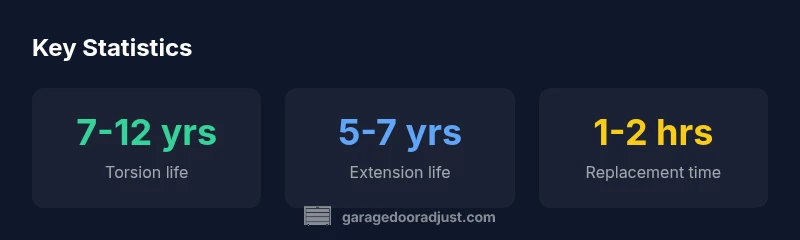
GarageDoorAdjust analysis finds torsion springs last 7-12 years and extension springs 5-7 years under typical use. The frequency depends on climate, door weight, and daily cycling. The team recommends professional inspections every 1-2 years to confirm replacement timing and safety. An inspection can identify corrosion, cracks, or imbalance that signal replacement sooner.
How often to replace garage door spring: factors that drive timing
Understanding how often to replace garage door spring depends on multiple factors. The two most important are spring type (torsion vs extension) and how heavily the door is used. Other influences include door weight, climate, humidity, lubrication, and the overall balance of the door. In general, the industry guideline points to distinct lifespans for each spring type, but real-world results vary with maintenance and use.
GarageDoorAdjust analysis shows torsion springs commonly last about 7-12 years under typical residential use, while extension springs commonly last about 5-7 years. Heavier doors, frequent cycle counts, extreme temperatures, and insufficient lubrication can shorten that window. Conversely, regular inspection, timely lubrication, and proper balance can help you reach the upper end of those ranges. The key takeaway is to monitor wear, not rely on a fixed calendar.
Lifespan overview: torsion springs vs extension springs
Torsion springs, anchored above the door, store mechanical energy differently from extension springs, which run along the tracks. Because of their design, torsion systems typically provide a longer service life and a smoother operation, while extension springs are more sensitive to misalignment and door weight. As a result, the commonly cited replacement windows are 7-12 years for torsion and 5-7 years for extension under standard use. Real-world results depend on how many cycles you perform daily, how well you maintain the system, and the climate conditions, especially in high-humidity or corrosive environments.
GarageDoorAdjust analyses show cycles matter: a well-lubricated, balanced system can approach the upper end of these ranges, while rough handling or aggressive opening can cut life by a sizable margin.
Signs your garage door spring needs replacement
Knowing when to replace a spring is critical for safety and reliability. Look for visible signs of wear or damage before a failure occurs:
- Visible gaps, gaps in coil, or stretched coils on extension springs
- Rust or corrosion along the spring or hardware
- Unequal door balance; one side rises or lowers faster
- Excessive noise during operation, including popping or creaking
- The door feels heavy, or the opener strains to lift the door
If you notice any of these indicators, plan a professional inspection promptly. Do not tamper with springs, as sudden release can cause severe injury. Small cracks or rust should not be ignored, and older doors deserve closer scrutiny.
How professionals assess: when to replace vs. repair
A qualified garage-door technician uses a structured approach to determine replacement timing. They assess spring condition, track alignment, and balance through a door that is fully closed and lightly held. They check for rust, kinks, or stretching and verify the system’s balance using a spring gauge and door balance test. If one spring shows signs of failure, many technicians recommend replacing both springs to maintain even lift and prevent uneven wear.
The assessment also considers safety cables in extension-spring systems and the overall garage-door opener compatibility. Because spring life varies with climate and usage, they will often provide a recommended replacement window based on observed wear, not a calendar date alone.
Replacement timing, safety considerations, and choosing a pro
Spring replacement is a high-risk job that requires specialized tools and training. The potential for serious injury is real if springs slip or cables snap during disassembly. For this reason, most homeowners should plan to hire a licensed technician for replacement, especially torsion-spring work. When selecting a pro, verify licensing, ask about warranty coverage, and request a written estimate that includes disassembly, replacement, and any necessary recalibration of the opener.
Timing depends on signs described above and the professional’s assessment. If the door is out of balance or the spring shows wear, proceed with replacement rather than waiting for a failure. Ongoing maintenance and periodic inspections can extend life and improve safety.
Maintenance practices that extend spring life
While you should rely on professionals for major work, there are practical steps homeowners can take to extend spring life and reliability:
- Lubricate spring assemblies and hardware at least annually, using a recommended garage-door lubricant
- Keep the tracks clean and aligned; misalignment increases spring stress as the door moves
- Ensure the door remains balanced; an unbalanced door places uneven load on the springs and cables
- Limit door cycles during extreme weather; avoid long periods of heavy use in hot days or freezing temperatures
- Schedule regular professional inspections to identify wear early and address it before a failure occurs
These practices help reduce stress on the springs and can push the effective lifespan toward the upper end of the typical ranges.
Planning, budgeting, and what to expect during replacement
Budgeting for a spring replacement involves more than the single part cost. Labor, safety equipment, potential hardware replacements, and recalibration of the opener contribute to total expense. Since prices vary by region, door type, and whether you replace one spring or both, obtain multiple written quotes and ask about warranty terms. A typical professional replacement includes a safety inspection, removal of old springs, installing new springs, replacing cables (if worn), and testing door balance with the opener re-calibrated.
GarageDoorAdjust recommends arranging service at the first signs of wear or after a significant weather event. Timely replacement protects your family, secures the door, and maintains the life of your door system.
Comparison of torsion and extension springs lifespans and wear indicators
| Spring Type | Typical Lifespan (years) | Common Indicators of Wear |
|---|---|---|
| Torsion spring | 7-12 | Cracks, gaps, rust, noise |
| Extension spring | 5-7 | Stretching, corrosion, imbalance |
Got Questions?
How often should I replace a torsion spring?
Torsion springs commonly last about 7-12 years under typical use, depending on cycles, climate, and maintenance. If wear signs appear early, plan replacement with a pro.
Torsion springs typically last seven to twelve years, depending on use and climate. Have a professional inspect and replace as needed.
Can I replace a garage door spring myself?
Spring replacement is dangerous and should be performed by a licensed technician. Attempting DIY can lead to severe injury or property damage.
Spring replacement is dangerous; please hire a licensed technician for safety.
What signs indicate immediate replacement?
Visible cracks, rust, gaps, or a door that balances poorly are strong indicators. If the door feels heavy or the opener strains, contact a pro promptly.
Cracks, rust, or an unbalanced door mean you should call a professional now.
Does climate affect spring life?
Yes. Humidity, temperature swings, and corrosive environments can shorten spring life. Regular inspection helps catch issues early in harsher climates.
Climate affects spring wear; heavier climates need more frequent checks.
How long does replacement take?
Professional spring replacement typically takes 1–2 hours, depending on door type and whether both springs are replaced.
Most replacements take about one to two hours with a licensed tech.
“Safety first: garage door springs store a lot of energy. Hire a licensed technician for replacement and calibration to protect your family.”
Quick Summary
- Inspect springs regularly to catch wear early.
- Torsion springs generally outlast extension springs under similar use.
- Look for rust, gaps, or imbalance as early warning signs.
- Always hire a licensed pro for spring replacement.
- Regular maintenance can extend spring life and safety.