How Long Should a Garage Door Spring Last: Lifespan Guide
Discover how long garage door springs last, the differences between torsion and extension springs, factors that affect lifespan, maintenance steps to extend life, and when to replace—backed by data from GarageDoorAdjust.


How long should a garage door spring last: baseline expectations
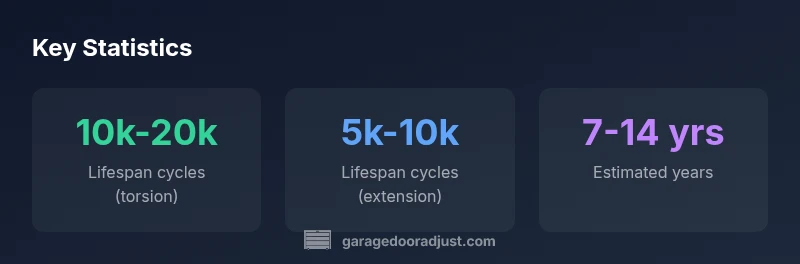
If you're trying to answer the question how long should a garage door spring last, the answer varies by spring type, usage, and maintenance. According to GarageDoorAdjust, torsion springs typically last about 10,000–20,000 open/close cycles, equating to roughly 7–14 years for many households. Extension springs usually reach around 5,000–10,000 cycles, or about 4–7 years with normal use. The exact lifespan also depends on maintenance, door balance, and environmental conditions. In practice, planning for replacement every several years reduces the risk of sudden spring failure. A door that runs with extra friction or imbalance wears springs faster, and corrosion can sharply shorten life in salty or humid climates. Understanding these baselines helps homeowners schedule inspections and replacements before a failure occurs.
Torsion vs extension: lifespans and failure modes
Garage door springs come in two common types: torsion and extension. Torsion springs store energy by twisting above the door, while extension springs stretch along the track. Both wear gradually, but their failure modes differ. Torsion springs tend to unwind or snap when fatigued, often producing a loud bang followed by a sudden door drop. Extension springs may wear coil fatigue and become brittle, sometimes resulting in a sagging door or a misaligned balance. In general, torsion springs provide longer life under similar usage, but both require regular maintenance to maximize cycles lived. When a spring approaches the end of its cycle range, you may notice increased door effort, slower operation, or unusual noises that warrant inspection.
How cycles translate to years for a typical home
To translate cycles into years, consider average daily use. Many households open and close their garage door 2–4 times per day, which is roughly 1,460 cycles per year. Using this assumption, torsion springs measured at 10,000–20,000 cycles translate to about 7–14 years of life, while extension springs at 5,000–10,000 cycles align with roughly 4–7 years. Of course, daily use can swing these estimates. Heavier doors, frequent entry for deliveries, or kids using the garage can accelerate wear. A practical takeaway is to estimate a replacement window based on your door’s usage pattern, then plan annual inspections to catch fatigue early.
Factors that shorten or extend spring life
Several factors determine how long your springs last:
- Usage frequency: More cycles shorten life; light daily use extends it.
- Door balance and alignment: A misaligned or heavy door places extra stress on springs.
- Lubrication and maintenance: Regular lubrication reduces friction and wear.
- Environment: Humidity, salt, and moisture accelerate corrosion and fatigue.
- Temperature swings: Extreme heat and cold can affect metal fatigue over time.
- Quality and installation: Original hardware quality and proper installation influence lifespan.
Understanding these factors helps you make informed maintenance decisions and catch early signs of fatigue before a critical failure occurs.
Maintenance and inspection routines to maximize life
Maximizing spring life hinges on proactive care:
- Schedule lubricant every 6–12 months with silicone- or lithium-based products suitable for metal parts.
- Inspect for wear at least twice a year; look for gaps, cracks, or frayed cords near springs.
- Test balance and alignment; a door that feels heavy or pulls to one side indicates possible issues.
- Keep hardware clean and free of debris that can hinder movement along tracks.
- Ensure safe spring containment and proper safety cables where applicable.
- If you hear grinding or see visible wear, contact a professional to assess and avoid DIY failures.
Regular care reduces sudden failures and extends spring life, allowing you to plan replacements rather than react to a breakdown.
Replacement considerations: safety, cost, and DIY limits
Replacement of garage door springs is a high-risk task due to the stored energy in springs. While some homeowners attempt DIY replacements, most jurisdictions and codes encourage or require professional handling. Costs vary by region and spring type, but the key is safe handling, proper tension assignment, and ensuring two springs (if applicable) are balanced and matched. A professional will also check related components like cables, pulleys, and drums to ensure safe operation after replacement. Planning ahead and budgeting for a pro can prevent dangerous attempts and longer downtime.
Getting professional help: timelines and planning
Many homeowners schedule spring maintenance on a 1–2 year cycle, adjusting based on usage and observed wear. Start planning replacements when you approach the lower end of the expected cycle range, or if maintenance notes indicate fatigue. Warranties often cover manufacturing defects but not normal wear; a pro can advise on whether to replace a single spring or both (if two are used). Regular inspections ensure you stay ahead of fatigue, reduce break risk, and maintain safe operation for the family.
Signs your spring is near the end of its life
Watch for indicators such as a door that feels heavy, frequent spring noises, gaps or gaps near coils, or uneven opening. If you notice any of these symptoms, stop using the door and contact a pro. Early detection can prevent sudden failure that could damage property or cause injury.
Final planning: warranties, safety, and future-proofing
When replacing springs, ask about warranties on the hardware and the service. Also consider upgrading components that influence spring life, like stronger cables or a balanced system. Keeping a log of maintenance and replacements helps you track performance over time and plan future investments in your garage door system.