Garage Door Spring How to Choose: A Homeowner's Step-by-Step Guide
Learn how to select the correct garage door spring for your setup. This guide covers torsion vs extension springs, weight calculations, safety tips, and where to buy, ensuring a safe, durable solution for homeowners.


With this guide, you will confidently select the right garage door spring for your setup and ensure safe, reliable operation. You'll learn how spring types, weight, door height, and cable configuration affect performance, plus essential safety steps and where to seek professional help. According to GarageDoorAdjust, choosing the correct spring type and tension is critical for durability and safety.
Understanding Garage Door Springs: Basics
Garage door springs are what counterbalance the weight of a door, making it easy to lift with a garage door opener or by hand. They store mechanical energy when wound and release it gradually to balance the door’s weight. Misjudging spring size or tension can cause uneven lifting, premature wear, or dangerous door behavior. In practice, the right spring combination reduces motor load, extends door life, and improves balance. According to GarageDoorAdjust, springs should be matched to the door’s weight, height, and track configuration to deliver smooth, safe operation. As you assess a door, note that springs come in different forms, but all perform the same fundamental task: balance the door for easy operation and reliable performance over time. This section lays the groundwork for the rest of the guide and helps you appreciate why the choice matters for long-term safety.
Types of Springs: Torsion vs Extension
There are two primary spring designs used on residential garage doors: torsion springs and extension springs. Torsion springs are mounted above the door on a torsion bar and twist as the door moves, offering controlled, balanced lifting and longer service life when sized correctly. Extension springs run along the tracks and stretch or contract with movement; they are simpler in concept but can be more exposed to wear and misalignment. Each type has safety considerations and compatibility requirements with door size, track setup, and mounting hardware. In many homes, torsion systems are favored for their smooth operation and reduced risk of sudden release, while extension springs can be a cost-effective option for lighter doors. GarageDoorAdjust Analysis, 2026 highlights that the right choice depends on weight, ceiling space, and the presence of safety cables for extension springs. Whether you’re replacing an old system or selecting a new one, understanding the core differences helps you make an informed decision.
How to Choose by Weight, Height, and Cable Configuration
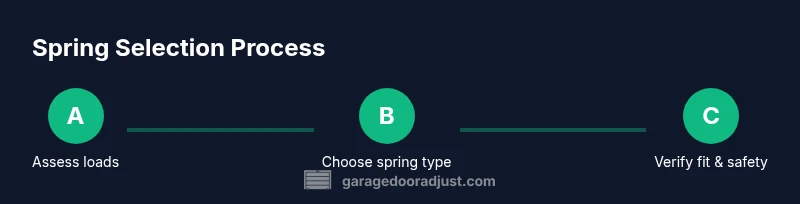
Choosing the correct spring requires matching the door’s weight and dimensions to the spring’s rating. Start by estimating the door’s total weight, then determine the track height and the number of springs. Heavier doors typically require stronger springs with higher torque ratings, and taller doors may need longer springs or additional supports. Cable configuration also matters: some setups use a single spring on each side, others use multiple springs in a more complex arrangement. The goal is to achieve a balanced door that stays put when opened and tracks smoothly when closing. This is where precise measurement matters. GarageDoorAdjust emphasizes that small miscalculations can lead to binding, noisy operation, or unsafe door behavior over time. Keep a careful record of measurements and confirm compatibility with the manufacturer’s guidelines or a qualified technician before purchasing.
Safety and Compatibility: Safety First
Safety is non-negotiable when dealing with garage door springs. Springs are under high tension, and mishandling can cause severe injury. Always disconnect power to the opener and stand clear of the door path when inspecting. Wear eye protection and gloves, and never place yourself under a door balanced by a spring while lifting or uncovering components. Compatibility matters: confirm the spring type (torsion vs extension), wire size, inside diameter, coil count, and mounting orientation match your door’s design. If your garage has standard torsion springs with a torsion bar, your selection will differ from a system using extension springs with safety cables. GarageDoorAdjust Analysis, 2026 notes that incorrect spring sizing increases wear on cables, tracks, and the opener, reducing lifespan and increasing risk. When in doubt, consult a professional for precise sizing and installation.
How to Verify Fit and When to Call a Pro
Before purchasing, verify that the chosen springs will fit your door’s width, height, and hardware. Check track spacing, winding cone location (on torsion systems), and the presence of safety cables for extension springs. If the door’s balance feels off during a test—rising slowly, sticking on one side, or producing unusual noises—pause and reassess. If you’re unsure about the weight, type, or installation steps, contact a licensed technician. The GarageDoorAdjust team recommends treating spring work as a high-risk task that benefits from professional handling, especially for heavier doors or unfamiliar hardware. In all cases, confirm warranty terms and ensure you receive proper safety instructions with any replacement parts.
Authority Sources and References
For further reading on safe practices and standards, consult these authoritative sources:
- OSHA Safety Standards for Garage Doors: https://www.osha.gov
- Extension Service Guidance on Garage Door Maintenance: https://extension.psu.edu
- National Fire Protection Association (NFPA) Guidelines on Garage Doors: https://www.nfpa.org
These references provide general safety principles and maintenance guidelines that complement the hands-on guidance in this article. GarageDoorAdjust Analysis, 2026 synthesizes these standards to emphasize that correct spring selection is essential for door balance and safety.
Common Pitfalls and Maintenance
Common mistakes include ordering springs without measuring door weight, mismatching torsion vs extension systems, and overlooking safety cable requirements for extension springs. Maintenance after installation should focus on periodic lubrication, track alignment checks, and testing balance with the opener disconnected. Regular inspection helps catch wear before it leads to failure. Remember that even with a correctly chosen spring, tools, and procedures must be used with care. As always, use high-quality components and follow the manufacturer’s installation instructions. The GarageDoorAdjust team stresses that routine maintenance and careful part selection dramatically extend spring life and reduce the risk of injury.
Measurement and Installation Readiness: A Practical Checklist
Before you order, create a measurement snapshot: door weight, height, track spacing, and spring type. Use a spring gauge or weight estimate to refine your rating, and document all measurements for reference. This preparation reduces the chance of ordering the wrong part. If you lack a reliable weight estimate, consider consulting a professional who can perform a precise balance test and identify the correct spring size. Proper tools, a clear workspace, and a safety plan are essential for any hands-on replacement scenario. Remember, accuracy now saves time and risk later.
Where to Buy and Costs to Expect
Springs vary by type, size, and rating, so prices will fluctuate based on your door’s specific requirements. Plan for a purchase that includes safety components (like cables for extension systems) and hardware compatible with your mounting setup. While costs can be a concern, prioritizing correct sizing and quality components reduces long-term maintenance and replacement frequency. Always verify warranty coverage and return policies on any spring kit you buy. For most homeowners, a professional installation, while more expensive upfront, can prevent costly mistakes and injuries.
Tools & Materials
- Door weight measurement tool or spring scale(To estimate the door's weight accurately)
- Winding bars(For torsion-spring winding during adjustment)
- Adjustable wrench(To loosen or tighten set screws)
- Screwdrivers (flathead and Phillips)(General fastener access)
- Pliers and locking pliers(Grip and maneuver components)
- Safety glasses and gloves(Personal protection from sharp hardware)
- Ladder or stable platform(Safe access to higher components)
- Torque wrench (optional)(Precise torque on hardware if specified by manufacturer)
- Replacement springs (matching type)(Torsion or extension springs that match your door)
- Safety cables (for extension springs)(Required for many extension-spring setups)
- Lubricant (silicone spray or light oil)(Lubricate tracks and hardware)
Steps
Estimated time: 60-120 minutes
- 1
Assess door and identify spring type
Turn off the garage door opener, put on PPE, and visually inspect the spring arrangement to determine whether you have torsion or extension springs. Note mounting hardware and any safety cables. This step sets the stage for accurate sizing and safe handling.
Tip: If you see visible cracking, corrosion, or the door feels unusually heavy, stop and consult a pro. - 2
Measure weight and door height
Use a scale or manufacturer data to estimate total door weight, and measure door height, track spacing, and mounting height. Accurate numbers help select a spring with the proper torque rating.
Tip: Double-check measurements at both sides of the door to catch uneven data. - 3
Choose the spring type and rating
Based on your measurements, select torsion or extension springs with the appropriate torque rating, wire size, and length. Ensure compatibility with cables, tracks, and mounting brackets.
Tip: Avoid mixing spring types or using mismatched ratings, as this can create unsafe imbalance. - 4
Prepare installation area
Clear the workspace, lay out all tools, and secure the door in a mid-range position. If you’re inexperienced with winding or manipulating springs, consider having a second person to assist and keep bystander safety in mind.
Tip: Keep wind directions and bar placements consistent to prevent sudden releases. - 5
Install springs and hardware
Install the new springs following the manufacturer’s instructions and alignments. Re-check mounting brackets and safety components. Do not force components beyond their intended limits.
Tip: When in doubt, stop and consult the instruction sheet or a professional. - 6
Test balance and safety features
Reconnect power, test the door with the opener, and manually verify smooth balance across the full range of motion. Listen for grinding or binding and inspect tracks and rollers for wear.
Tip: If the door drops or rises unexpectedly, abort the test and recheck fittings.
Got Questions?
What are the main types of garage door springs?
The two main types are torsion springs and extension springs. Torsion springs sit on a bar above the door and twist as the door moves, offering balanced lifting. Extension springs run along the tracks and stretch with movement, often used on lighter doors. Each type has unique safety considerations and compatibility requirements.
The two main types are torsion and extension springs; each has pros and cons depending on your door design.
Can I replace springs myself safely?
Spring replacement involves high tension and potential injury. If you’re not experienced with winding bars and balancing procedures, hire a licensed technician. Always follow manufacturer instructions and disconnect power before starting.
Springs are under high tension; if you’re not experienced, this is best left to a pro.
How do I know which spring is right for my door?
Measure door weight, size, and hardware configuration, then select a spring with a compatible torque rating and length. Confirm that safety cables and brackets match your setup.
You determine the right spring by door weight and the track setup.
What happens if springs are mis-sized?
Mismatched springs can cause uneven lift, faster wear on cables and tracks, and potential hazardous failure. Always size accurately and test balance carefully.
Wrong size springs can damage the door and create safety hazards.
Do I need safety cables with extension springs?
Yes. Safety cables help constrain the spring if it breaks, reducing the risk of injury or damage. Many jurisdictions require them for extension-spring setups.
Extension springs usually need safety cables for safety.
What are common signs I need new springs?
If the door feels heavier, sags on one side, makes unusual noises, or the opener struggles, these can indicate worn or damaged springs. Have a professional inspect before replacement.
Heavy door, sagging, or noisy operation can signal worn springs.
Watch Video
Quick Summary
- Identify door weight and system type before buying.
- Match spring type (torsion vs extension) to your hardware.
- Verify compatibility with tracks, cables, and mounting brackets.
- Prioritize safety: disconnect power, wear PPE, and rely on proper tools.
- For heavy or unfamiliar doors, involve a professional.