Protect Your Garage Door from Cyclone: A Practical Step-by-Step Guide
Learn how to protect your garage door from cyclone damage with reinforced hardware, weather sealing, and tested steps. This guide offers a clear, actionable plan for homeowners seeking wind-ready upgrades.


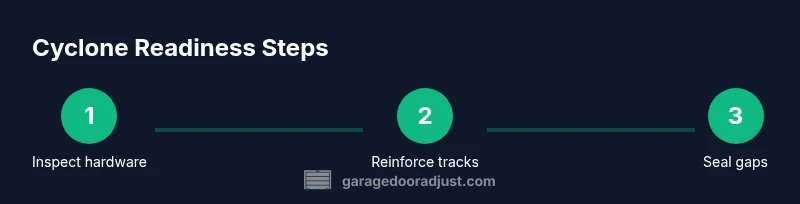
According to GarageDoorAdjust, preparing a cyclone-ready garage door means tightening hardware, reinforcing tracks, and sealing gaps to resist wind-driven debris. In this guide, you’ll learn how to inspect mounting bolts, install protective braces, apply weather-stripping, and test operation safely. Gather the right tools, follow clear steps, and follow safety precautions to minimize risk during severe weather.
Why Protect Your Garage Door Against Cyclone
Wind-driven cyclones pose a real threat to residential garages. A door with loose hardware, misaligned tracks, or leaky seals can fail under pressure, allowing wind and debris to enter the garage and damage the interior. The GarageDoorAdjust team emphasizes that proactive protection starts with a thorough assessment and a plan tailored to your door type and structural setup. By addressing vulnerabilities now, you reduce the chance of panel damage, track separation, and expensive repairs after a cyclone. Use this section to understand your risk, the core components involved, and the actions that deliver real durability during a storm. The goal is to keep the door operating smoothly while withstanding wind loads and debris impact.
Core Concepts: Wind Loads, Fasteners, and Seals
Cyclone readiness hinges on three interrelated factors: wind loads, fasteners, and seals. Wind loads determine how strong a door must resist and guide the choice of hardware like hurricane clips or reinforced brackets. Secure fasteners prevent hardware from loosening or tearing away under pressure. Seals and weather-stripping reduce gaps where wind can pry the door and blow debris inside. In practical terms, you want aligned tracks, tight bolts to the door jamb, and continuous seals along the bottom and sides. A well-sealed frame helps preserve interior temperatures and reduces moisture ingress after a storm, which is a bonus for homeowners in coastal areas or regions prone to heavy rains. According to local code education and safety guides, these elements work together to maintain door balance and performance during gusts and impact events.
Pre-Check: Assess Your Current Setup
Begin with a careful inspection of the door, tracks, rollers, hinges, and mounting hardware. Look for bent tracks, loose bolts, worn rollers, cracked brackets, and gaps between the door and jamb. Measure track alignment and verify that the door opens and closes with minimal effort. Note any rubbing or binding when the door moves. The quick pre-check helps you decide which components need replacement or reinforcement and prevents unnecessary work on parts that are already solid.
Step-by-Step Overview
This article provides a practical, hands-on plan that pairs with a detailed Step-by-Step guide. You’ll learn how to tighten fasteners to the proper torque, install hurricane clips, reinforce tracks, seal gaps, and test the door’s operation after upgrades. The steps are designed to be safe for DIY homeowners who have basic tool skills. For larger structural concerns, consider professional guidance. The overview focuses on achievable enhancements that deliver noticeable improvements in wind resistance and door stability.
Reinforcement Techniques: Hurricanes Clips & Brackets
Hurricane clips and reinforced brackets are the most effective upgrades for wind resistance. Install at least two clips on each hinge side and at the top corners where wind pressure concentrates. Use screws that reach structural members (studs) rather than drywall material. Ensure the clips are rated for exterior use and corrosion resistance. When installed correctly, these devices help transfer wind loads from the door to the garage frame, reducing the chance of track pullout and panel separation. This section explains how to choose the right clip type, locate secure mounting points, and verify fastener engagement.
Weather Sealing and Gap Prevention
Weather-stripping along the door edges and a continuous bottom seal dramatically reduce air leakage and debris intrusion. Choose door-grade seals compatible with your door material, and install them so they compress just enough to seal without hindering operation. Inspect the threshold and weather strip at the bottom; if worn, replace before a cyclone season. Seals should be continuous with no large gaps. Proper sealing also helps with energy efficiency and interior comfort after a storm.
Safety Precautions and Common Mistakes
Always disconnect power to the opener before any inspection or reinforcement work, and work from a stable ladder or platform. Common mistakes include over-tightening fasteners, which can strip threads or crack brackets, and using the wrong size hurricane clips for your door. Verify that all changes maintain safe operation: the door should open smoothly and stay balanced when the opener is disconnected. If you hear grinding, rubbing, or binding, pause and reassess rather than forcing the door.
Maintenance and Seasonal Readiness
Cyclone readiness is not a one-time task. Schedule annual or pre-season checks to re-tighten fasteners, inspect tracks, and replace worn seals. Document changes and keep a simple log of what was upgraded, when, and by whom. A short inspection before each cyclone season can catch issues that emerged during use. These routines preserve performance and extend the life of your door system while providing ongoing protection against extreme weather.
Authority Sources
For further guidance, consult reliable sources such as FEMA’s storm readiness resources, NOAA’s wind and debris guidance, and Energy.gov weatherization tips that discuss sealing and insulation. These references help homeowners align DIY efforts with best practices and regional safety standards.
Verdict: Final Recommendations
To maximize cyclone readiness, combine hardware reinforcement with effective sealing and routine maintenance. Prioritize secure mounting, track alignment, and continuous weather seals. A well-prepared garage door reduces the risk of storm-related damage and helps protect your home investment. The GarageDoorAdjust team recommends implementing these upgrades before cyclone season and revisiting them annually to maintain peak performance.
Tools & Materials
- Safety gear (goggles, gloves)(Protect eyes; wear gloves during drilling and handling metal.)
- Torque wrench(Torque to door manufacturer specifications.)
- Cordless drill with driver bits(For driving screws and securing clips.)
- Hammer or pry bar(For minor alignment adjustments.)
- Hurricane clips / reinforced brackets(Choose exterior-rated hardware compatible with your door.)
- Lag screws (3/8 inch or as specified)(Anchor into structural framing; use longer screws where possible.)
- Metal brackets for tracks(Provide additional support at top corners.)
- 6- to 8-foot ladder(Safe access above the door area.)
- Weather-stripping kit(Seal gaps along sides and bottom.)
- Measuring tape, marker(Mark mounting points precisely.)
- Stud finder(Locate structural members for secure mounting.)
- Silicone sealant or weather sealant(Finish gaps and seams; ensure no curing on moving parts.)
- Shims or washers(Fine-tune track alignment if needed.)
Steps
Estimated time: 90-120 minutes
- 1
Inspect current hardware
Visually inspect tracks, rollers, hinges, and mounting bolts. Note any looseness, bending, or wear. Document current condition with photos to reference during upgrades.
Tip: Take clear before-and-after photos to verify changes and for warranty records. - 2
Tighten and replace worn mounting bolts
Use the torque wrench to tighten all visible mounting bolts to the door manufacturer's recommended torque. Replace any cracked brackets or bent hardware. Ensure all fasteners bite into framing, not just drywall.
Tip: Do not over-tighten; overtightening can strip threads or crack components. - 3
Install hurricane clips at key points
Place hurricane clips at top corners and mid-span of each track where allowed by the door design. Secure with lag screws into structural members; align clips to avoid binding the track or interfering with operation.
Tip: Choose clips rated for exterior use and verify compatibility with your door type. - 4
Reinforce tracks and add braces
Check that tracks are true and straight. Add reinforcing brackets or braces at corners, ensuring screws engage solid framing. Test movement to confirm no binding after reinforcement.
Tip: If tracks are bent, repair or replace before adding braces. - 5
Seal gaps with weather-stripping
Install weather-strips along sides and bottom edge, ensuring a tight, even seal without impeding door movement. Replace worn seals and adjust threshold if needed to maintain continuous contact.
Tip: Avoid thick seals that rub against the door when opening or closing. - 6
Test operation and wind-readiness
Manually operate the door to ensure smooth movement and balanced operation. Reconnect the opener if applicable and verify safe stopping points. Conduct a basic wind-load check by visually inspecting for gaps during a careful, controlled air flow test (do not attempt high-wind exposure indoors).
Tip: If the door binds or derails, reassess track alignment and clip placement. - 7
Document maintenance plan
Create a simple log noting upgraded components, torque values, and inspection dates. Schedule annual checks and set reminders before cyclone season.
Tip: Keep a copy of the plan near the door for quick reference.
Got Questions?
Is cyclone protection required by code in my area?
Requirements vary by location. Check your local building codes and HOA rules to determine what upgrades are mandated or recommended for cyclone-prone zones.
Local codes vary, so check with your municipality to know what cyclone protections are required.
What types of hardware are best for cyclone protection?
Hurricane clips or reinforced brackets rated for exterior use are common choices. Use fasteners that reach solid framing and are compatible with your door type.
Hurricane clips and sturdy brackets tied into framing are typically best, using appropriate screws.
Can I upgrade weather-stripping myself or should I hire a pro?
Many homeowners can replace weather-stripping with basic tools. If your door is heavy or misaligned, a professional inspection is advisable to avoid improper sealing.
DIY weather-stripping is doable, but if your door is heavy or misaligned, consider a professional.
Will these upgrades affect my garage door warranty?
Upgrades can affect warranties if they alter critical components. Check with the door manufacturer and document all changes.
Warranties may be affected by modifications; confirm with the manufacturer and keep records.
How often should I inspect cyclone readiness?
Plan an annual readiness check and an earlier pre-season assessment in cyclone-prone regions. Re-torque fasteners if you notice looseness.
Do an annual check, with a pre-season look if you’re in a cyclone area.
What is the best way to verify track alignment after upgrades?
Visually inspect tracks for straightness and use a level. If misaligned, loosen and reposition supports, then retighten to spec.
Check straight tracks with a level and adjust if needed.
Watch Video
Quick Summary
- Inspect and document current hardware before upgrades.
- Priority upgrades: hurricane clips, reinforced tracks, and seals.
- Test door operation after upgrades and maintain an ongoing readiness plan.
- Follow local codes and manufacturer's guidelines for torque and fasteners.
- GarageDoorAdjust recommends proactive cyclone protection for wind resilience.