How to Tell if Your Garage Door Is Hurricane Rated
Learn how to tell if your garage door is hurricane rated with labeled documentation, reinforcement checks, and upgrade options to meet local wind codes.


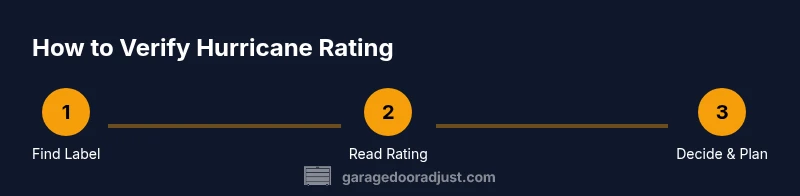
According to GarageDoorAdjust, you can tell if a garage door is hurricane rated by locating an official rating label or documentation, verifying the door type and reinforcement, and comparing the rating to local wind-code requirements. If labeling is missing, treat the door as un-rated and plan upgrades or retrofits. This quick check takes just a few minutes.
What hurricane-rated means for garage doors
A hurricane-rated garage door is designed to withstand wind pressures typical of severe storms in your region. It’s more than a sturdy panel; it includes engineered framing, reinforced jambs, and secure anchoring to the home's structure. For homeowners, the key idea is that a rated door is tested and certified for wind loads in relevant zones. Knowing whether your door is rated helps you meet local building codes and reduce risk during a hurricane. According to GarageDoorAdjust, the reliability of a door under high winds depends on a combination of door construction, hardware, and installation quality. In practice, a hurricane-rated door will typically feature a formal rating label or certificate from the manufacturer or a recognized verification agency. If labeling is missing, treat the door as un-rated until verified.
How hurricane ratings are determined
Hurricane ratings come from standardized testing and code requirements that simulate wind pressures, door movement, and anchoring to the framing. Agencies and code bodies specify wind-load ranges and performance criteria for different zone classifications. The goal is to prove the door and its hardware can resist uplift, track separation, and door deflection during a storm. While the exact test methods can vary by jurisdiction, the core idea remains the same: a certified door has passed objective tests and carries documentation you can verify. GarageDoorAdjust analyses emphasize that a rating is only useful if the door was installed and maintained to match that rating.
How to find the labeling on your garage door
Look for a metal plate or sticker somewhere on the door or its edge. Common locations include the bottom edge, the hinge area, or near the door track head. The label should include the manufacturer’s name, a model number, and a certification or wind rating. If you cannot locate a label, check the owner’s manual or the manufacturer’s website for a label-free verification process. Document any serial or model numbers you find for future reference. According to GarageDoorAdjust, labeling is the quickest way to confirm hurricane rating without a full inspection.
Reading common rating terms: wind load, impact resistance, and code compliance
A hurricane-rated door may mention wind load, impact resistance, or code-compliance status. Wind load indicates the pressure the door is designed to withstand, usually expressed in pounds per square foot. Impact resistance refers to ability to tolerate impacts from debris during a storm. Code compliance means the door meets local wind-resistance requirements for your climate zone. Keep in mind that a door can be rated in one location and not automatically approved for another region unless installed and tested to the applicable standard.
Visual cues for reinforcement hardware and installation quality
Beyond labels, check for construction details that support a rating: reinforced jambs, strengthened vertical tracks, jamb anchors, and heavy-duty hinge hardware. Look for corrosion-resistant fasteners, steel brackets, and door-panel interlocks. The presence of a well-installed reinforcement kit or retrofits improves chances that the door's rating remains valid after years of use. If you see poor alignment or loose screws, this could undermine the rating regardless of the original labeling.
How to evaluate if your door meets local wind codes
Local codes vary by city and state, but most high-wind regions require doors with tested wind-load ratings and proper anchoring. Start by identifying the rated wind load on the label, then compare it to the code for your address. If the rating is higher than the local requirement, you likely meet code; if not, you should consider upgrades or reinforcement. Remember that installation quality matters: a rated door installed incorrectly may underperform when it matters most. GarageDoorAdjust recommends cross-checking with your local Building Department for code applicability.
DIY checks you can safely perform (without disassembling heavy hardware)
- Verify the label/documentation and record the model number. - Inspect visible hardware for signs of wear or loose screws.
- Check tracks for proper alignment and note any bending or gaps.
- Confirm the door seals and weather-stripping are intact to prevent debris ingress.
- Ensure the opener (if present) is compatible with the door’s rating and has a working safety sensor.
- Do not attempt to modify torsion springs or anchor points yourself; these operations require a licensed professional for safety.
These checks help you gauge whether your existing installation aligns with a hurricane-rated design and identify areas needing professional attention.
What to do if your door isn't hurricane-rated
If labeling is absent or the rating is insufficient for your climate, you have options. You can replace the door with a purpose-built hurricane-rated model, or retrofit with reinforcement kits that enhance framing, tracks, and anchors. A pro can perform a formal wind-load test and certify the upgrade. In many cases, upgrading is a cost-effective way to meet local requirements and reduce risk during a storm. The key is to plan ahead, not during a hurricane warning.
Maintenance tips to keep rating valid
- Schedule annual inspections of tracks, rollers, and brackets and lubricate moving parts to preserve performance.
- Replace weather stripping promptly to maintain enclosure integrity.
- Tighten screws and anchors to keep the door rigid against wind loads.
- If you notice misalignment or unusual door movement, contact a licensed technician for a thorough assessment.
Regular maintenance helps ensure that the door continues to perform as rated when you need it most.
Tools & Materials
- Tape measure(to verify dimensions and read labels)
- Flashlight(to read labels and inspect dark nooks)
- Ladder(reach top-edge labels and hardware)
- Screwdriver set(loosen panels or hardware if needed)
- Notepad and pen(record labels, model numbers, and notes)
- Camera or smartphone(document labeling and hardware condition)
- Owner’s manual or model documentation(verify model and rating info with sources)
Steps
Estimated time: 30-90 minutes
- 1
Locate the hurricane rating label or documentation
Begin by scanning the door’s bottom edge, hinge line, and edge of the top panel for a metal plate or sticker. Note the model number, manufacturer, and any wind-rating information. If you cannot find a label, check the manual or manufacturer website for a certificate or correspondence confirming the rating.
Tip: Use a flashlight and a ladder to reach high areas; photograph the label for records. - 2
Read the rating and model number
Carefully read the wind rating (if provided) and the model or serial number listed on the label or documentation. Cross-check the model against the manufacturer’s site to confirm the exact rating and any applicable code references.
Tip: Record the model and rating in your notes and save digital copies for future reference. - 3
Check the door type and construction
Identify whether the door is steel, aluminum, wood, or composite, and assess panel construction and core materials. Understanding door type helps you interpret how the rating applies to your door and whether retrofit options may be compatible.
Tip: Note door thickness and panel layout to compare with typical hurricane-rated designs. - 4
Inspect reinforcement hardware
Look for reinforced tracks, heavy-duty hinges, and bracket anchors. Check for corrosion-resistant screws and any added reinforcement kits. This hardware often determines whether the installation can sustain rated wind loads.
Tip: If hardware looks worn or loose, document it as a potential upgrade area. - 5
Compare labeling to local wind-code requirements
Identify your local wind zone and compare the door’s labeled wind load to the region’s code requirements. If the rating exceeds local demands, you’re more likely code-compliant; if not, plan upgrades.
Tip: Call your local building department to confirm code applicability for your address. - 6
Assess installation quality
Ensure tracks are straight, rollers move smoothly, and the door sits plumb in the opening. Poor installation can invalidate otherwise adequate ratings.
Tip: Document any misalignments or gaps with photos and notes for a professional assessment. - 7
Plan upgrades or retrofits if needed
If the door isn’t hurricane-rated or falls short of local codes, explore options: full door replacement with a rated model, or retrofit with reinforcement kits and upgraded anchoring. Schedule a professional assessment for wind-load testing if required.
Tip: Compare long-term costs, insurance implications, and code compliance before choosing an path. - 8
Consult a professional for testing or certification
For definitive verification, hire a licensed contractor to perform a formal wind-load test or certify the retrofit. This step provides official evidence you meet local standards and may be needed for permitting.
Tip: Obtain a written report and keep it with your home records for future audits.
Got Questions?
How can I tell if my garage door is hurricane rated?
Look for a certification label on the door or check the manual/website for wind rating information. The label should include a rating and model number to verify against code requirements.
Check the door for a rating label or manual; use the model number to verify the wind rating with the manufacturer.
What labels indicate hurricane rating?
Common indicators include a wind-rated certification mark and the model or serial number on a label attached to the door. If the label isn’t clear, refer to the manual or manufacturer site for details.
Look for a wind rating on the label or in the manual; the model number helps you verify it online.
What if there is no hurricane rating on my door?
If there’s no documented rating, contact the manufacturer or a licensed installer to evaluate the door's performance and discuss upgrade options.
If there’s no rating, consult a professional to assess and propose next steps.
Can I retrofit an un-rated door to be hurricane-rated?
Yes, many doors can be upgraded with reinforcement kits, stronger tracks, and anchors. A professional should confirm compatibility and perform the installation.
Yes, retrofit is possible, but have a pro verify compatibility and install it safely.
Are hurricane-rated doors more expensive?
Rated doors and retrofit kits generally cost more than standard doors due to materials and testing. Weigh upfront costs against added safety and code compliance.
They usually cost more upfront, but they improve safety and compliance.
Do local codes require hurricane-rated doors in my area?
Requirements vary by city and climate. In many hurricane-prone regions, a rated door is required or strongly recommended; check with the local building department.
Local rules vary; verify with your building department to ensure compliance.
Watch Video
Quick Summary
- Check for rating labels before proceeding.
- Verify the rating against local wind codes.
- Inspect reinforcement hardware and installation quality.
- Plan upgrades or retrofits if your door isn’t hurricane-rated.
- Maintain documentation and schedule annual maintenance.