How to Guarantee Your Garage Door: A Homeowner's Guide
Learn how to guarantee garage door performance, protect warranties, and avoid common pitfalls with practical, expert, step-by-step guidance from GarageDoorAdjust.


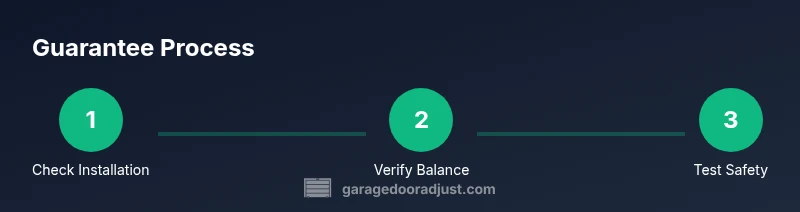
By following this guide, you can guarantee garage door performance by ensuring correct installation, balanced operation, proper spring tension, safe opener programming, and intact weather sealing. You'll learn how to inspect hinges and tracks, test auto-reverse safety, and confirm warranty terms with manufacturers. Prepare basic tools, take safety precautions, and follow the step-by-step process to protect your investment and prevent costly failures.
What Guarantee Means for Your Garage Door
According to GarageDoorAdjust, a true garage door guarantee isn't just a sticker—it's a documented, workmanship-driven commitment that the door will operate safely and reliably under normal use. In plain terms, a guarantee governs not only the parts that move but the way the system integrates with your home’s door opening, safety sensors, and opener. It is meant to give you confidence that the door won’t fail at the worst possible moment. For homeowners, understanding this guarantee starts with distinguishing it from a warranty: a warranty is the manufacturer’s promise about defects; a guarantee can be broader, sometimes covering performance standards, maintenance requirements, and service eligibility. The GarageDoorAdjust team found that most guarantees emphasize the door’s daily balance, smooth operation, and safe stopping, yet they often require documented maintenance. As you pursue a formal guarantee, approach the process as a proactive home-maintenance project, not a one-off fix. Keeping up with the basics—lubrication, track alignment, weather stripping, and safety tests—helps you meet warranty conditions and reduces the likelihood of disputes later on.
In practical terms, guaranteeing your garage door means keeping it operating like it did on Day One, with predictable results under typical weather, usage, and opener programming. You’ll want to verify that installation was performed to spec, confirm that the door remains balanced, and ensure the opener safety features respond correctly. Before you claim any guarantee, collect essential documentation: model numbers, serial numbers, purchase receipts, and maintenance logs. This documentation not only supports your claim but also clarifies what your guarantee covers and what it excludes. With a clear understanding of these elements, you’ll be positioned to guard your investment and avoid unnecessary repair costs. The emphasis is on consistent performance rather than a one-time restoration, which is the essence of guaranteeing a garage door.
The Takeaway: A solid guarantee rests on consistent performance, proper maintenance, and clear documentation. Keep records, follow the installer’s guidelines, and verify safety features regularly to maintain eligibility and protect your investment.
Tools & Materials
- Safety glasses(Eye protection when inspecting tracks, springs, and hinges)
- Work gloves(Protect hands from sharp edges and pinch points)
- Step ladder(Stable access to high components like tracks and torsion hardware)
- Socket wrench set(Tighten or verify mounting hardware on door and track brackets)
- Flathead and Phillips screwdrivers(Brackets, end caps, and sensor mounts)
- Lubricant (silicone-based)(Lightly lubricate aluminum tracks and rollers; avoid over-lubrication)
- Cloth rags(Wipe away dust and excess lubricant)
- Tape measure / ruler(Check gaps and door alignment visually)
- Camera or notepad(Document installation and wear patterns for claims)
Steps
Estimated time: 45-90 minutes
- 1
Inspect installation for compliance
Begin by visually inspecting mounting screws, brackets, tracks, and hinges. Look for loose fasteners, misaligned tracks, and signs of rubbing or binding. Confirm that weather seals are intact and that the door sits evenly on the ground when closed. Do not force components to move; document any misalignment with photos for warranty claims.
Tip: Take close-up photos of all mounting points and track joints to support your guarantee claim. - 2
Check door balance and track alignment
Manually test door balance by disconnecting the opener and lowering the door slowly with controlled support. The door should stay in place if you stop supporting it. If it travels unevenly or drifts, there may be balance or track issues. Do not attempt spring adjustments unless you are trained; call a pro.
Tip: Never_override safety devices or springs; misadjustment can cause serious injury. - 3
Test safety features and opener reversal
With the door closed, place an object on the floor under the door and operate the opener so the door closes and reverses on contact with the object. Repeat on both sides where sensors are located. Verify the auto-reverse function is responsive and the safety sensors align and stay clean.
Tip: If the door doesn’t reverse, stop immediately and seek professional service; this can affect warranty eligibility. - 4
Review warranty terms and required maintenance
Locate your warranty document or online warranty page. Note what’s covered (parts, labor, wear items) and what voids coverage (DIY modifications, improper installation). Create a checklist aligning your maintenance tasks to warranty requirements, including lubrication and periodic inspections.
Tip: Keep a dated maintenance log to simplify claim processing. - 5
Document current condition and prepare claim package
Compile photos, receipts, model/serial numbers, and a summary of observed issues. Write a concise description of the problem and steps already taken. Contact the manufacturer or authorized service provider to start the claim, following their process precisely.
Tip: Ask for a reference or claim number and note any required forms for future reference. - 6
Plan next steps for guarantee or replacement options
If the claim is approved, schedule the necessary service and verify that follow-up maintenance aligns with warranty recommendations. If optional, compare the cost of repairs versus replacement to determine the best long-term guarantee value for your home.
Tip: Request a written recap of approved work and warranty extension terms after service.
Got Questions?
What does a garage door guarantee typically cover?
A garage door guarantee outlines what is protected based on the manufacturer and installer. It often addresses parts, safety features, and performance under normal use, but exclusions apply for improper maintenance, DIY modifications, and non-OEM parts.
A garage door guarantee covers the door's parts and performance under normal use, with exclusions for improper maintenance and non-OEM parts.
Can I guarantee a garage door myself after installation?
You can verify and maintain components per warranty terms, but major coverage like labor or certain parts often requires a certified service technician. Always review the specific warranty terms to know what you can claim yourself.
You can perform maintenance checks, but major coverage usually requires a professional.
How long does a typical garage door warranty last?
Warranty duration varies by model and maker. It generally covers critical components and may require scheduled maintenance to stay valid. Always read the warranty document for exact terms.
Warranty duration varies; read your warranty for exact terms and required maintenance.
What voids a garage door warranty?
Common voids include improper installation, use of non-OEM parts, and failing to perform required maintenance. Modifications or unsafe DIY repairs can also cancel coverage.
Improper installation, non-OEM parts, or skipped maintenance can void warranties.
Who can help file a claim for a garage door guarantee?
Authorized technicians or the manufacturer’s warranty department typically handle claims. Start with the provider listed in your warranty and keep documentation ready.
Contact the manufacturer or an authorized technician to start your warranty claim.
Watch Video
Quick Summary
- Document warranty details and keep maintenance logs.
- Avoid DIY spring adjustments to protect safety and warranty validity.
- Test safety features regularly and maintain clean tracks.
- Gather photos and receipts to support guarantee claims.
- Compare repair versus replacement when evaluating guarantee options.