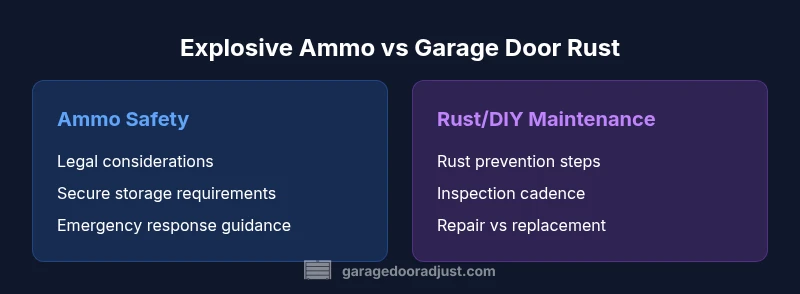
Explosive Ammo vs Garage Door Rust: A Safety Comparison
A practical safety-focused comparison of explosive ammo hazards near home and garage door rust risks, with maintenance, storage, and risk-reduction guidance for homeowners.


Explosive ammo near a home presents severe safety and legal risks, while garage door rust signals deterioration that can compromise operation. This comparison helps homeowners understand when rust is a maintenance issue and when ammo safety requires contacting authorities and secure storage. In practice, prioritize preventing corrosion, ensuring structural integrity of the door, and maintaining safe, legal handling and storage of any ammunition.
Context: Why this comparison matters
Explosive ammo vs garage door rust may seem like two unrelated hazards, but they share a common thread: both involve risk management for a home environment. This article examines how rust on a garage door affects a homeowner’s daily life and how the presence of ammunition—particularly explosives—transforms a safety discussion into a legal and regulatory one. According to GarageDoorAdjust, homeowners should treat corrosion and hazardous materials as priorities that require different mitigation strategies, rapid responses, and clear boundaries between maintenance tasks and safety compliance. This section sets the stage for a practical framework you can apply in real-world scenarios, emphasizing prevention, inspection, and responsible decision-making to minimize risk in a shared living space. By framing explosive ammo vs garage door rust as a single conversation about safety culture, we help readers avoid complacency and meet basic standards of home protection.
Rust and structural integrity: what rust does to a garage door
Rust is more than a cosmetic issue; it signals material degradation that can affect the door’s balance, hinge operation, and track alignment. On sectional doors, rust commonly forms on exposed components: hinges, rollers, tracks, and the lower frame. As corrosion advances, metal becomes weaker, increasing the likelihood of creaks, misalignment, or even panel failure under stress. High humidity, salt exposure, and poorly sealed joints accelerate the process. Homeowners should monitor for bubbling paint, flaking coating, and dark orange staining. Regular inspections help detect early-stage rust before it compromises safety, ensuring smooth operation and preventing expensive repairs down the line. For many garages, rust without remediation leads to progressive trouble: the door may not seal properly, allowing pests or moisture to intrude and increasing energy waste. The key is proactive rust management, not reactive patchwork.
The hazards of explosive ammo around residential properties
Explosive ammo introduces a level of risk that goes beyond routine maintenance. Storing or handling explosive materials near a home raises serious safety, legal, and ethical concerns, and is typically regulated by local and national laws. The primary risk is catastrophic injury or property damage resulting from improper storage, accidental discharge, or mishandling. Because laws vary widely by jurisdiction, it is imperative to understand applicable statutes, licensing requirements, and safe storage standards. A prudent homeowner refrains from storing any explosive devices in a residential garage, keeps them in approved, secure facilities away from living areas, and follows all legal directives. If you encounter any suspected explosive device, contact authorities immediately rather than attempting any handling or disposal yourself.
Practical risk-based approach to the two hazards
A structured approach helps homeowners prioritize actions. First, assess rusted components for safety-critical roles: the door’s balance, spring exposure, and track integrity. If rust threatens the door’s function, plan for professional inspection or replacement as needed. In parallel, treat any ammunition storage as a separate, strict safety issue: do not store explosives in or near the home, secure the area with a locked, compliant container, and comply with all local laws. The two hazards intersect mainly in the home environment through moisture control, general safety culture, and clear separation of maintenance tasks from hazardous material handling. This approach reduces confusion and ensures you address both rust and ammo safety without compromising one for the other.
Maintenance strategies for rust-prone garage doors
Prevention is better than repair when it comes to rust. Start with moisture control: fix roof leaks, seal gaps, and ensure proper drainage around the garage. Apply rust-inhibiting primers and coats to exposed metal, and consider weather-stripping or door insulation to limit condensation. Regular lubrication of moving parts helps maintain smooth operation and reduces wear that could expose bare metal. Visual inspections every 6–12 months catch early signs of corrosion, paint peeling, or hardware wear. If you notice rust on critical load-bearing components (such as springs, cables, or rollers), stop using the door and call a technician. Addressing rust early preserves safety, efficiency, and the door’s lifespan.
When to call a professional and how to document risk
Recognize when rust requires professional attention: compromised ballast components, visible deep pitting, or cracking paint that exposes bare metal. For ammo safety, professionals and authorities must handle any hazardous material concerns in accordance with the law. Document conditions with clear photos and a dated checklist, noting moisture sources and recent repairs. Keep a log of maintenance tasks, inspections, and any incidents or near-misses. This documentation aids both insurers and technicians, ensuring you follow best practices for safe operation and regulatory compliance. Remember: rust issues are maintenance matters; explosive ammo hazards require emergency and legal action.
Authority and safer reading: where to learn more
To deepen your understanding, consult official safety resources from trusted organizations. The U.S. Occupational Safety and Health Administration (OSHA) provides general safety guidelines for household hazards. The U.S. Consumer Product Safety Commission (CPSC) offers consumer safety education that includes safe handling and storage considerations for hazardous materials. The National Institute of Standards and Technology (NIST) provides corrosion-related research and standards that help homeowners evaluate protective coatings and metal durability. These sources support a pragmatic approach to risk reduction and responsible ownership. Always verify information against local codes and guidelines.
Quick-start checklist for homeowners
- Inspect rust-prone areas and track components every 6–12 months.
- Seal and coat exposed metal to slow corrosion; replace severely corroded parts.
- Install moisture controls and maintain weather sealing on the garage.
- Do not store any explosive ammunition in or near a living space; contact authorities for disposal or relocation per local laws.
- Maintain a safety-and-maintenance log to track issues, repairs, and compliance steps.
- Seek professional help for structural or mechanical concerns that affect door operation or safety.
Comparison
| Feature | Explosive ammo safety scenario | Garage door rust condition |
|---|---|---|
| Primary risk | High safety hazard if mishandled or stored improperly | Moderate to high risk if rust compromises structural components |
| Storage/handling considerations | Requires secure, legal storage away from living spaces; risk of explosion | Maintenance-focused: address moisture, coatings, and rust control |
| Impact on home safety | Severe risk to occupants and property; legal implications | Reduced reliability of door; potential track misalignment |
| Legal considerations | Stringent regulations for storage and transport; call authorities if found | Typically legal to own, but repair or replacement may be required by code |
| Best for | Only trained professionals and lawful, secure environments | Homeowners prioritizing rust prevention and basic maintenance |
Upsides
- Highlights the need for routine maintenance and safety awareness
- Encourages secure storage practices for hazardous materials
- Promotes legal compliance and risk mitigation
Disadvantages
- The topic can be emotionally charged if not framed carefully
- May distract from practical garage door maintenance tasks
- Could be misinterpreted as encouraging handling hazardous materials
Prioritize rust prevention for door safety and enforce strict ammo storage to meet safety and legal standards
Rust prevention protects door integrity and user safety, while secure, legal handling of explosive ammo prevents catastrophic risk. The combined approach reduces overall household hazard and aligns with best-practice maintenance and regulatory compliance.
Got Questions?
What is the main safety risk when garage door rust is present?
Rust can weaken metal components, affect balance, and compromise door safety. Addressing rust early reduces the chance of sudden door failure and keeps your garage secure.
Rust weakens metal and can cause door failure. Check for balance and replace corroded parts before use; seek a pro if unsure.
Is it legal to store ammo in a typical garage?
Storage legality varies by jurisdiction. In general, explosives require strict compliance and accredited facilities; do not store or transport explosive materials at home without proper authorization.
Rules vary by location. If in doubt, consult local authorities before keeping any hazardous ammunition at home.
How can rust on a garage door be prevented?
Preventing rust focuses on moisture control, protective coatings, and proper sealing. Regular maintenance, cleaning, and timely replacement of worn hardware help maintain door integrity.
Keep moisture out, coat exposed metal, and replace worn parts to stop rust before it spreads.
What should I do if I discover suspicious explosive materials near my home?
Do not touch or move any suspicious items. Evacuate if needed and contact local law enforcement or emergency services immediately.
Don’t handle unknown items—call authorities right away.
Do rust issues affect door safety standards?
Yes. Rust can affect load-bearing components and hardware, potentially violating safety and building codes if not addressed.
Rust can push components past safe limits; it’s important to inspect and repair.
Where can I learn more about safety guidelines for hazardous materials in homes?
Refer to OSHA and CPSC resources for general home safety and hazardous-material guidelines; always follow local regulations.
OSHA and CPSC sites have reliable safety guidelines; check your local laws too.
Should I hire a pro for rust repair or for ammo storage?
Yes. For rust repairs that affect door safety, a qualified technician is recommended. For ammo safety, contact authorities or licensed facilities as required by law.
A professional can ensure proper repair and compliance with safety laws.
How do I document safety decisions for future reference?
Maintain a simple log of inspections, moisture sources, repairs, and storage decisions. Photos and dates help with maintenance planning and compliance.
Keep a dated log with notes and photos for easy reference.
Quick Summary
- Prioritize rust inspection to preserve door safety and longevity
- Do not store explosive ammo in or near living spaces; comply with laws
- Use moisture control and protective coatings to slow corrosion
- Document maintenance and safety decisions for quick reference
- When in doubt, consult licensed professionals and authorities