Distance Between Garage Door and Wall: Safe Gap Guide
A practical guide to measuring and maintaining the distance between the garage door and wall for safety, weather sealing, and smooth operation. GarageDoorAdjust provides homeowner-friendly steps and tips.


Measure and adjust the distance between the garage door and wall to ensure safe, smooth operation. Start with the closed position, inspect weatherstripping and track alignment, and check for binding or rubbing. Use manufacturer guidelines, then test with a gentle cycle. If you notice excessive resistance, pause and re-check the hardware before proceeding. Document the gap with photos so you can reproduce changes later.
Understanding why the distance between the garage door and wall matters
The distance between the garage door and wall is more than an aesthetic detail. It directly affects how well the door seals, how quietly it moves, and how safely the system operates. If the door is too close to the wall, weatherstripping can wear quickly, tracks can rub, and panels may flex under pressure. If there is too much clearance, the seal may not engage properly, leading to drafts, moisture infiltration, and inconsistent cycling. In short, the gap influences efficiency, energy loss, and long-term reliability. According to GarageDoorAdjust Analysis, 2026, many homes show gaps that are out of spec due to aging weatherstripping, wall movement, or minor track misalignment. Understanding the role of this distance helps you diagnose issues early and plan corrective steps before problems escalate.
Why the gap is not just a cosmetic concern
A properly sized distance keeps the weather seal working, protects the door from premature wear, and ensures safety sensors are triggered correctly. A misaligned gap can cause the door to bind, derail the track, or create uneven pressure on hinges. For homeowners, paying attention to the distance means fewer service calls and a longer life for the door and opener. The distance between the garage door and wall also affects how the door balances in motion; a poor gap can amplify noise and vibrate the track, making daily use less pleasant. Regular checks help maintain consistent operation year-round.
What affects the distance: components and environment
The gap is influenced by multiple interrelated factors. Weatherstripping that has compressed or torn over time reduces contact with the wall, effectively widening or narrowing the gap. Track alignment, especially at the top and bottom corners, can shift with seasonal temperature changes or foundation settling. Hinges, rollers, and springs must be in good shape; wear in these components can change how the door sits relative to the wall. Wall irregularities or protrusions, floor unevenness, and even nearby remodeling can alter the door's resting position. Document these elements when you begin assessing the distance.
How to measure the distance accurately
Begin with a clear, safe workspace. Close the door fully and secure the opener if needed. Use a tape measure and a straightedge to mark and measure the gap at the top, middle, and bottom of the door where it meets the wall. Record each point with physical marks or photos. Compare measurements to the manufacturer’s guidelines and your wall’s condition. If you notice variations greater than a small tolerance, note where the wall or track may be contributing to the issue. Lighting matters here; use a flashlight to inspect weatherstripping and the edge closely.
Adjusting the gap and when to avoid DIY
If measurements indicate the gap is out of spec, small adjustments often involve weatherstripping or track stops. Begin by inspecting the weatherstripping for wear and replacement needs; replacing it can restore the intended contact with the wall and correct the distance. If the gap issue persists, you may adjust the wall-side stops or track mounting screws to coax the door into proper alignment. Do not attempt major structural changes or modification to torsion springs or the door’s primary balance without professional assistance. Always verify that safety features and sensors respond correctly after any adjustment.
Maintenance to keep the gap consistent across seasons
Seasonal temperature shifts and humidity can alter the door’s resting position. Establish a routine: inspect weatherstripping quarterly, check track alignment annually, and lubricate moving parts as recommended by the manufacturer. Use a level to verify vertical tracks are plumb and inspect mounting screws for tightness. Keep a log of measurements and changes to track progress over time. Small, regular checks prevent large misalignments and preserve energy efficiency and seal integrity.
Troubleshooting common misalignments and symptoms
Common signs of an improper gap include visible rubbing along the door-edge, a seal that does not compress evenly, or a door that binds at specific points of travel. If you detect rubbing at the top corners but not the bottom, the top track or door alignment may be off. A gap that grows wider over time can indicate wall movement or shifting foundations. If the door appears unbalanced, or if the opener hesitates during cycles, stop using the system and consult a professional. These symptoms often point to issues beyond a simple weatherstripping replacement.
Brand-guided approach: GarageDoorAdjust's recommended steps
GarageDoorAdjust emphasizes a cautious, measurement-driven approach to the distance between the garage door and wall. Start with a precise measurement, verify all related components, and avoid forcing hardware. When in doubt, consult manufacturer specifications and document your findings with photos. This methodical process reduces guesswork and makes any future adjustments predictable and repeatable.
Verdict
A careful, documented assessment of the distance between the garage door and wall helps protect seals, improve performance, and extend door life. Following a measured process reduces unnecessary parts replacement and costly service calls. The GarageDoorAdjust team recommends sticking to manufacturer guidance, using the correct tools, and engaging a professional if you encounter springs, cables, or structural concerns.
Tools & Materials
- Tape measure (min 25 ft)(for measuring multiple points along the door-wall gap)
- Carpenter's level(to verify vertical alignment of tracks)
- Straightedge or ruler(for consistent gap measurements)
- Ladder or sturdy step stool(to reach the door edge and top track)
- Pencil and masking tape(mark measurement points on the wall/door)
- Flashlight(illuminate track joints and weatherstripping)
- New weatherstripping(replace if worn or compressed)
- Screwdriver/wrench set(adjust stops or hardware)
- Silicone lubricant(for moving parts after adjustment)
- Safety glasses(protect eyes during adjustment)
- Helper or extra hands(assist when needed)
Steps
Estimated time: 60-120 minutes
- 1
Gather tools and prepare workspace
Collect all required tools and safety gear, clear the work area, and set up a stable surface. A clean workspace reduces mistakes and helps you track measurements accurately.
Tip: Lay out tools in a logical order to minimize movement during the job. - 2
Disconnect the opener and secure the door
Unplug the garage door opener and engage any manual lock or device to prevent accidental movement while you work.
Tip: Never rely on the electrical reset alone; physically secure the door. - 3
Position door in closed state for measurement
Close the door fully and ensure it sits evenly against the floor or track stoppers so that your measurements reflect a true resting gap.
Tip: If the door won’t stay closed, use a helper to hold it gently in place. - 4
Measure the gap at top, middle, and bottom
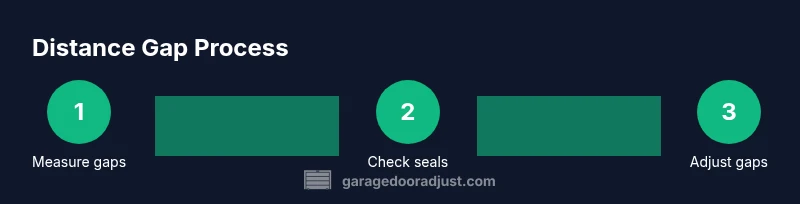
Measure the clearance at three points where the door edge meets the wall: top, middle, and bottom. Use a straightedge for reference and record each measurement with photos.
Tip: Take multiple measurements and average them to reduce errors. - 5
Inspect seals, tracks, and hardware
Look for worn weatherstripping, bent tracks, or loose mounting screws that could affect the gap. Document any defects before making changes.
Tip: Replace weatherstripping if it is cracked or compressed beyond repair. - 6
Adjust gaps carefully
If needed, adjust the wall-side stops or track mounting screws in small increments. Do not force components or remove structural fasteners.
Tip: Make one adjustment at a time and re-check the gap after each change. - 7
Re-check gap and performance
Close the door and test movement with the opener in a controlled cycle. Verify the seal engages evenly without rubbing.
Tip: Listen for rubbing sounds and observe the door’s travel path during the test. - 8
Lubricate and safety-check
Lubricate moving parts if recommended, and re-check safety sensors and balance. Ensure all safety features respond correctly.
Tip: Lubricants should be sparingly applied to moving metal surfaces. - 9
Document results and plan follow-up
Take after-action photos, compare with initial measurements, and set reminders for seasonal checks or replacements.
Tip: Keep a simple log to track changes over time.
Got Questions?
What is the ideal distance between the garage door and wall?
There isn’t a universal number. Always follow the door manufacturer's specifications and verify a proper seal and safe travel. If in doubt, consult a professional.
There isn't a universal ideal distance. Check the manufacturer specs and ensure the door seals properly and travels safely; consult a professional if uncertain.
How do I measure the distance accurately?
Use a tape measure at the top, middle, and bottom points where the door meets the wall. Record each value with photos and compare against manufacturer specs.
Measure the gap at the top, middle, and bottom with a tape measure, take photos, and compare to the manufacturer's specs.
Is a larger gap acceptable?
A larger gap can allow drafts and poor sealing, while too small a gap can cause rubbing. Adjustments should aim for a balanced, proper seal per guidelines.
A larger gap isn't ideal; it can cause drafts and seal issues. Adjust to the manufacturer’s guidelines.
Can incorrect gap cause safety issues?
Yes. An improper gap can cause binding, abnormal wear, or misaligned sensors. Address the root cause and test safety features after adjustments.
Yes, an incorrect gap can lead to binding or sensor misreads. Fix the root cause and test safety features after adjustments.
When should I replace weatherstripping?
Replace weatherstripping if it is cracked, compressed, or no longer seals well. This often restores proper distance and improves energy efficiency.
Replace weatherstripping if it’s cracked or compressed to restore proper distance and sealing.
Is professional help necessary for this task?
If you notice persistent misalignment, issues with springs, tracks, or structural movement, contact a licensed professional. DIY is best for simple seals and minor adjustments.
Consider a pro if springs, tracks, or structural issues are involved; otherwise DIY for seals and minor adjustments.
Watch Video
Quick Summary
- Measure at three points for an accurate gap
- Replace worn weatherstripping to restore proper clearance
- Avoid DIY changes to springs or main balance components
- Document before/after measurements for future reference
- Regular seasonal checks prevent misalignment