Why Is My Overhead Garage Door Beeping? A Homeowner's Troubleshooting Guide
Troubleshoot beeping overhead garage doors with a clear, step-by-step guide. Learn common causes, safety tips, and when to call GarageDoorAdjust for repairs.


Beeping overhead garage doors are usually sensor or power-related. Check the safety beams, reset the opener, and replace remote batteries. If it continues, you may have a wiring or limit switch issue that needs professional inspection.
Understanding why your overhead garage door beeps
When a garage door beeps, it’s a built-in safety or system warning, not a random alarm. The most common culprits are misaligned safety sensors, a dying remote battery, or a power issue with the opener. According to GarageDoorAdjust, most beeping is a solvable fault that homeowners can address with a methodical checklist. If you’ve asked yourself, why is my overhead garage door beeping, you’re not alone—this guide helps you identify the cause, verify safety, and restore normal operation without guessing.
Key idea: treat beeping as a warning signal, not a nuisance. Start with the simplest explanations (sensor alignment, battery, power) before diving into wiring or control-board checks. This approach minimizes risk and keeps you in control of the repair process.
Beep Patterns and Their Meanings
Beep cadence is the door opener’s shorthand for a problem. A single short beep may indicate a door that’s not fully closed or a minor sensor misalignment. A rapid series of beeps often points to a safety sensor fault or a blocked beam. Continuous, rhythmic beeps can signal a low-supply issue or a failing control board. While patterns vary by model, the underlying rule is consistent: start with the simplest, most accessible cause and work toward the more complex possibilities. GarageDoorAdjust’s guidance emphasizes documenting the pattern for reference when you consult a professional.
- Short, infrequent beeps: check safety beams for obstruction and clean the lenses.
- Rapid beeps: inspect sensor alignment and wiring connections.
- Continuous beeps: verify power supply, batteries, and circuit protection.
In all cases, rely on visual inspection first, then move to testing with the remote and wall control.
Safety First: When Beeping Signals a Hazard
A beeping door can indicate a real safety hazard. If you notice a door that moves unexpectedly, sags, or makes grinding noises, stop and disconnect power before touching the mechanism. The beeping could be a warning about a torsion spring, track misalignment, or an electronic fault that could cause the door to fall. The GarageDoorAdjust team stresses safety: never place hands near the tracks or moving parts while the door is powered. If you suspect a structural failure or a damaged spring, call a licensed tech immediately.
Safety checkpoints:
- Keep people and pets away from the door.
- Do not modify safety sensors or cut wires.
- Disconnect power to the opener before inspecting components.
Quick Checks You Can Do Before Calling a Pro
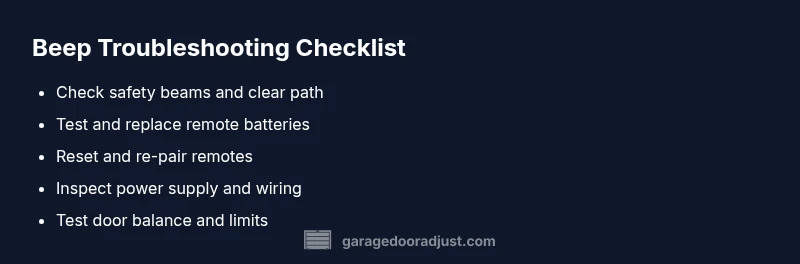
If you want to troubleshoot quickly, start with the basics. Confirm the door closes smoothly by manual operation and verify that the wall button and remote control respond correctly. Check the infrared safety beams: they must be unobstructed and aligned. Replace batteries in remotes and keypads, and re-pair devices if your system prompts you. If the beeping continues after these steps, you’re likely dealing with a sensor, wiring, or control-board issue that requires a deeper inspection by a professional.
Pro tip: document each step you take and photograph sensor alignment before making adjustments. This makes it easier to communicate the issue to a technician.
Step-by-Step Fixes for the Most Common Causes
To address the most frequent beeping causes, follow a structured approach. Start with the simplest fixes (sensor cleaning, battery replacement) and progress to more involved checks if needed. This section complements the dedicated STEP-BY-STEP block below and provides context so you know what to expect as you work through the repair.
- Sensor misalignment: adjust the safety beams so they face each other directly and are not blocked.
- Battery issues: replace the remote and keypad batteries with fresh ones; re-pair devices.
- Power problems: inspect the outlet, power cord, and any surge protection. Ensure the opener is receiving stable voltage.
- Wiring and control-board concerns: look for loose connections, but avoid handling high-voltage parts unless you’re trained.
If you still hear beeps after these checks, it’s time to proceed with the formal diagnostic flow or call a pro.
Prevention Tips to Keep It Quiet and Reliable
Prevention is easier than repair. Regular maintenance reduces unexpected beeps and extends the life of your garage door system. Clean the photo eyes monthly, test the safety reversal, lubricate moving parts every 3–6 months, and replace batteries at least once per year. Keep the tracks clean of debris and ensure the door is balanced by a professional every couple of years. A tidy, well-maintained system beeps less and lasts longer.
Stay proactive with a simple routine: inspect sensors, test the reversal system, and verify wall control responsiveness during seasonal checkups.
When to Call a Pro: Choosing Garage Door Professionals
If basic beeps persist after you’ve exhausted safe, DIY steps, it’s wise to involve a professional. A licensed technician can diagnose sensor faults, monitor circuits for fault codes, and verify the door balance and spring health. When selecting a pro, ask about their experience with safety sensor alignment, circuit diagnostics, and code compliance. The GarageDoorAdjust team recommends choosing a technician who provides clear diagnostics, explains the root cause, and offers a written estimate for any required parts or labor. In most cases, a professional visit resolves sensor, wiring, or spring issues quickly and safely.
Common Mistakes and Things to Avoid
Avoid bypassing safety sensors or disabling safety features to stop the beeping. Do not replace components without verifying compatibility. Over-tightening screws, using the wrong battery type, or ignoring the door balance can lead to recurring beeps and more serious problems. Always work cautiously around moving parts and stored energy. If you’re unsure, contact GarageDoorAdjust for guidance before attempting a repair.
Final Thoughts: Summary of Key Steps
Beeping garages door alarms are common and solvable. Start with the easiest checks—clear beams, test power, replace batteries—and progress to sensor realignment and wiring inspection. Maintain your system regularly to avoid future beeps. For the healthiest result, combine DIY fixes with periodic professional tune-ups.
Steps
Estimated time: 30-60 minutes
- 1
Identify beep pattern and test manual operation
Note whether beeps occur with door open/closed, and verify the door can move freely by hand when the opener is unplugged. This helps confirm whether the issue is mechanical or electrical.
Tip: Always unplug the opener before manual testing. - 2
Inspect safety beams for obstructions
Check the infrared eyes at each side of the door opening. Remove any debris, clean the lenses, and ensure nothing blocks their path.
Tip: Misalignment often causes beeps and a failed safety test. - 3
Test and replace batteries
Replace batteries in remotes, keypads, and any wireless sensors. Then re-pair remotes to the opener if prompted by your model.
Tip: Use fresh batteries of the exact size recommended by the manufacturer. - 4
Reset or relearn the opener codes
Follow the model’s reset procedure to relearn remotes and keypads. This clears potential code conflicts that trigger alarms.
Tip: A firmware or control-board update may also help in some models. - 5
Check the power supply and wiring
Inspect the outlet, power cord, and any extension cords or surge protectors. Look for scorch marks or loose connections and secure them.
Tip: If you see damaged insulation or burnt smell, stop and call a pro. - 6
Test limit and force settings
Ensure the door opens and closes fully without stopping mid-travel. Adjust limit settings slightly as per the manual and re-test.
Tip: Make small adjustments and test multiple cycles.
Diagnosis: Beeping overhead garage door repeatedly or continuously
Possible Causes
- highFaulty safety sensor beam alignment or obstruction
- highLow remote or keypad battery, or weak power supply
- mediumLoose or damaged wiring between sensors and control board
- lowIncorrect opener limit or force settings
Fixes
- easyRealign or clear obstruction from safety beams; clean lenses
- easyReplace remote/keypad batteries; re-pair devices if needed
- mediumInspect and reseat sensor/wiring connections; look for damaged wires
- mediumCheck and reset limit/force settings per the opener manual
Got Questions?
What does a beeping garage door opener mean?
Beeping usually signals a safety or power issue with the opener. It’s often due to misaligned safety sensors, low batteries, or a wiring fault. Check basics first before diving deeper.
Beeping usually means a safety or power issue. Start with sensors and batteries, then check wiring if needed.
Can low batteries cause beeping even if the door works?
Yes. Weak batteries in remotes or keypads can trigger beeps as the system tries to verify signals. Replace batteries and re-pair devices.
Weak batteries can trigger beeps. Replace them and re-pair devices if needed.
Is beeping always a safety issue?
Not always. Some beeps are routine warnings after an adjustment or battery change. However, persistent or loud beeps should be treated as safety issues until proven otherwise.
Not always a safety issue, but persistent beeps should be checked.
Do I need a professional if the beep pattern changes after I reset?
If resetting and basic checks don’t resolve the issue, a professional should diagnose sensor wiring, control board faults, or spring balance. They can safely handle high-voltage and moving parts.
If resets don’t fix it, a pro should diagnose sensor wiring or control board faults.
How do I reset the opener to fix beeping?
Follow your model's reset procedure in the manual to relearn remotes and keypads. This can clear code conflicts causing beeps.
Reset the opener by using the manual’s steps to relearn remotes.
Watch Video
Quick Summary
- Identify beep pattern first
- Check safety beams and batteries
- Reset remotes and relearn codes
- Call a pro for persistent issues