Where is the Garage Door Lock: A Homeowner's Guide
Learn where to find the garage door lock, how it works, and how to service or replace it safely. This guide helps homeowners diagnose lock issues, locate components, and improve door security and reliability.


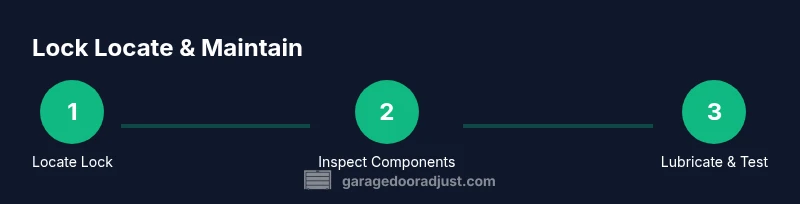
You will locate and inspect your garage door lock, identify its type, and test its operation. This guide shows where to look, how to access the lock safely, and what tools you need. You’ll learn step-by-step actions to open, service, or replace a damaged lock. Follow these steps to verify engagement, reduce sticking, and ensure reliable door function.
Understanding the role of the garage door lock in security
According to GarageDoorAdjust, the garage door lock is a hardware feature that helps prevent forced entry and keeps the door aligned when closed. The lock configuration varies by door style, but the goal is the same: engage a mechanism that blocks the roller carriage from moving when locked. In modern setups, a lock may be integrated with the door skin or mounted on the side edge of the door panel. Some designs rely on the opener for security, while others use a manual keyed lock. Understanding how the lock works is essential before attempting any maintenance. In this section, we’ll explore why the lock exists, what components it includes, and how to identify its location on your door. When you know where to look, you can assess whether the lock is engaged, jammed, or simply in need of lubrication.
Common lock configurations you'll encounter
Garage doors use several configurations to secure the door when closed. External keyed cylinders may appear on older or custom doors, while interior thumb-turn locks or lever handles are common on panels with accessible edges. Some designs rely on a simplified bottom-lock bracket that anchors the door when shut, particularly on off-the-shelf steel doors. Modern, fully automated doors may not include a traditional lock at all; security then hinges on precise alignment and the reliability of the opener’s locking mechanism. Regardless of the layout, the underlying goal remains the same: a functional lock that prevents the door from moving when engaged, while still allowing safe operation when disengaged.
How to locate the lock on your door
To find the lock, start with the obvious places: the interior edge of the door panel near the latch area and any handle or thumb-turn on the interior side. If there is an external lock, look for a keyhole or a small cylinder on the door’s face. Check along the door’s side edge and near the header where the panel meets the track. In some designs, the lock is tucked behind a decorative cover or integrated into the opener’s mounting hardware. Use a flashlight and a mirror if needed to view tight spaces. Once located, identify whether the lock is mechanical (keyed), manual (thumb-turn), or integrated with the opener’s electronic lock.
Safe access and preparation before working on the lock
Before touching any lock, prioritize safety. Disconnect power to the garage door opener to prevent unexpected movement, then wear gloves and safety glasses. Clear pets and children from the workspace, and ensure you have adequate lighting. Use a sturdy ladder if you must inspect the header area or high components. Have a small tray for screws and a magnetic pickup tool to prevent dropping parts into the tracks. Preparing properly reduces the risk of injury and lost hardware.
Testing and diagnosing lock issues
Start by closing the door fully and attempting to engage the lock. If there is a keyed lock, test both the locked and unlocked positions with the key. Check whether the latch aligns with the strike plate; misalignment is a common cause of failure. Look for rust, corrosion, or debris that could hinder movement. If the lock is stuck, avoid forcing it; instead, inspect the mechanism for obstructions, inspect the gear on the opener side, and lubricate moving parts with a silicone-based lubricant. If normal operation cannot be restored, the lock or strike may need replacement.
Maintenance and future-proofing
Regular maintenance keeps the lock functioning and improves door security. Clean the lock and surrounding area to remove dust and grime. Lubricate the latch, hinges, and any sliding components every 6–12 months or after hard seasons. Inspect weather-stripping around the door, as poor seals can affect lock engagement. If you notice recurring issues—frequent jamming, wear on the latch, or misalignment—consider upgrading to a lock designed for your door type or consulting a pro for a precise adjustment.
Tools & Materials
- Flashlight(Bright beam to inspect tight spaces along the door edge and header)
- Safety gloves(Protect hands from sharp edges and moving parts)
- Screwdrivers (flat-head and Phillips)(For removing trim covers or securing screws on the lock housing)
- Silicone-based lubricant(Lubricate moving parts; avoid oil-based lubricants that attract dust)
- Graphite powder (optional)(Alternative dry lubricant for certain keyed locks)
- Rags or microfiber cloth(Wipe away grime before applying lubricant)
- Allen wrench set (optional)(If your lock uses set screws)
- Replacement lock kit (optional)(Only if the current lock is worn or damaged)
Steps
Estimated time: 20-45 minutes
- 1
Locate the lock type and position
Close the door and inspect both interior and exterior faces to find the lock mechanism. Note whether it is a keyed cylinder, a thumb-turn, or an internal lever. Document its location to guide the repair approach.
Tip: If you struggle to see the lock, use a mirror and flashlight to view tight corners. - 2
Identify the lock configuration
Determine if the lock is external (keyed) or internal (thumb-turn/lever). This determines how you safely test and operate the lock. Understanding the configuration prevents accidental damage.
Tip: Take a quick photo of the lock housing for reference later. - 3
Test unlocking and locking
If there is a key, insert and gently rotate to unlock. On thumb-turn or lever locks, operate the mechanism to verify it moves freely. Do not force a stubborn lock, as it may indicate wear or misalignment.
Tip: If the key doesn’t turn, check for bent key or worn pins; do not force the key. - 4
Check latch alignment with strike plate
Close the door slowly and observe where the latch meets the strike plate. If misaligned, the latch may settle or the strike plate could be bent. Adjust as needed to ensure smooth engagement.
Tip: Small shims or minor bend adjustments can often realign the strike plate without replacement. - 5
Lubricate moving parts
Apply a light, silicone-based lubricant to the lock’s moving parts, hinges, and any sliding components. Wipe away excess to avoid attracting dust. Lubrication reduces friction that causes sticking and premature wear.
Tip: Avoid oil-based lubricants on plastic components; they can degrade plastic over time. - 6
Test door operation post-maintenance
Operate the door several times to ensure the lock engages reliably and the door wheels move smoothly. Listen for unusual noises and watch for sticking or binding.
Tip: If you hear grinding, stop and inspect the gear train or hinge mounts for issues. - 7
Decide if replacement is needed
If the lock remains unreliable after lubrication and adjustment, the internal mechanism may be worn. Consider replacing the lock or consulting a professional installer.
Tip: A matching lock kit designed for your door model often yields the best results. - 8
Re-secure and finalize
Once the lock operates reliably, re-secure any trim covers, ensure all screws are tight, and store your tools. Keep a record of the lock model for future maintenance.
Tip: Keep a small maintenance log to track lubrication dates and any adjustments.
Got Questions?
What is the purpose of a garage door lock?
A garage door lock helps prevent unauthorized entry by securing the door in the closed position and aligning components so the door operates smoothly. It increases security, especially when the door is left unattended.
The lock keeps the door secure when closed and helps ensure smooth operation, improving overall safety.
Where is the lock typically located on a residential garage door?
Locks can be external keyed cylinders on the door face, an internal thumb-turn or lever near the interior edge, or in rare cases, a bottom-lock bracket. Not all doors have a traditional lock; some rely on the opener for security.
Look along the interior edge, the door face, or near the header for a keyhole or thumb-turn.
Can I service the lock myself or should I hire a pro?
Many routine maintenance tasks, like lubrication and alignment checks, are suitable for homeowners. More complex issues, such as a worn latch or damaged strike plate, may require a professional replacement to ensure safety and proper operation.
Basic maintenance you can do at home; for major issues, consider a pro to ensure safe operation.
What are common signs of a failing garage door lock?
Common signs include difficulty locking/unlocking, misalignment with the strike plate, unusual noises, or the door moving freely when the lock is engaged. Corrosion and worn components can also indicate replacement is needed.
If it won’t lock, sticks, or makes odd noises, it may need inspection or replacement.
Is it safe to lubricate the lock?
Yes, use a silicone-based lubricant on moving parts. Wipe away excess to prevent dust buildup. Avoid oil-based lubricants on plastic parts.
Lubrication is safe and helpful when done with the right product and minimal excess.
When should I replace a garage door lock?
If the lock remains unreliable after cleaning and lubrication, or the latch and strike plate show significant wear, replacement is recommended to restore security.
If it still doesn’t work well after fixes, replacement is wise for security.
Watch Video
Quick Summary
- Identify lock type before testing
- Align latch with strike plate for reliable engagement
- Lubricate moving parts to reduce sticking
- Replace worn locks to maintain security