Tallahassee Garage Door Repair: A Local Step-by-Step Guide
A comprehensive, local-focused guide to diagnosing, repairing, and maintaining garage doors in Tallahassee. Learn safe DIY steps, when to call a pro, and how climate affects wear and performance for reliable operation year-round.


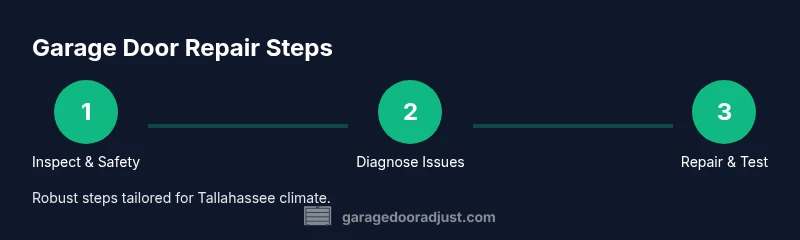
With this guide, you will perform basic tallahassee garage door repair and safely diagnose common issues specific to Florida's capital. You'll learn essential tools, safety steps, and a practical, step-by-step approach. This plan helps homeowners decide when DIY is safe and when to call a pro for tallahassee garage door repair, ensuring reliable operation year-round.
Local climate and its impact on garage doors in Tallahassee
Tallahassee experiences hot, humid summers and seasonal storms. Those conditions accelerate wear on weather seals, accelerate corrosion in humid environments, and can warp wooden components. In this climate, garage doors and openers face more moisture exposure than inland climates. That's why local Tallahassee homeowners need a targeted approach that considers rain, humidity, and temperature swings. The GarageDoorAdjust team has analyzed typical failure modes for doors in this area and recommends inspection intervals that align with seasonal weather patterns. Regular checks help catch issues before they escalate into expensive repairs. In our experience, most common problems involve improper balance, track misalignment, and degraded weather seals, all of which worsen with humidity. By understanding these local conditions and performing preventive maintenance, you can extend door life and keep the garage secure for the family. This guide focuses on practical, locally relevant steps you can perform safely and effectively.
Common Problems Facing Tallahassee Homes
Many Tallahassee doors struggle with spring wear due to frequent cycling and high humidity. Torsion springs can lose tension, causing uneven lifting or sudden drops. Track and roller wear from temperature swings and grit can cause binding or noisy operation. Weather seals deteriorate rapidly in humid air, reducing insulation and inviting drafts. If you notice jerky movement, grinding noises, or the door stopping halfway, these symptoms point to misalignment, worn components, or dry parts needing lubrication. Understanding these patterns helps homeowners anticipate failures and prioritize maintenance before a breakdown occurs. GarageDoorAdjust notes that proactive checks, especially after heavy storms, dramatically reduce emergency repairs and downtime.
Safety First: Prep and Protective Steps
Safety comes first in any Tallahassee garage door repair task. Before touching anything, unplug the opener from its outlet and disconnect the emergency release to eliminate accidental movement. Wear safety glasses and gloves, tie back long hair, and keep children and pets away from the workspace. Use a sturdy ladder and secure it on a level surface. Never attempt to adjust torsion springs or cables unless you are trained and equipped for spring work; professional help is essential for those components to prevent serious injury. Clear the area of obstacles and work in daylight or bright lighting to improve visibility. These precautions reduce risk and set the stage for a successful, controlled repair process.
Diagnosing Issues by Symptoms
If the door refuses to open or closes unexpectedly, start with the opener and safety sensors. Check the track for obstruction or misalignment, then inspect rollers and hinges for wear. A grinding or squealing sound often indicates dry bearings or worn rollers. If you notice uneven movement or gaps along the track, address alignment first and then examine components like rollers, hinges, and weather seals. Record symptoms and timing to help narrow down root causes and inform any professional assessment. This symptom-based approach keeps you focused and reduces guesswork.
Maintenance and Preventive Care for Humid Climates
Regular lubrication of moving parts helps counter humidity-related stiffness, especially in the tracks, hinges, and rollers. Use a light silicone-based or lithium-based garage door lubricant and avoid heavy oils that attract dust. Schedule inspections at least twice a year, with extra checks after storms or heavy rain. Replace degraded weather seals promptly to preserve insulation and protect components from moisture. Keeping panels clean and free of debris also minimizes wear and prolongs life. A small yearly investment in maintenance pays off with smoother operation and fewer emergency repairs.
When to Call a Pro in Tallahassee
Some tasks require professional expertise, especially torsion spring replacement or cable work where high tension is involved. If you hear persistent grinding, notice frayed cables, or see reduced door balance after basic checks, contact a licensed technician. Local pros can accurately diagnose issues that may be caused by climate-related wear, structural movement, or electrical sensor faults. Scheduling a professional inspection in spring or fall aligns well with Tallahassee's seasonal changes and helps maintain reliability throughout the year. The GarageDoorAdjust team recommends a proactive yearly evaluation for long-term door health.
Tools & Materials
- Safety glasses(ANSI-rated safety glasses and gloves for hand protection.)
- Work gloves(Sturdy gloves to protect hands during handling.)
- Ladder(Stable ladder tall enough to reach the door mechanism safely.)
- Flashlight/headlamp(Good visibility inside tracks and torsion area.)
- Wrench set and socket/ratchet(Common sizes for bolts and brackets.)
- Screwdrivers (Phillips and flathead)(For brackets and small fasteners.)
- Lubricant (silicone-based)(Light spray for tracks, hinges, and rollers.)
- Cloth rags(Wipe excess lubricant and clean components.)
- Replacement rollers/hinges (optional)(Only if wear is evident.)
- Tension spring tool (for professionals)(Only for trained technicians.)
Steps
Estimated time: 2-3 hours
- 1
Disconnect power and assess safety
Begin by unplugging the garage door opener from its outlet and disengaging the manual release so the door cannot move unexpectedly. Visually inspect the door in a lowered position to spot obvious misalignments or damage. This step reduces risk before any hands-on checks.
Tip: Never work under a door that is supported only by springs; always disengage power first. - 2
Check balance and track alignment
With the door closed, pull the manual release and lift the door halfway to test balance. If it stays put or drifts, the springs or balance system may need adjustment. Inspect tracks for dents, bends, or obstructions and ensure they run straight along the sill.
Tip: Misaligned tracks cause wear and noise; fix alignment before continuing. - 3
Inspect springs, cables, and rollers
Look for worn or frayed cables, damaged springs, and cracked or chipped rollers. Do not attempt spring work if you are not trained; these parts are under high tension and can cause severe injury.
Tip: If springs or cables show wear, schedule professional service immediately. - 4
Lubricate moving parts
Apply a light silicone-based lubricant to the tracks, rollers, hinges, and chain or belt drive (if applicable). Wipe away excess to prevent dust buildup. Lubrication reduces friction and extends component life in humid climates.
Tip: Avoid spray oils near weather seals as they can degrade rubber. - 5
Test operation with power restored
Plug the opener back in and perform a full cycle with the door both manually and via the remote. Listen for unusual noises and observe smooth movement. If anything seems off, stop and re-check or call a pro.
Tip: Never force a door to move; stop at the first sign of binding. - 6
Plan for professional follow-up
If issues persist after basic checks, schedule a professional Tallahassee garage door repair appointment. A licensed tech can confirm spring tension, track geometry, and sensor health with proper safety measures.
Tip: Annual professional inspection can prevent costly failures.
Got Questions?
Is a permit typically required for garage door repair in Tallahassee?
Most basic garage door repairs don’t require a building permit. However, changes that affect structural elements or electrical components may require local inspection. Check with your city zoning or building department for confirmation.
Most repairs don’t need a permit, but check with local authorities for the specifics.
Can I safely replace a torsion spring myself?
Torsion springs are high-tension components; replacing them without proper training can cause severe injuries. It’s best to leave spring work to a licensed technician and follow manufacturer safety guidelines for non-spring tasks.
No—torsion springs require professional handling for safety.
How long does Tallahassee garage door repair usually take?
Repair duration varies with the issue and parts availability. Most common fixes take a few hours when parts are on hand; more complex repairs may require scheduling a follow-up visit.
Most fixes are completed in a few hours, depending on the parts and complexity.
What’s a rough cost range for common repairs?
Costs vary by problem and local labor rates. Plan for a broad range that accounts for parts, labor, and potential sensor or weather sealing replacements. Get multiple quotes for best value.
Costs vary; get a few quotes to compare.
How can I extend my door’s life in a humid climate?
Regular lubrication, prompt weather seal replacement, and annual inspections help. Clean debris from tracks, inspect rollers, and tighten brackets to reduce moisture-related wear.
Keep up with lubrication and seal checks to fight humidity.
When should I replace my garage door rather than repair it?
If the door is structurally compromised, heavily corroded, or repeatedly failing despite repairs, replacement may be more cost-effective. Consider energy efficiency and security improvements when upgrading.
If repairs keep failing or the door is old, replacement may be best.
Watch Video
Quick Summary
- Test balance and tracks before any DIY fixes
- Do not work on springs without training
- Lubricate moving parts to reduce wear
- Consider annual professional inspections for climate resilience