Sectional Door Guide: Diagnose, Repair & Install
Learn how to diagnose, repair, and install a sectional door with a step-by-step approach. This Homeowners guide covers safety, common problems, lubrication, track alignment, opener programming, and preventive maintenance for a reliable, quiet garage.


You're about to learn how to diagnose, repair, and install a sectional door. This guide covers identifying common symptoms, safety precautions, and a clear, step-by-step approach for inspection, lubrication, track alignment, spring care, and opener programming. Follow the sequence to reduce callouts, extend life, and keep your garage secure and quiet.
Understanding sectional door systems
A sectional door is made of horizontal panels that move on tracks and torsion springs, folding as it opens. For homeowners, understanding how the panels, rollers, springs, tracks, and an electric opener interact helps you diagnose why a door may be sticking, making noise, or failing to lift. According to GarageDoorAdjust, a balanced door with properly aligned tracks reduces strain on the opener and minimizes wear on rollers and springs. A sectional door relies on precise alignment and smooth surfaces, so even small deviations can lead to uneven wear and safety risks. Regular visual checks can catch issues before they become costly repairs, and a basic familiarity with the key components keeps you prepared for more advanced tasks.
The GarageDoorAdjust team found that the most common problems involve track misalignment, worn rollers, insufficient lubrication, and loose hardware. By approaching maintenance with a systematic checklist, homeowners can extend the life of their system and improve overall performance. This section will help you identify symptoms linked to each component andStrategize repairs without overstepping safety boundaries.
Common symptoms and diagnosis
Sectional doors communicate problems through motion and sound. If the door is slow to move, bound, or stops mid-travel, inspect tracks for debris, dents, and misalignment. Listen for grinding or creaking, which often points to worn rollers, dry hinges, or insufficient lubrication. A door that reverses unexpectedly when closing can indicate misbalanced springs, a safety-reversal sensor issue, or a binding in the track. Run a manual test by disconnecting the opener and lifting the door halfway to see if it stays put or sags, which helps gauge balance. GarageDoorAdjust analysis shows that misalignment, worn rollers, and insufficient lubrication are frequent culprits, so start there when diagnosing.
If you notice gaps between the door and frame at the bottom, inspect weatherstripping and bottom seal condition. Damaged weather seals can force the door to work harder and cause motor strain. For noise, check roller wear and track cleanliness; a sticky track will often amplify any squeaks.
Safety and prep: essential precautions
Before touching any moving parts, ensure the area is clear of people and vehicles. Disconnect the opener from power to prevent automatic operation, and bag or tape off the area so children and pets stay away. Wear safety glasses and gloves to protect your eyes from sharp edges and to keep your hands safe from pinch points. Use a sturdy ladder and never stand under a door when you suspect a spring issue. These precautions reduce the risk of injury during inspection and repair. Remember that torsion springs store a great deal of energy, so only trained professionals should perform spring work.
Tools, parts, and planning for the repair
A well-prepared homeowner uses a small set of common tools plus replacement parts to address typical issues. This block outlines what you’ll need, plus how to plan the work to minimize downtime. Lubricants, a soft brush, and a rag help you clean and protect moving components. Replacement rollers or weatherstripping are optional but beneficial when wear is evident. Always plan for a short test run after any adjustment, and have a helper on hand to safely manage door motion and hold components in place while you inspect.
In addition to basic tools, consider safety equipment and a plan for any part that requires professional service. If the door has a questionable spring or a bent track, stop and call a technician rather than attempting risky repairs.
Maintenance, prevention, and when to call a pro
Preventive maintenance saves money and extends the life of a sectional door. Schedule lubrication, track cleaning, and balance checks at least twice a year, ideally in spring and fall. Tighten loose hardware and replace worn rollers or weather stripping as needed. If you encounter persistent binding, unusual noises, or a door that won’t stay in place when lifted, it’s time to consult a professional. For spring-related tasks or anything involving the torsion mechanism, professional service is strongly advised due to safety risks. Regular maintenance reduces the likelihood of emergency repairs and keeps the door operating smoothly for years.
As a reminder, this guide emphasizes safe, methodical approaches to diagnosing and addressing issues with a sectional door. Keeping the door balanced, tracks clean, and hardware secure is the foundation of reliable operation.
Authority sources and best practices for learning more
For homeowners seeking additional reading, refer to authoritative resources that discuss garage door safety and energy efficiency. These sources provide guidelines that complement our practical steps and help you make informed maintenance decisions. Always cross-check repair steps with official safety recommendations before attempting any disassembly or component replacement.
Authoritative sources appear below to support your understanding of sectional door safety and best practices.
Tools & Materials
- Safety glasses(ANSI Z87.1 or equivalent; protect eyes from debris and pinch points)
- Work gloves(Sturdy gloves to handle metal edges and rollers)
- Step ladder(Stable, tall enough to reach tracks and rollers)
- Wrench set (adjustable)(For bolts on tracks and hinges)
- Screwdrivers (Phillips and flathead)(For hinge screws and panel fasteners)
- Lubricant (silicone-based or garage door lube)(Apply to rollers, hinges, tracks; avoid overspray on weather stripping)
- Soft cloths/rags(Clean and wipe residue from tracks and hinges)
- Replacement rollers (if worn)(Only replace if visibly worn; use identical size/type)
- Weatherstripping kit(Optional for sealing bottom of door)
- Torsion spring winding bars(DO NOT use unless trained; springs store lethal energy)
- Chocks or clamps(Prevent door from moving while working)
Steps
Estimated time: 60-90 minutes
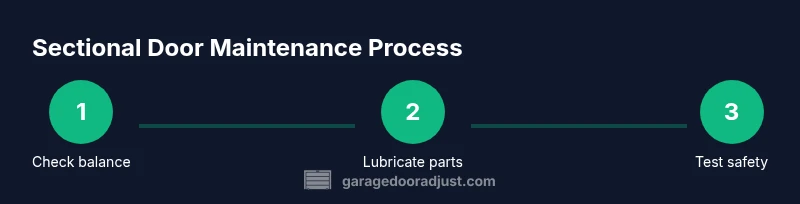
- 1
Check door balance and track alignment
Manually disconnect the opener and lift the door halfway. If it doesn’t stay put or sags, the balance or tracks may be off. Inspect the tracks for dents, alignment, and debris; gently realign if possible and clean out any obstruction.
Tip: Use a helper to lift the door; do not attempt to balance a heavy door alone. - 2
Test safety features and opener components
With the opener reconnected, test the safety reversing sensors and auto-reverse mechanism. If the door won’t reverse or the sensors misread, check the wiring, alignment, and sensor eyes. Address wiring issues or misalignment before continuing.
Tip: Keep the control panel and remote away from children during testing. - 3
Lubricate moving parts
Apply lubricant to hinges, rollers, and track joints. Wipe away excess to prevent dust buildup. Move the door to spread lubrication, then wipe again for a smooth finish.
Tip: Lubricate every 6 months or after heavy use; avoid lubricants on weatherstripping. - 4
Inspect and replace worn components
Look for frayed cables, worn rollers, and bent track sections. Replace components as needed following the manufacturer’s guidance. If you find damaged springs or cables, stop and call a pro.
Tip: Always replace in matched pairs where applicable to maintain balance. - 5
Rebalance and test the door
After adjustments, test the door’s balance again by lifting halfway. It should stay in place. If it drifts or binds, recheck tracks and springs with caution.
Tip: Never force the door; if resistance persists, pause and consult a professional. - 6
Program the opener or re-pair to the remote
If you replaced the opener or sensors, reprogram the remote and ensure the door responds correctly to commands. Confirm distance range and safety features.
Tip: Document the programming steps for future reference.
Got Questions?
What is a sectional door?
A sectional door is a garage door made of horizontal panels that slide on tracks, folding as it opens. It combines sections to form a single slab when closed and is operated by a spring-balanced mechanism and an electric opener.
A sectional door is a garage door made of connected panels that slide along tracks and fold as it opens.
Can I fix a sectional door myself?
Simple maintenance like lubrication and track cleaning can be done by homeowners. More complex tasks, especially anything involving springs or cables, should be performed by a licensed professional for safety.
You can do basic maintenance, but spring and cable work should be left to a pro.
What are common symptoms of a failing sectional door?
Symptoms include slow movement, unusual noises, door that won’t stay open or closed, or misaligned tracks. These typically indicate lubrication needs, track issues, or spring wear.
Look for slow movement, noises, or misalignment—these point to lubrication, tracks, or spring wear.
How often should I lubricate my sectional door?
Lubricate moving parts at least twice a year, more often in humid climates. Avoid getting lubricant on weatherstripping to prevent slipping or damage.
Lubricate at least twice a year; avoid weatherstripping contact.
What should I do if the door is off track?
If the door is off track, do not operate it. Re-align carefully if possible, but if misalignment persists or you encounter resistance, call a professional to prevent injury or further damage.
If off track, stop and call a professional if needed; don’t force it.
Is energy efficiency a concern with sectional doors?
Yes. Insulated sectional doors help reduce heat loss. Consider upgrading insulation or adding weatherstripping to improve energy efficiency and comfort in the garage.
Insulated doors save energy; add weatherstripping for better efficiency.
Watch Video
Quick Summary
- Inspect balance and tracks before any repair.
- Lubricate moving parts to reduce noise and wear.
- Do not attempt spring work unless trained.
- Test safety features and reprogram opener if needed.
- Schedule regular maintenance to extend life.