Roller Door Checklist: Inspect, Maintain, and Fix Your Roller Door
A practical roller door checklist to diagnose alignment, balance, tracks, springs, and opener safety. Learn step-by-step maintenance tips from the GarageDoorAdjust Team.


The Roller Door Checklist helps homeowners systematically inspect balance, alignment, tracks, rollers, springs, and opener safety features. Before you begin, gather basic tools, unplug the opener, and secure the door. This guide walks you through safe inspection, common symptoms, recommended maintenance, and when to call a pro, so you can diagnose issues confidently and prevent costly damage.
Prerequisites and safety basics
Before you start the roller door checklist, set up a safe workspace and protect yourself. Unplug the garage door opener or switch off the circuit to prevent accidental movement, and keep children and pets away. Gather the required tools listed in the Tools & Materials section and inspect the surrounding area for loose items. A calm, methodical approach reduces the risk of injury and damage as you work through the maintenance tasks.
Thorough inspection checklist
A comprehensive roller door checklist focuses on the door, the opener, and the safety system. Start with the door itself: inspect tracks for debris, dents, and loose mounting brackets; check tracks are vertically aligned using a level; ensure rollers spin freely without binding. Move to the door balance: disconnect the opener, manually lift the door to about halfway and let go; if it tends to drift or slam shut, there may be a balance issue or worn springs (which require a pro). Next, test safety sensors and reverse mechanism by placing an obstacle in the path; the opener should reverse clearly. Finally, examine the cables, hinges, and brackets for wear and tightness.
Troubleshooting common issues
Common symptoms may point to specific root causes. If the door sticks or binds when opening/closing, debris in tracks or misaligned tracks are likely culprits. Squealing or grinding noises usually indicate lack of lubrication or worn rollers; clean and lubricate moving parts, replacing any worn components as needed. If the door opens but stops unexpectedly or reverses early, recheck the photo-eye alignment and ensure the safety sensor is unobstructed. If the opener won't operate, verify power supply, outlet condition, and remote control batteries. For more complex spring or balance problems, never attempt DIY repairs—call a pro.
Maintenance best practices to extend life
Create a simple schedule to keep your roller door functioning smoothly. Wipe down tracks monthly to remove dust and corrosive grit; lubricate aluminum or steel rollers, hinges, and tracks every 6 months with a silicone-based or lithium-based lubricant—avoid heavy grease on tracks. Tighten loose screws or brackets during visual inspections and replace worn components promptly. Keep the door balanced and the section joints clean; a tidy, well-lubricated system reduces noise and extends life.
When to call a pro: red flags and escalation
Not all problems are safe to tackle yourself. Call a pro if you notice obvious spring tension irregularities, frayed cables, cracked tracks, or if the door is not balanced after a manual test. If the opener reverses for no reason or the sensors fail to detect objects reliably, professional inspection is advised. For upgraded security or remote programming, a certified technician can ensure safe operation and warranty compliance.
Quick-start printable checklist template
Use this printable roller door checklist to guide your maintenance sessions. It includes sections for visual inspection, lubrication, safety tests, and notes. Print a copy, check off items as you complete them, and keep the sheet with your repair tools for easy reference during future maintenance.
Tools & Materials
- Safety goggles(Protect eyes from debris and springs)
- Work gloves(Grip and hand protection)
- Ladder or step stool(Access high tracks safely)
- Screwdrivers (Phillips and flat-head)(Loose screws and hardware)
- Wrench set (combination or adjustable)(Tighten brackets and bolts)
- Lubricant (silicone-based or lithium grease)(Lubricate moving parts; avoid chain oil)
- Rags or paper towels(Clean surfaces and wipe excess lubricant)
- Cordless drill (optional)(If you need to remove rollers or adjust brackets)
- Voltage tester (optional)(Ensure circuits are off when testing opener wiring)
Steps
Estimated time: 60-90 minutes
- 1
Secure area and power down
Unplug the opener and clear the workspace. Use a ladder if you need to reach high tracks, and block access to the door with a clamp or block to prevent accidental movement.
Tip: Never work on a door that could move; always isolate power before touching any components. - 2
Inspect tracks and rollers for debris
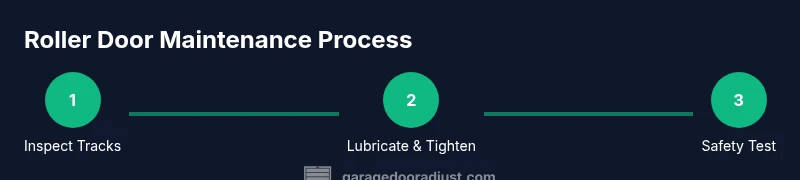
Use a flashlight to inspect all tracks for dust, rust, or dents. Remove debris with a stiff brush and wipe the rails clean. Check that tracks are straight and brackets are tight, listening for any looseness as you run your finger along the track.
Tip: If you find bent brackets or severely damaged tracks, stop and plan replacement; avoid forcing the door. - 3
Test door balance manually
Disconnect the opener following the manufacturer’s instructions, then manually lift the door to about midway and hold for a few seconds. If it drifts up or down, note the direction and prepare for possible spring or balance work.
Tip: Balance issues can be dangerous; do not attempt spring adjustments unless you are trained. - 4
Lubricate moving parts
Apply a light coat of silicone-based or lithium grease to rollers, hinges, and neutral points along the tracks. Wipe away any excess to avoid attracting dirt.
Tip: Lubricate only moving parts; avoid applying lubricant to bearings that are not designed for it. - 5
Check safety sensors and limits
Re-connect the opener and test the auto-reverse by placing an object in the path of the door. Ensure the sensors are clean and aligned; adjust if needed until the door reverses reliably.
Tip: Keep the sensor eyes clear of dust and obstructions—misalignment is a common cause of reversals. - 6
Inspect springs and cables visually
Look for any signs of wear, fraying, or corrosion on cables, and a visible gap in springs. Do not attempt to adjust or replace springs yourself; call a pro if there are any concerns.
Tip: Springs and cables carry high tension; a professional should handle replacements. - 7
Test opener operation and manual closure
Reconnect the opener and run the door up and down using the remote. Observe for smooth operation and listen for unusual noises. Test manual closure to confirm the door remains secure when fully lowered.
Tip: If you hear grinding or the door binds, stop and re-check alignment before continuing. - 8
Document findings and plan maintenance
Create a short maintenance log noting any wear, loose screws, or components needing replacement. Schedule a recheck in 3–6 months to keep performance optimal.
Tip: Keep your log near the control panel for quick reference during future sessions.
Got Questions?
What should I include in a roller door checklist?
A roller door checklist should cover tracks, rollers, balance, springs (visual only), cables, safety sensors, opener function, and hardware. Add lubrication notes and any observed wear. Use this as a baseline before any repairs.
Your roller door checklist should cover tracks, rollers, balance, sensors, and opener function, plus lubrication notes and observed wear.
Can I fix a misaligned track myself?
Minor misalignment can sometimes be corrected by tightening brackets and realigning tracks. If you notice bends, cracks, or the door binds, stop and seek professional help to avoid injury and further damage.
Minor alignment issues may be fixable, but bent tracks or binding should be handled by a pro.
Why does my door reverse unexpectedly when closing?
Unexpected reversal often points to misaligned safety sensors, reversed wiring, or improper limit settings. Clean and align the sensors, test with a light obstacle, and adjust the opener limits if needed.
If the door reverses, check the safety sensors and the opener's limit settings.
How often should I lubricate the roller and track?
Lubricate moving parts at least every 6 months or after heavy use or dusty conditions. Use a silicone-based lubricant and wipe away excess to prevent dirt buildup.
Lubricate every six months or after heavy use with silicone-based lubricant.
When should I call a professional?
Call a professional for any signs of spring tension changes, frayed cables, cracked tracks, or unresolved balance issues after a manual test. Warranty and safety considerations also justify expert help.
Call a pro if you see damaged springs, frayed cables, or persistent balance issues.
How can I extend the life of my roller door?
Regular cleaning, timely lubrication, tightening loose hardware, and proactive inspection help prevent wear. Maintain balance and address issues early to avoid costly repairs.
Regular cleaning, lubrication, and early issue detection extend door life.
Watch Video
Quick Summary
- Follow safety-first practices at every step.
- Regular inspection prevents major failures and extends life.
- Don’t DIY spring or cable repairs; call a pro when needed.
- Maintain logs to track wear and plan maintenance.