Protect Garage Doors from Basketball: A Practical DIY Guide
A practical, beginner-friendly guide to shield your garage door from basketball impacts with barriers, maintenance, and smart placement. Learn a proven, step-by-step approach from GarageDoorAdjust.


According to GarageDoorAdjust, you can dramatically reduce basketball-related damage by installing protective barriers, creating a dedicated play zone, and performing regular garage door maintenance. Start with a sturdy backstop, bumper guards, and weather-stripping, then verify sensor alignment after the installation. This approach minimizes impact risk without replacing the door. Follow these steps carefully to ensure safety and preserve warranty.
Understanding the basketball risk to your garage door Basketball near a driveway often becomes a source of accidental contact with the garage door. When a ball strikes a panel, the impact can leave dents, bend a track, or misalign a roller and hinge assembly. In some cases, the photoelectric sensor can be knocked out of alignment, causing false reversals that trap the door in mid-travel. The GarageDoorAdjust team found that even small impacts accumulate stress in the door system over time, reducing reliability and potentially shortening the door's life. The most common injuries from a hit include dented panels, bent tracks, misaligned springs, and loose hardware at hinges or rollers. Early signs include creaking noises, slower travel, irregular gap at the bottom edge, or the door stopping short of the floor. A quick weekly check that includes a full cycle and a visual inspection of tracks and seals can catch these issues before they become a damage claim or a costly repair.
Smart strategies to prevent impact The easiest way to reduce basketball-induced damage is to create a safe play zone and limit ball trajectories near the door. Start by moving the hoop and basketball to a dedicated area away from the garage opening. Use a wall-mounted backstop on the wall opposite the door to intercept shots before they reach the door panels. Consider installing floor mats or a temporary barrier to catch rebounds. Establish a routine so family and guests practice in the same area every time, and remind players to retrieve the ball from outside the garage after shots. Additionally, set a rule: never swing or throw a ball near the door when it is in motion. The combination of planning, discipline, and simple barriers dramatically reduces the chance of a damaging impact.
Physical barriers you can install There are several practical barriers you can install without replacing the door. A wall-mounted backstop behind the door is the most effective first line of defense; choose a backstop with a solid, stud-mounted frame that can absorb direct hits. Install corner guards at the contact zones where the wall meets the door frame to protect against ricochet damage. Add foam padding or rigid bumper strips along the door’s lower edges to cushion any contact. For additional protection, mount a lightweight, portable barrier that can be pulled into place during play. Finally, consider weather-stripping along the sides and bottom to reduce bounce and seal gaps that can amplify impact energy and cause the door to bind.
Garage door maintenance basics that matter A well-maintained door is less susceptible to impact-related problems. Regularly lubricate tracks, rollers, and hinges with a silicone-based lubricant to ensure smooth operation and minimize resistance when the door reverses after an impact. Check that tracks are still aligned and that screws and bolts are tight, with particular attention to the hinges. Test the safety sensors by placing a harmless object in the path as the door closes and confirming the door reverses. Inspect weather-stripping for wear or gaps and replace as necessary to keep the door sealing well and minimizing bounce. Finally, test the door’s balance by turning off the opener and lifting the door halfway; if it stays put, the springs are balanced; otherwise, call a pro. GarageDoorAdjust analysis shows that a well-lubricated, balanced system significantly reduces wear from incidental contact.
How to choose and install protective measures When selecting barriers, prioritize materials that absorb impact without causing ricochets or creating new hazards. Foam padding, padded backstops, and rubber trim are preferable to hard plastics near moving parts. Ensure any barrier is mounted securely to studs and does not interfere with door travel or sensor operation. Plan for quick removal or reconfiguration if you switch to a different parking arrangement or a larger hoop. If you are unsure about mounting, hire a handyman or garage door technician to install the barrier with proper fasteners and safety practices. After installation, re-check the door’s function and restore any misaligned components if needed.
Safety considerations and insurance implications Keep safety at the forefront: barriers must not obstruct the door’s sensors, limiters, or emergency releases. Follow manufacturer guidelines when making any modifications, and avoid drilling into structural springs or tracks. If you rent or own a home with a mortgage, check your insurance policy; some modifications can influence coverage or require additional documentation. Document the barrier installation with photos and notes so you can share details with your insurer if questions arise. If any barrier is damaged or bent in a hit, replace it promptly to maintain protection.
Real-world scenarios and maintenance routines In many homes, a simple set of barriers and a play-area plan can reduce basketball-related damage by substantial margins. A quarterly maintenance routine—visual inspection, sensor test, and barrier check—helps catch issues early. After basketball season ends or during a move, revisit barrier placement to accommodate changes in driveway layout or parked vehicles. Keep a dedicated maintenance log noting dates of inspections, parts replaced, and any sensor recalibrations. By staying proactive, you minimize costs and keep your garage door functioning smoothly year-round. The GarageDoorAdjust team recommends treating protection as an ongoing project, not a one-time fix.
Authority Sources For additional safety guidelines and standards, consult reputable sources: - U.S. Consumer Product Safety Commission (CPSC): https://www.cpsc.gov - Occupational Safety and Health Administration (OSHA): https://www.osha.gov - University Extension Service (example: https://extension.illinois.edu) - National Fire Protection Association (NFPA): https://www.nfpa.org These sources provide general guidance on safe behavior around doors, protective installations, and code compliance. The GarageDoorAdjust team suggests cross-checking your barrier plans against these resources before performing permanent changes to critical door components.
Tools & Materials
- Backstop panel or foam padding(Mount behind the door, against the wall, to absorb impact)
- Corner guards(Cover door-frame corners to protect from ricochet damage)
- Weather-stripping(Seal gaps along bottom and sides to reduce bounce)
- Measuring tape(Measure track width and clearance from wall)
- Screws and wall anchors(For mounting backstop and guards into studs)
- Safety goggles(Protect eyes during installation)
- Drill and driver bits(Securely fasten barriers to studs)
- Lubricant (silicone or silicone-based)(For tracks, hinges, and rollers during maintenance)
Steps
Estimated time: 1.5-2 hours
- 1
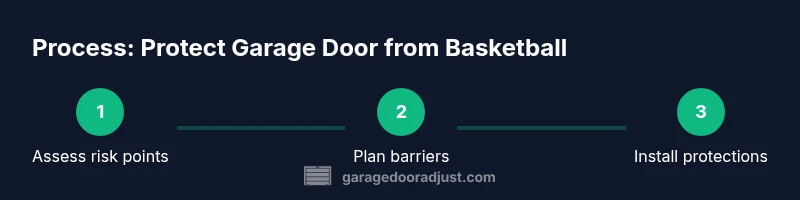
Assess risk and space
Survey the driveway and garage opening to identify where a basketball is most likely to strike the door. Note bounce paths, wall space, and clearance for barriers. Record measurements to guide barrier placement.
Tip: Document the worst-case impact point to prioritize barrier locations - 2
Plan barrier layout
Create a simple plan showing backstop location, bumper guards, and impact zones. Ensure barrier edges won’t interfere with door operation or sensor paths.
Tip: Use a chalk line or tape on the ground to visualize placement - 3
Mount backstop
Install the wall-mounted backstop panel or foam padding directly behind the door opening. Secure it to studs and verify it's level before proceeding.
Tip: Double-check stud locations with a stud finder - 4
Attach bumper guards
Fasten corner bumper guards to the wall and frame edges where the ball could strike. Align with the highest anticipated impact point and secure tightly.
Tip: Use multiple fasteners per guard for solid attachment - 5
Apply weather-stripping
Install weather-stripping along the bottom and sides to reduce bounce and improve energy efficiency. Check that the door seals without binding.
Tip: Test door closure after installing each strip to avoid binding - 6
Check sensors and balance
Recalibrate safety sensors and test door balance after modifications. Make sure the auto-reverse triggers when an object blocks the path.
Tip: Run the door through a full cycle and verify reverse direction - 7
Test and adjust
Open and close the door several times with a basketball rebound simulating real play. Adjust guard positions if needed and document changes.
Tip: Keep a simple log of adjustments for future maintenance
Got Questions?
Will a backstop alone prevent damage from basketball?
A backstop reduces direct hits but should be used with additional barriers and proper door maintenance to be effective.
A backstop helps, but you’ll want corner guards and regular maintenance for real protection.
Can I install protective barriers myself if my door is older?
Yes, in many cases you can install barriers safely, but avoid altering springs or structural components. If you’re unsure, consult a pro.
Yes, but avoid modifying the door’s springs or tracks. If in doubt, consult a pro.
Will these modifications affect my warranty?
Some manufacturers require professional installation and approved components. Check your warranty terms before making permanent changes.
Check your warranty terms; some changes may affect coverage.
How often should I inspect the protective barriers?
Inspect quarterly for secure mounting and signs of wear. Replace damaged parts promptly to maintain protection.
Inspect every few months and replace worn parts as needed.
What’s the typical cost range for adding barriers?
Costs vary by materials but typically fall within a moderate range depending on backstop type and mounting hardware.
Costs vary by materials; expect a moderate range depending on backstop and hardware.
Watch Video
Quick Summary
- Protect the door using a backstop and corner guards.
- Keep a play zone separate from the door area to reduce incidents.
- Regularly test sensors and door balance after modifications.
- Document maintenance and barrier adjustments for safety.
- Review warranty implications before permanent modifications.