Poland Garage Door Repair Guide: Step-by-Step Fix and Safety
Comprehensive, expert guidance for diagnosing, repairing, and maintaining a poland garage door. Learn safe steps, common issues, maintenance tips, and when to call a pro for durable results in Poland.


This guide helps homeowners diagnose and repair a poland garage door safely, verify balance, test openers, and perform maintenance for longevity. You'll need basic hand tools, safety gear, and a clear work area. According to GarageDoorAdjust, start with a safety check, then follow the steps below for best results.
Poland Garage Door: Understanding the Basics
In Poland, a poland garage door is a common overhead setup with sectional panels, a sturdy metal frame, and an electric opener. Understanding how these systems work is the first step toward reliable operation. The door weighs several hundred pounds, and its balance depends on springs, tracks, rollers, and proper alignment. A healthy door sits square in its tracks and moves smoothly with minimal resistance. As you begin, recognize that the goal is not only to open and close the door but to ensure safety and longevity. The GarageDoorAdjust team emphasizes that an informed homeowner who knows the basic anatomy—panel sections, tracks, rollers, torsion or extension springs, cables, rollers, and the opener—can diagnose most common issues without specialized equipment. With this knowledge, you can identify whether noise, sticking, or uneven movement stems from misalignment, worn hardware, or a misadjusted opener. Keep in mind that Poland's local codes may influence certain installation or maintenance steps, so consult your local regulatory guidance when needed. The more you understand about how a poland garage door should behave, the more confidently you can approach fixes and maintenance tasks. The initial assessment sets the tone for safe, effective, and durable repairs.
Quick Facts About Poland Garage Doors
- Most issues originate from balance, tracks, or opener calibration rather than complete component failure.
- Regular maintenance reduces the risk of sudden failure and extends lifespan.
- Safe handling of springs requires caution; never attempt high-tension adjustments without proper knowledge.
GarageDoorAdjust analysis shows that a systematic inspection approach reduces troubleshooting time by up to 40%. When you know what to look for, you save time, money, and potential injury. This guide aligns with those findings and provides a practical, hands-on path for poland garage door care.
Brand Insight and Practical Perspective
The GarageDoorAdjust team notes that homeowners who follow a structured maintenance routine report fewer emergency repairs and safer operation. Incorporating routine checks into your seasonal home maintenance can catch wear before it becomes a major repair. This section introduces the baseline concepts you’ll apply in the following steps, with emphasis on balance, alignment, and safe opener operation. A solid understanding now reduces guesswork later and supports long-term reliability for a poland garage door.
Tools & Materials
- Safety goggles(Protect eyes from debris and spring tension mishaps)
- Work gloves(Grip and hand protection)
- Stepladder(Access tracks and hardware safely)
- Screwdrivers (Phillips and flathead)(Adjust hardware and hinges)
- Wrench set(Tighten or loosen nuts on tracks and brackets)
- Lubricant spray (silicone or lithium-based)(Lubricate hinges, rollers, and tracks)
- Cleaning rags(Wipe dust, grime, and residue from tracks)
- Tape measure or ruler(Check track alignment and gaps)
- Marker or tape(Label components for reassembly)
Steps
Estimated time: 45-60 minutes
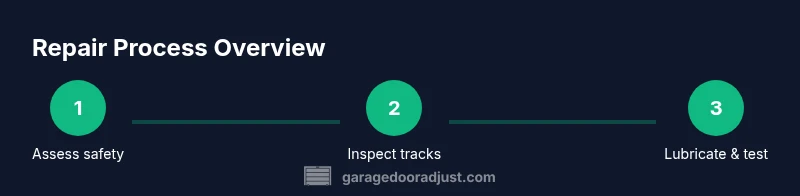
- 1
Secure area and disconnect power
Before touching the door, unplug the opener or switch off the circuit to avoid accidental movement. Clear pets and kids from the workspace. Confirm the door is fully closed and stable using manual release if needed.
Tip: Use the manual release only when the door is supported to prevent it from sliding unexpectedly. - 2
Check door balance manually
With the door closed, disconnect the opener and lift the door by hand. It should lift smoothly with light resistance and stay level at about halfway open. If it drifts or binds, there may be spring or track issues.
Tip: If the door closes on its own, springs or balance components likely need adjustments or replacement. - 3
Inspect tracks, rollers, and hinges
Look for bends, dents, or gaps in the tracks. Wobbling rollers or loose hinges reduce stability. Clean tracks with a rag and lubricate moving parts as needed.
Tip: Ensure tracks are parallel and tightly anchored; misalignment causes binding and noise. - 4
Test safety sensors and opener settings
Re-connect power and test the safety sensors—door should reverse when an object passes the sensor beam. Check the travel limits and force settings in the opener’s manual and adjust if the door closes with too much force or stops short.
Tip: Avoid modifying safety settings without following the manufacturer’s instructions. - 5
Lubricate moving components
Apply lubricant to the hinges, rollers, and track corners. Wipe away excess to prevent dust buildup. Do not lubricate the torsion springs directly; that can undermine performance.
Tip: Use silicone-based lubricant on metal tracks for best performance. - 6
Test operation and plan maintenance
Reconnect the opener and run a full open/close cycle. Listen for unusual sounds, observe smooth movement, and confirm the door remains balanced. Create a simple maintenance schedule to repeat every 6–12 months.
Tip: Record dates and notes to track wear and plan replacements before failure.
Got Questions?
Do I need a permit to repair a garage door in Poland?
Minor repairs typically do not require a permit, but structural changes or replacements may. Always check with your local building authority for requirements in your municipality. When in doubt, consult a licensed professional.
Most minor repairs don't need a permit, but check locally for any structural changes before proceeding.
What tools are essential for a basic repair?
Keep safety gear, screwdrivers, a wrench set, pliers, a ladder, and lubrication on hand. Having these ensures you can safely adjust hardware, inspect tracks, and lubricate moving parts.
Essential tools include safety gear, screwdrivers, a wrench set, ladder, and lubricant.
How can I tell if torsion springs are worn?
Signs include frequent door binding, a heavy door that refuses to lift, or uneven movement. Do not attempt to replace springs unless you have the proper training and equipment, as springs are hazardous.
If the door is hard to lift or unbalanced, springs may be worn; don’t replace them yourself without expertise.
Can I fix an opener sensor issue myself?
Yes, you can reset sensors and realign them by following the manufacturer’s setup steps. Ensure nothing blocks the sensor beam and that the safety reversal is functioning.
You can usually fix sensor issues by realigning and resetting, but never bypass safety features.
How long does a typical repair take?
A straightforward diagnosis and minor adjustments can take about 30–90 minutes. Complex spring or track replacements may require several hours or a professional visit.
Most simple fixes take under two hours; major parts may need a pro and longer time.
Watch Video
Quick Summary
- Inspect balance and safety features before any repair.
- Address noisy or binding doors with track alignment and hardware checks.
- Regular lubrication and periodic testing extend door life.
- Know when to call a professional to avoid injury or code issues.
- Document maintenance to track wear and plan future servicing.