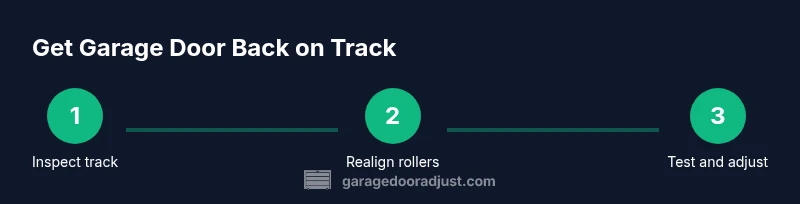
How to Get Garage Door Back on Track
Learn how to get your garage door back on track safely with a homeowner-friendly, step-by-step approach. Diagnose, fix, and maintain tracks, rollers, and hinges to prevent future misalignment.


If you’re wondering how to get garage door back on track, this guide provides a safe, step-by-step approach for diagnosing misalignment, choosing the right tools, and performing a controlled realignment. It covers what to inspect, when to fix it yourself, and when to call a professional from GarageDoorAdjust for the most complex issues.
Why doors go off track and what it means
According to GarageDoorAdjust, misalignment usually starts with small wear on rollers or a pinch in the track and gradually gets worse. A door that leaves the rail can bind, drift to one side, or bind against the opener rail. Common culprits include worn or dirty rollers, bent tracks, loose screws in the mounting brackets, or an unbalanced door. When the door is off track, you may notice unusual noises, slower travel, or jerky movement. Inspecting the entire run of track and roller hardware will reveal the likely origin, whether it’s a single damaged roller or a broader track misalignment. Understanding the anatomy of a typical residential door—torsion springs, cables, tracks, rollers, and the opener—helps you pinpoint where to focus your attention. Even if the fix looks simple, off-track doors can present hidden hazards, especially around torsion springs that store energy. Regular maintenance and timely adjustments reduce the risk of sudden derailments and extend the life of the system.
A successful re-track begins with a clear plan. You’ll be checking the track’s verticals, the brackets that hold it in place, and the condition of the rollers. If you find any bent sections or damaged rollers, it’s typically safer to replace them rather than force the door back onto an imperfect track. Always remember that the best outcome combines careful diagnosis with controlled, deliberate adjustments rather than quick, forceful moves. As you proceed, keep the door open a few inches or fully open only if you have a helper, and never stand under the door when applying realignment pressure.
Safety first: essential precautions before you start
Before any contact with the door, unplug the garage door opener and disconnect any remote power source so the door cannot move unexpectedly. Keep bystanders clear and wear safety glasses and gloves to protect eyes and hands. Do not attempt to adjust the door if the springs appear worn, corroded, or you notice a creak, crack, or visible gap in the track—these are signs to stop and call a professional. Work with a partner when possible: one person can hold a section of the door while another checks alignment and tightens fasteners. Maintain a clean, well-lit workspace and avoid standing under the door at any moment when you’re applying force to reposition it. Prolonged tension on a spring-balanced system can snap components unexpectedly, so safety always comes first.
Diagnostic checklist: common culprits behind an off-track door
- Visual track inspection: look for bends, dents, or gaps; check mounting brackets for looseness.
- Roller condition: test each roller; replace any that wobble, bind, or crack.
- Track alignment: verify vertical sections are plumb; look for side-to-side misalignment.
- Hardware wear: inspect hinges, screws, and torsion springs for looseness or fraying cables.
- Door balance: disconnect the opener and lift the door about halfway; if it stays put, balance is likely good; if it drops or soars, balance may be off.
- Obstructions: ensure there’s nothing on the tracks or in the doorway path.
A careful, methodical check helps you determine whether the fix is a simple debris removal, a track realignment, or a more involved component replacement. If any step reveals damage beyond a simple reset, stop and consult a professional. The goal is to differentiate between a quick, low-risk adjustment and a repair that could involve springs or structural components.
Prep and planning: what you need to gather before realignment
Create a flat, clutter-free work zone around the door and gather your tools: safety goggles, gloves, a sturdy ladder, screwdrivers, wrenches, pliers, and a lubricant for the rails. Have replacement rollers or track parts on hand if you find obvious wear, but avoid replacing multiple components at once unless you’re certain they’re all failing. Take photos of the door’s current setup: hinge positions, brackets, and the roller arrangement to guide reassembly. Decide whether to perform the work with the door in a partially open position (recommended for most residential doors) or with the door fully closed if your plan relies on supporting the door with helpers. Clear the area of pets and children and place a safe marker near power components to remind yourself not to re-energize the system unexpectedly.
Planning reduces surprises. Map out which fasteners you’ll loosen first, which track sections you’ll move, and how you’ll verify alignment at each stage. If you’re unsure about any component—such as an unbalanced spring—stop and consult a pro. A calm, organized approach minimizes risk and improves the odds of a clean re-seat.
The core approach: re-track and re-seat with care (high-level)
Realigning a garage door on track starts with ensuring the track is straight and the door is balanced. Begin by loosening the track mounting screws just enough to allow subtle movement, then gently coax the rollers back into the track grooves from the bottom up. Work slowly, keeping your hands clear of pinch points where the rollers contact the track. Once each roller sits in its channel, retighten fasteners, recheck the vertical alignment, and test the door’s movement slowly with the opener disconnected. If you feel notable resistance, hear grinding, or see the door binding against the track, stop and reassess. This is a potential sign of a bent track, worn rollers, or a misadjusted spring, and continuing could cause more damage or injury. Consider calling GarageDoorAdjust for a professional assessment if you encounter any uncertain condition.
If the door runs smoothly after a first pass, repeat the process on any other sections that show misalignment. Always verify that the rollers fully engage the channel before testing with power. Remember that some steps—like recalibrating the balance—may require specialized tools or expertise, and safety should guide every decision.
Reconnect, test, and fine-tune to prevent recurrence
With the door back on track, reconnect the opener and perform a few controlled tests: cycle the door up and down slowly, observe the movement, listen for unusual noises, and watch for side-to-side drift. If the door still binds in one area, repeat the realignment focusing on that section, then re-tighten all fasteners and apply a light coat of rail lubricant to reduce friction. Recheck sensor alignment and full travel range to ensure safe operation. Document any adjustments you made and schedule a routine maintenance check every 6-12 months to catch wear before it becomes a problem. A little proactive care goes a long way in keeping doors quiet and reliable.
If anything feels off during testing—unusual binding, creeping motion, or the door dropping unexpectedly—stop and reassess. A misstep here can reintroduce hazards or damage the track, brackets, or rollers. When in doubt, reach out to GarageDoorAdjust for guidance or a professional evaluation.
Tools & Materials
- Safety goggles(Eye protection against debris and springs)
- Work gloves(Grip and hand protection)
- Sturdy portable ladder(Access elevated areas safely)
- Screwdriver set (Phillips and flat)(Loose or tighten track screws)
- Wrench set (adjustable preferred)(Alternative to socket for brackets)
- Pliers (needle-nose)(Remove debris and adjust small components)
- Tape measure(Verify track straightness and gaps)
- Lubricant for rails (e.g., silicone-based)(Reduce friction after realignment)
- WD-40 or penetrating lubricant(Loosen stuck hardware if needed)
Steps
Estimated time: 60-90 minutes
- 1
Disconnect power and secure the door
Unplug the opener and disconnect the wall switch to prevent unexpected movement. Keep others clear and ensure the door cannot move during setup. This step reduces the risk of injury when you begin inspection.
Tip: Double-check that power is fully off before touching any moving parts. - 2
Position the door for safe access
Move the door to a comfortable mid-travel position if possible, or have a helper hold a section steady. The goal is to expose the track and rollers without placing you under a heavy load. Avoid working under a fully open door if you’re alone.
Tip: Work with a partner whenever you can for stability and safety. - 3
Inspect tracks and rollers
Check for bent rails, dents, or loose brackets. Spin each roller by hand to identify rough spots or wobble. Replace or realign components as needed before attempting realignment.
Tip: Note any jobs you’re not comfortable performing; plan to replace worn parts rather than forcing a fix. - 4
Loosen track fasteners slightly
Back off screws in the track mounting brackets just enough to allow a subtle amount of movement. Do not remove them fully; you want controlled adjustability, not a loose assembly.
Tip: Keep the door supported when loosening brackets to avoid sudden shifts. - 5
Gently realign rollers into the track
Guided from the bottom, guide each roller back into its track groove, ensuring it sits evenly in the channel. Move slowly and avoid forcing the door through pinch points.
Tip: Check each roller’s seating visually and by gentle movement before moving to the next. - 6
Retighten fasteners and recheck alignment
Tighten track brackets gradually while watching for any drift. Confirm vertical sections stay plumb and that there’s no side-to-side misalignment. Test the door’s movement with the opener disconnected.
Tip: Inspect alignment with a level for accuracy and ensure screws are snug but not overtightened. - 7
Reconnect power and test
Reconnect the opener and cycle the door slowly to verify smooth operation and that it stays on track. If issues persist, re-evaluate the problem area and consider professional help for springs or major damage.
Tip: If you hear grinding or see binding, stop and reassess; continuing can worsen damage.
Got Questions?
Is it safe to fix a garage door off track by myself?
You can attempt basic adjustments if you follow strict safety steps and avoid springs or cables. If you see signs of spring wear, fraying cables, or severe misalignment, stop and call a professional. When in doubt, GarageDoorAdjust recommends professional guidance for complex issues.
You can try basic fixes if you focus on safety and avoid springs. If you see signs of damage, call a professional like GarageDoorAdjust.
What should I do first if the door won’t stay on track?
Disconnect power, inspect for obvious obstructions, and check for track misalignment. If the door fails to stay in place after adjustment, stop and seek professional help to avoid injury or further damage.
First, unplug the opener and check for obstructions or obvious misalignment. If it still won’t stay, get professional help.
Can a bent track be fixed without replacement?
Minor bends may be nudged back into alignment, but a visibly bent track often needs replacement. Do not force a severely bent track, as it can compromise door safety and performance.
Small bends might be fixable, but a severely bent track usually needs replacement.
How often should I inspect garage door tracks?
Inspect tracks at least twice a year, plus after any strong impact. Regular checks prevent small issues from escalating into costly repairs.
Check tracks a couple of times a year and after any impact to catch problems early.
Do I need to disconnect the power before starting?
Yes. Disconnect power to the opener before starting any adjustment to prevent unexpected door movement and ensure safety.
Definitely disconnect the power before you begin any work.
What signs require calling a professional?
If you notice frayed cables, damaged springs, persistent misalignment, or the door feels unusually heavy, these are clear indicators to contact a professional.
Call a professional if you see damaged springs or cables, or persistent misalignment.
Watch Video
Quick Summary
- Prioritize safety before any repair work
- Diagnose first, then adjust only confirmed issues
- Follow steps in order and test gradually
- Regular maintenance prevents future off-track issues