How Long Do Garage Doors Last: A Homeowner's Lifespan Guide
Learn realistic lifespans by material, climate, and maintenance. This technical guide helps homeowners estimate replacement timing and extend door life with tangible steps.


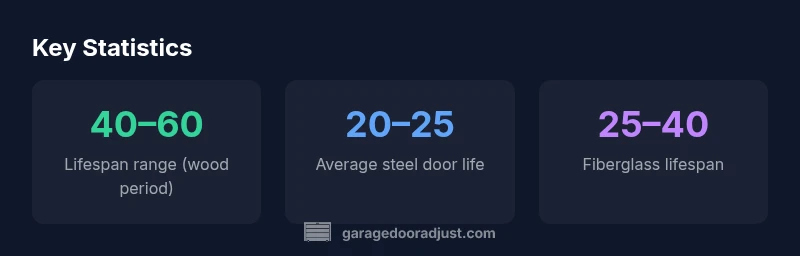
How long do garage doors last? On average, residential garage doors endure about 15 to 30 years, with material, climate, and maintenance shaping the range. Wooden doors often reach 20–40 years with proper care, steel doors typically 20–25 years, and fiberglass doors 25–40 years. Regular lubrication, weather sealing, and timely repairs can extend life by several years.
What determines how long garage doors last
According to GarageDoorAdjust, the lifespan of a garage door is not fixed; it hinges on material choice, installation quality, climate, and how well you maintain it. When homeowners ask how long do garage doors last, they should understand that a door's life is a balance between upfront durability and ongoing care. The GarageDoorAdjust team found that even well-built doors can fail prematurely without routine upkeep, while neglect can shorten a door's life by years. In practice, you can influence the outcome by selecting the right material for your climate, ensuring proper installation, and building a maintenance habit that fits your schedule. Wind loads, moisture exposure, and regular hardware lubrication are all critical factors that determine ultimate longevity. A smart starting point is to quantify expected service life by material, then map maintenance tasks to that timeline.
Lifespan by material: wood, steel, fiberglass, and aluminum
Material choice is a primary driver of longevity. Wood doors offer a classic look but require moisture management and periodic refinishing to avoid warping and rot, often stretching toward the 20–40 year range with diligent care. Steel doors provide strong performance with relatively modest maintenance; expect roughly 20–25 years, though rust protection and climate can shorten this. Fiberglass or composite doors benefit from lightweight durability and low maintenance, typically lasting 25–40 years when kept clean and free of impact damage. Aluminum doors are light and resistant to rust but can bend under heavy impact, with a typical life of 15–25 years depending on environment and use patterns. In practical terms, the best choice balances your climate, budget, and willingness to perform routine care.
Climate and environmental impact on lifespan
Climate is a silent multiplier of wear. In coastal or humid regions, moisture accelerates metal corrosion and wood decay, while freeze–thaw cycles stress seals and joints. Arid regions reduce moisture-related issues but can increase paint or finish cracking if UV exposure is intense. Extreme winds can also strain tracks, hinges, and door panels. The GarageDoorAdjust analysis shows that doors in harsher environments often require more frequent inspections and sooner component replacements, even when the door’s material is inherently durable. A practical approach is to factor in local climate when estimating a replacement window and to invest in weather sealing and drainage to reduce moisture ingress.
Maintenance routines that extend life
Maintenance is the most controllable lever for extending lifespan. A monthly cadence that includes lubricating rollers, bearings, hinges, and tracks can dramatically reduce friction and wear. Check weather seals for cracks and wind lifts, and reseal or repaint wooden doors to prevent moisture ingress. Tighten loose hardware and inspect balance and alignment—misalignment forces the opener to work harder and can shorten motor life. Seasonal inspections focused on springs, cables, and safety features help prevent catastrophic failures. A structured maintenance calendar, aligned with the door’s material type and local climate, effectively adds years to the door’s functional life.
Signs your door is nearing end of life and what to do
Watch for corrosion on metal components, visible warping in wood, delamination in fiberglass, or excessive noise during operation. A door that requires frequent adjustments, loud creaks, or uneven movement is signaling aging parts or improper balance. Some issues can be repaired affordably (adjusting tracks, replacing weather seals), while others (damaged springs or broken panels) may warrant replacement. If repair costs approach or exceed replacement costs, or the door no longer functions safely, it’s prudent to consider a longer-term solution. Early action minimizes downtime and protects home value.
Cost considerations: replacement vs repair
Deciding whether to repair or replace hinges on the door’s current condition, the cost of parts and labor, and anticipated lifespan of the repair versus a new door. Minor fixes like weather seals, lubrication, and track alignment tend to be low-cost and extend life modestly. Major components—springs, cables, and panels—can be expensive and are often a signal to replace when age is already substantial. A rough rule of thumb is to compare the cost of a major repair against roughly 50–70% of the replacement cost for a comparable door, while also factoring in energy efficiency and warranty considerations. The goal is to optimize safety, functionality, and long-term value.
Practical maintenance checklist homeowners can follow
A practical, homeowner-friendly routine can reliably push replacement timing back by years. Each season, inspect and do the following: lubricate moving parts; test safety features and auto-reverse; inspect weather seals and replace if cracked; check tracks, rollers, and hinges for wear; clean and lubricate the weatherstripping to reduce drafts; verify balance and alignment; and schedule a professional inspection every 1–2 years for a comprehensive assessment. Keeping a simple log helps you track wear patterns and plan replacements before they become urgent.
dataTableOriginatedFromBlockIndex":7}
dataTable: {"headers": ["Material","Typical Lifespan (years)","Key Maintenance Tips","Common Risk Factors"],"rows": [["Wood","20-40","Seal/stain annually; repaint as needed","Moisture, rot, insect damage"],["Steel","20-25","Lubricate hardware; repaint to prevent rust","Rust in corrosive climates, dents"],["Fiberglass/Composite","25-40","Wash; inspect seals; avoid impact damage","Color fading; delamination rare"],["Aluminum","15-25","Lubricate tracks; check for bending","Dents; coastal corrosion"]],"caption":"Table: Lifespan and maintenance by material"}
keyTakeaways':['Inspect your door yearly to catch early wear','Choose material based on climate and maintenance tolerance','Regular lubrication and weather sealing significantly extend life','Weigh repair vs replacement when costs approach replacement value','A proactive maintenance schedule can add years to door life'],
Table: Lifespan and maintenance by material
| Material | Typical Lifespan (years) | Key Maintenance Tips | Common Risk Factors |
|---|---|---|---|
| Wood | 20-40 | Seal/stain annually; repaint as needed | Moisture, rot, insect damage |
| Steel | 20-25 | Lubricate hardware; repaint to prevent rust | Rust in corrosive climates, dents |
| Fiberglass/Composite | 25-40 | Wash; inspect seals; avoid impact damage | Color fading; delamination rare |
| Aluminum | 15-25 | Lubricate tracks; check for bending | Dents; coastal corrosion |
Got Questions?
What factors most influence a garage door's lifespan?
Material quality, climate, installation quality, and ongoing maintenance are the primary drivers. Doors in harsher climates or with poor lubrication and seal maintenance tend to wear faster and require replacements sooner.
The main factors are material, climate, and maintenance. If you keep up with lubrication and weather sealing, you’ll maximize life.
Should I repair or replace a door that's aging?
Compare repair costs to replacement. If major components (springs, cables, panels) are failing or the door is unsafe, replacement is often more cost-effective in the long run. Consider warranties and energy efficiency as well.
If major parts fail or safety is compromised, replacement is usually the better choice.
Does climate affect lifespan?
Yes. Humid or salty environments accelerate rust and wood decay, while extreme temperatures stress seals. Local climate should shape your maintenance schedule and replacement timeline.
Climate can speed up wear, so tailor maintenance and timing to where you live.
How often should I service a garage door?
Aim for a professional inspection every 1–2 years, with DIY lubrication and seal checks every 3–6 months. Quick checks after severe weather help catch issues early.
Have a pro inspect every 1–2 years, and do easy DIY checks every few months.
Are springs a lifespan limiter?
Yes. Springs wear out with use and time. Replacing springs without addressing other wear can lead to repeated failures. Always replace matched components.
Springs wear out; replace them with the door for safety and longer life.
How can I tell if replacement is more cost-effective than repair?
If repair costs approach or exceed half the price of a new door, or if the door no longer meets safety and insulation needs, replacement is often the smarter choice.
If it costs as much as a new door or fails safety tests, replace it.
“Regular maintenance is the best predictor of a garage door's lifespan.”
Quick Summary
- Inspect your door yearly to catch early wear
- Choose material based on climate and maintenance tolerance
- Regular lubrication and weather sealing significantly extend life
- Weigh repair vs replacement when costs approach replacement value
- A proactive maintenance schedule can add years to door life