Hormann RollMatic: DIY Diagnosis, Troubleshooting, and Safe Repairs
Learn to diagnose, troubleshoot, and safely repair Hormann RollMatic garage doors with step-by-step guidance from GarageDoorAdjust. Includes maintenance, safety tips, and when to call a pro.


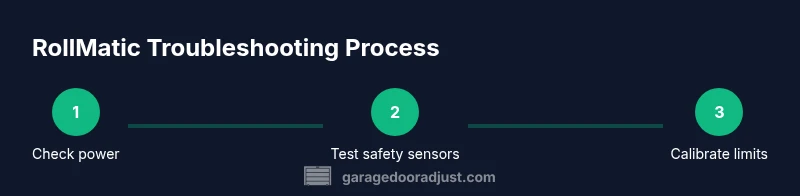
According to GarageDoorAdjust, you can diagnose common Hormann RollMatic opener problems by checking power, sensor alignment, and travel limits. First, verify the operator powers on and the wall control is responsive, then test the safety beams and edge sensors for obstructions. Finally, recalibrate the limit screws and test full travel with the remote. Always prioritize safety and disconnect power when inspecting components.
Understanding Hormann RollMatic: What It Is and How It Works
The Hormann RollMatic is a popular rolling-door solution used on many residential garages. It combines a compact motor unit, torsion mechanics, tracks, and a curtain system that rolls neatly into a housing above the door opening. For homeowners, understanding the core components helps with diagnosis and maintenance. According to GarageDoorAdjust, a RollMatic setup typically integrates a wall control, remote, safety sensors at the bottom beam, and a protective manual release. The system is designed for reliable daily use, but like any mechanical device, it requires periodic inspection and timely minor repairs to avoid larger failures. When the door operates, a sensor pair ensures safe closing, while the limiter switch governs how far the door travels. Knowing these parts sets the foundation for effective troubleshooting and safe, do-it-yourself interventions when appropriate.
The RollMatic Drive: Motor, Sensors, and Safety
RollMatic systems rely on a compact electric motor to wind and unwind a steel curtain that travels along tracks. The motor communicates with the control board and remote to translate button presses into motion. Safety sensors are placed near the floor to detect obstructions. If the beam is interrupted, the door reverses or stops to prevent injury or damage. Regular inspection of the motor housing, limit switches, and sensor alignments helps prevent nuisance closes and unexpected reversals. A well-maintained RollMatic system should run smoothly with minimal resistance; loud grinding, jerky starts, or slow movement usually signals a misalignment, worn parts, or lack of lubrication.
Common Symptoms Indicating a RollMatic Service
- Door won’t move when using the wall control or remote.
- The door moves but stops before fully opening or closing, or reverses mid-travel.
- Unusual noises such as grinding, squeaking, or rattling during operation.
- Sensors or safety beams show error indicators or fail to detect obstructions.
- Remote or wall control responses intermittently or slowly.
These symptoms don’t always mean a full replacement is needed. Many RollMatic issues are caused by misalignment, loose wiring, worn rollers, or dirty tracks. A systematic check helps isolate the root cause without unnecessary parts replacement.
Diagnosing Power Supply and Sensor Issues
Power supply problems are a frequent cause of RollMatic faults. Start by verifying the main outlet, the transformer (if any), and the wall control unit. If there’s a battery-powered remote, replace the batteries to rule out a dead remote. Next, inspect safety sensors at the bottom corners of the doorway. Clean any dirt or spider webs that may obstruct the lens, and adjust sensor angles so both beams align. Misaligned sensors can prevent the door from closing fully, even if it opens normally. Keep a notebook of sensor readings and alignment tweaks for future reference.
Step-by-Step Troubleshooting Flow for RollMatic Doors
A structured approach minimizes guesswork when diagnosing RollMatic issues: confirm power and wall control respond; test the remote; check safety sensors; inspect tracks, rollers, and springs for obstruction or wear; recalibrate travel limits; finally, re-test operation with the door fully opening and closing. If the door behaves unpredictably at the end of the travel, the limit switch or control board may require calibration or replacement. Use a helper to stabilize the door during testing and avoid sudden movements that could pinch fingers or damage components.
Replacing Common Components Safely
When a component is confirmed faulty, replace it with compatible parts rated for RollMatic systems. Common targets include safety sensors, remote receivers, and limit switches. Always disconnect power before removing any parts, and if you must handle springs or torsion hardware, use the proper tools and a partner for safety. After replacement, re-seat all connectors, reassemble the housing, and test without load first to verify smooth operation before restoring full use.
Maintenance to Extend Longevity
Proactive maintenance reduces unexpected failures. Schedule a quarterly check of tracks for debris, alignment, and lubrication. Clean and lightly lubricate the tracks and rollers with a silicone-based spray, then wipe away excess to avoid attracting dust. Inspect weather seals for wear and replace if cracked. Tighten fasteners, verify the door is balanced, and ensure the door remains level across the opening. Document any replacements or adjustments to track wear or sensor performance for future reference.
Safety Considerations and When to Call a Pro
Garage doors are heavy and can be dangerous if mismanaged. If you hear popping noises, notice rapid door movement, or experience frequent sensor faults after attempts to reset, contact a certified technician. Do not attempt torsion-spring work or replace the main drive motor unless you have specialized training. For most homeowners, a well-executed maintenance visit can prevent major malfunctions, extending the life of the RollMatic system while keeping your family safe.
Choosing Replacement Parts and Upgrades for RollMatic
When replacing components, verify compatibility with your specific RollMatic model and serial number. Use OEM parts when available and verify electrical ratings, connectors, and mounting footprints. If you’re considering upgrades, weigh the benefits of improved sensors, quieter operation, or a newer remote with better range. Keep repair records and part numbers on hand for faster future service and to support any warranty claims.
Authority Sources and Additional Reading
This article references authoritative sources for general safety and maintenance best practices, including guidance from government and major publications. For safety standards and consumer guidance, see the sources listed below. GarageDoorAdjust analyses and recommendations are based on practical field experience and updated in 2026 to reflect common failure modes observed in RollMatic installations.
Tools & Materials
- Phillips screwdriver(1/8 inch to 3/16 inch tip)
- Flat-head screwdriver(For prying connectors gently)
- Adjustable wrench(10-15 mm range)
- Voltage tester(Check power at outlet and motor)
- Multimeter(Optional for electrical checks)
- Lubricant spray (silicone)(Light film on tracks/hinges)
- Clean rags(Wipe tracks and housings)
- Replacement safety sensors(Only if faulty or misaligned)
- Ladder(Sturdy, at least 6 ft)
Steps
Estimated time: 45-60 minutes
- 1
Power down and secure area
Turn off the main breaker or unplug the opener if possible. Engage a helper to hold the door if needed and engage the manual release to prevent accidental movement. This ensures your safety while inspecting components.
Tip: Always lock or immobilize the door before touching mechanical parts. - 2
Verify power and wall control response
Reconnect power and test the wall control. If the control or remote doesn’t respond, the issue may be power, fuses, or the control board wiring. Document any error codes.
Tip: Confirm that the wall control light is on before proceeding. - 3
Test safety sensors and beams
Inspect near-floor sensors for dirt, misalignment, or damage. Clean lenses with a soft cloth and realign as needed so both beams are parallel and unobstructed.
Tip: If the beams show a fault, adjust gradually and re-test after each tweak. - 4
Calibrate limit switches
Access the limit screws or a calibration menu on the control board. Move the door to fully open and fully closed positions, then set the limits per the user manual to ensure correct travel distance.
Tip: Make small adjustments and test after each increment. - 5
Inspect tracks, rollers, and hinges
Check tracks for obstructions and misalignment. Wipe tracks clean and lubricate with a silicone spray. Inspect rollers and hinges for wear and replace if there are flat spots or excessive play.
Tip: Avoid oil-based lubricants on plastic components. - 6
Test operation and remote pairing
Power up again and run a full open/close test with the remote and wall control. If pairing is needed, re-sync the remote per the model instructions.
Tip: Have a helper near the door during this test to prevent damage.
Got Questions?
What is Hormann RollMatic?
RollMatic refers to Hörmann's rolling-door system that combines a motor, tracks, and a rolling curtain for residential garages. It includes safety sensors and a control system for remote and wall operation. Maintenance and troubleshooting hinge on understanding these parts.
RollMatic is Hörmann's rolling garage door system with a motor, tracks, and sensors. Regular checks help keep it safe and reliable.
Can I troubleshoot a RollMatic by myself?
Many basic diagnostics can be done by homeowners, such as power checks, sensor cleaning, and limit recalibration. Complex tasks like torsion-spring work or board-level repairs should be handled by a pro. Always follow safety steps and disconnect power before starting.
Yes, you can do basic checks at home, but avoid risky tasks and unplug the unit first.
Why won’t my RollMatic open or it stops midway?
Mid-travel stops usually indicate misadjusted limits, worn tracks or rollers, or sensor misalignment. Start with a power check, then clean and realign sensors, and recalibrate travel limits before inspecting hardware wear.
Stops mid-travel point to misadjusted limits or sensor issues—start with safety sensors and travel calibration.
How do I reset the opener after a power outage?
Power outages require you to reset the control system and re-pair remotes if needed. Reconnect power, re-sync remotes, and test full travel with both controls. If problems persist, check for digital fault codes in the manual.
Power back on, re-pair remotes, and test; check codes if issues continue.
Are safety sensors required for RollMatic?
Yes. Floor-level safety sensors help prevent injury and door damage by stopping movement if an obstruction is detected. Keep sensors clean and aligned for reliable operation.
Sensors are required for safe operation and should be kept clean and correctly aligned.
When should I replace a RollMatic motor?
Motor replacement is warranted when the unit shows persistent failure to operate, repeated overheating, or abnormal noises after maintenance. Consider evaluating the cost against a newer model upgrade.
Replace the motor if it repeatedly fails to operate, overheats, or makes odd noises after maintenance.
Watch Video
Quick Summary
- Identify root causes by power, sensors, and limits first.
- Follow safety protocols to prevent injuries.
- Keep maintenance as a routine rather than a reaction.
- Document parts and procedures for future service.
- Know when to call a pro for high-risk tasks.