Garage Door Repair in Fort Worth: Step-by-Step Guide
Safety-first, step-by-step guide to diagnosing and repairing common Fort Worth garage door issues. Learn when to DIY and when to hire a pro with insights from GarageDoorAdjust.


Goal: diagnose and perform a safe, basic repair on a typical Fort Worth garage door. Start by disconnecting power to the opener, then inspect balance, tracks, and rollers for wear. This guide walks you through practical, step-by-step checks you can complete with common tools. You’ll learn when to DIY and when to call a professional.
Common causes of garage door issues in Fort Worth
Fort Worth's climate, humidity, and temperature swings stress garage doors, especially older models. The most frequent problems involve worn rollers, misaligned tracks, weak springs, and a tired opener. In many homes, accumulation of dust and lack of regular lubrication contribute to grinding, sticking, or jerky movement. According to GarageDoorAdjust, a lot of Fort Worth repairs start with worn rollers and track misalignment, which can be fixed with basic maintenance and careful adjustments. Weather exposure and frequent cycling can accelerate wear on hinges and brackets, making early inspection and maintenance a cost-effective habit for homeowners.
Safety precautions before you begin
Before you touch any moving parts, power off the opener and unplug the outlet. Keep children and pets away, wear safety glasses and gloves, and work on a stable, well-lit surface. Use a sturdy ladder, and never stand directly under the door while testing movement. If you hear cracking, notice sharp edges, or see frayed cables, stop and seek professional help. This keeps you safe and reduces the risk of damage to the door. Remember: safety first protects you and your investment, especially in areas with seasonal temperature changes like Fort Worth.
Diagnostic checklist: balance, rollers, tracks, opener
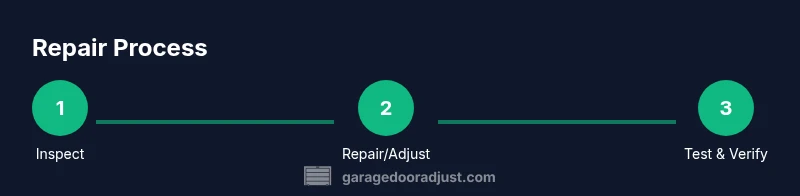
Start with a manual test: disconnect the opener and raise the door halfway. It should stay balanced with minimal effort. If it sags, there may be balance issues or spring wear. Inspect tracks for dents or binding, and check that rollers rotate freely without grinding. Inspect hinges, brackets, and bolts for looseness, and note any unusual noises during a slow manual operation. If anything seems off, plan targeted fixes rather than a full rebuild. A systematic approach helps you identify where the failure is most likely located.
Step-by-step repair approach: when to tighten, replace, adjust
Begin by tightening any loose screws on the track and brackets to restore alignment. If components are clearly worn, plan targeted replacements like rollers or brackets rather than a full door rebuild. Avoid adjusting torsion springs yourself; this is hazardous and should be handled by a qualified technician. For bent tracks or damaged hinges, replace the affected parts and re-check alignment. Conclude with a full safety test to ensure the door reverses on contact and stops smoothly. This section emphasizes safety and accuracy over rushing repairs.
Maintenance routines to extend life and prevent failures
Schedule regular lubrication of rollers, hinges, and tracks with a silicone-based spray, and wipe away excess to prevent dust buildup. Clean tracks to remove grit, inspect weatherstripping, and tighten brackets annually. Keep an eye out for door balance by testing manual operation periodically. Simple maintenance like these steps reduces wear and prolongs the life of your Fort Worth garage door, saving time and money over the long term.
When to hire a pro in Fort Worth
If the door shows persistent sagging, broken torsion springs, frayed cables, crumbling hinges, or the opener cable drum is damaged, contact a pro. Electricity or sensor issues should also be handled by a technician. Fort Worth homeowners benefit from a quick professional assessment when spring systems are involved, as improper handling can cause serious injury. In many cases, a professional can complete required safety checks and adjustments faster and more reliably than a DIY approach.
Tools & Materials
- ANSI-rated safety glasses(Protect eyes from debris and sudden parts movement)
- Work gloves(Non-slip grip; protect hands during pulls and adjustments)
- Stable step ladder(Use on flat, dry surface; avoid overreaching)
- Flashlight or headlamp(Bright lighting for track and hinge inspection)
- Phillips and flat-head screwdrivers(Assorted sizes for brackets and hardware)
- Adjustable wrench(Loosen/tighten nuts on brackets and hardware)
- Socket wrench set (metric)(Common sizes for track bolts and hardware)
- Needle-nose pliers(Grip and remove small parts without slipping)
- Tape measure(Check door alignment and spring spacing if applicable)
- Silicone-based lubricant(Light spray on rollers, hinges, and tracks)
- Voltage tester(Confirm power is off before touching wiring)
- Dry rag or cloth(Wipe off excess lubricant and dust)
- Replacement rollers/brackets (if advised)(Use only compatible parts with your model)
Steps
Estimated time: 45-60 minutes
- 1
Disconnect power and secure the door
Power off the opener at the wall switch and unplug the unit. Verify the door cannot move freely by attempting a slow manual lift with the opener disconnected. This prevents accidental movement while you inspect components.
Tip: Use a non-conductive tool if you need to test any component while the door is up. - 2
Inspect tracks and rollers
With the door in a mid-lift position, look for bent or dents in the tracks and rollers that rub or bind. Rotate rollers by hand to confirm smooth rotation without wobble. Tighten loose brackets if tracks are misaligned.
Tip: Mark track alignment with painter’s tape before loosening to ensure correct realignment. - 3
Check door balance
Gently release the door from the manual lift and observe how it behaves. If it drifts closed or drops quickly, there may be balance or spring issues. Do not attempt spring adjustments unless you have the proper training and tools.
Tip: If the door doesn’t stay in place, plan professional service for spring-related components. - 4
Lubricate moving parts
Apply a light coat of silicone-based lubricant to tracks, hinges, and rollers. Wipe away excess to prevent dust accumulation. Lubrication reduces friction and extends component life.
Tip: Avoid oil-based lubricants on nylon rollers; they can degrade plastic components over time. - 5
Tighten fasteners and replace worn parts
Tighten any loose screws or bolts on brackets and tracks. If you notice any worn rollers or brackets, replace them with compatible parts. Do not force parts that are resistant to movement; replacement is safer.
Tip: Keep screws organized and re-torque after a test run. - 6
Test the door and safety sensors
Reconnect power and run the door through several cycles. Test the auto-reverse feature to ensure it stops on contact. Confirm sensors align and respond correctly to obstructions.
Tip: If the door doesn't reverse or sensors misbehave, stop and consult a pro.
Got Questions?
What are the most common signs that a garage door needs repair?
Unusual noises, slow or jerky movement, misalignment, and frequent opener cycling are typical indicators of wear or imbalance. Addressing these early can prevent bigger problems.
Look for noises, slow movement, and misalignment as signs you may need repairs.
Is it safe to fix a garage door myself?
DIY is acceptable for non-spring components and light adjustments. Do not attempt torsion spring or cable work unless you are trained and equipped for high-risk repairs.
You can handle non-spring parts, but avoid springs unless you're trained.
When should I replace versus repair?
Repair when parts are affordable and the door remains structurally sound. Replace when the door is sagging, has widespread wear, or multiple components fail.
If the door is sagging or many parts fail, replacement is often best.
How often should I lubricate tracks and rollers?
Lubricate every six months or after heavy use with silicone-based spray. Wipe away excess to prevent dust buildup.
Lubricate every six months to keep things running smoothly.
What safety precautions should I take during repairs?
Always disconnect power, wear PPE, and avoid working alone on spring systems. If anything feels unsafe, stop and call a professional.
Disconnect power, wear PPE, and don’t work on springs alone.
Watch Video
Quick Summary
- Always disconnect power before inspection or repair.
- Balance, tracks, and rollers are critical to smooth operation.
- DIY is acceptable for non-spring components; springs require a pro.
- Regular maintenance prevents costly future repairs.