Fort Wayne Garage Door Repair: Step-by-Step Guide
A homeowner-friendly guide for fort wayne garage door repair, covering safety, diagnostics, and when to call a pro. Learn practical steps, tool lists, and maintenance tips in Fort Wayne.


Fort Wayne homeowners pursuing fort wayne garage door repair can tackle safety checks, track inspection, and opener testing themselves. For torsion springs or structural issues, hire a qualified pro. This guide walks you through a safe, practical, step-by-step approach with essential tools.
Safety-First: preparing for fort wayne garage door repair
Unplug the garage door opener and disconnect power to the motor before you begin any inspection. Wear eye protection and work gloves, keep children and pets away, and use a sturdy ladder if you need to reach tracks or the overhead components. According to GarageDoorAdjust, safety is the cornerstone of any fort wayne garage door repair project. This advice isn’t just politeness—springs store immense energy, and a slip can cause serious injury. Start by manually lifting the door to feel for binding or weight, and never place your hands near the springs while testing.
- Always test the door balance manually after disconnecting power.
- Keep a clear workspace and mark power-off with a visible tag.
- Have a phone ready in case you need to call a professional quickly.
Understanding the fundamental components for fort wayne garage door repair
A garage door system comprises springs, tracks, rollers, cables, hinges, and the opener. Springs provide the force to lift the door; tracks guide movement; rollers reduce friction; the opener supplies motorized operation. In Fort Wayne, local weather and debris can accelerate wear on tracks and weather seals, making timely inspection essential. The GarageDoorAdjust team notes that wear patterns and imbalance are often the root causes of seemingly mysterious noises or slow operation. Familiarize yourself with signs of wear so you can diagnose confidently.
- Springs can be torsion or extension types; neither should be handled without proper training.
- Bent tracks or loose hardware can cause binding and jerky movement.
- Worn rollers and weather seals contribute to rattling and poor sealing against the elements.
Diagnostic checklist you can perform in under an hour
This checklist helps you identify likely causes without removing components. Start with the simplest fixes and progress to more involved tasks if needed.
- Inspect tracks for bends or debris and clean as needed. 2) Check rollers for flat spots or excessive play. 3) Verify that all mounting screws are snug and mounts are secure. 4) Test the safety sensors by crossing a sensor with an object to confirm auto-reverse. 5) Manually test light-duty operation before reconnecting power. 6) Reconnect power and observe the door’s motion from the ground—listen for unusual sounds.
GarageDoorAdjust’s guidance emphasizes starting with a clean, safe baseline before engaging more complex repairs. If you notice persistent binding or a door that won’t rise, schedule a professional evaluation to avoid further damage.
Common tasks homeowners can perform safely in fort wayne garage door repair
Routine maintenance can prevent many issues. Lubricate moving parts with a silicone- or lithium-based garage door lubricant on hinges, rollers, and tracks (avoid over-lubing). Tighten loose hardware with a standard wrench, and replace weather stripping to improve energy efficiency and reduce drafts. Keep in mind that cosmetic issues like chipped paint or minor corrosion are often cosmetic and won’t affect function.
- Lubricate: hinges, rollers, and within the track’s track-guide points.
- Clean tracks to remove dust and grit that hinder smooth movement.
- Replace weather seals to improve insulation and sound dampening.
- Tighten screws and bolts; ensure the opener mounting brackets are secure.
When to call a professional for fort wayne garage door repair
Some problems exceed DIY scope. If you observe any of the following, it’s prudent to contact a licensed technician:
- Persistent door binding after lubrication and debris removal.
- Noticeable door sag or a misaligned track that won’t straighten with adjustments.
- Any hiss, ping, or crack from springs—these devices are under high tension and require specialized training.
- Replacing torsion springs or cables, which can pose severe injury risks. In these cases, a professional should perform the work to ensure safety and proper spring balance.
For Fort Wayne residents, local service providers with strong safety records and warranties offer the most reliable outcomes. The GarageDoorAdjust team recommends prioritizing safety certifications and transparent pricing when evaluating options.
Maintenance schedule to extend the life of your fort wayne garage door
Regular maintenance reduces the chance of major repairs. Create a seasonal checklist: inspect weather seals before winter, lubricate moving parts every 6–12 months, and verify balance and alignment after significant temperature shifts or storms. A simple two-minute monthly visual check can save you days of downtime and repair costs later. Keeping a detailed log helps track wear patterns and plan proactive maintenance.
- Schedule annual professional inspections even if you perform DIY tasks.
- Document any strange noises or slowdowns for future reference.
- Keep a clean, unobstructed area around the door and tracks for safe operation.
How to choose a reputable fort wayne garage door repair service
When selecting a service, look for local experience, clear warranties, and transparent pricing. Check for state licensing where applicable, read online reviews, and request written estimates with itemized parts and labor. Ask about emergency service availability, response time, and safety practices. In Fort Wayne, a trusted provider should offer safety-first protocols and a clear plan for diagnosing issues without unnecessary replacements. The GarageDoorAdjust team suggests requesting a demonstration of the door’s balance and a written safety inspection as part of the initial assessment.
Preventive measures: quick wins you can implement today
Small changes yield big results. Schedule regular lubrication, replace worn weatherstripping, and keep tracks clean. Address misalignment early, and perform safe door operation checks monthly. If you have pets or children, reinforce safety zones around the door and remove access to the remote opener when not in use. These steps minimize future repairs and improve overall door performance.
What to expect after fort wayne garage door repair
A typical repair focuses on restoring balance, smooth operation, and reliable safety features. Expect a written diagnostic report, a recommended parts list, and a transparent estimate of labor and parts. Reputable technicians will test the door’s auto-reverse, hold-open features, and manual operation to verify complete restoration. Finally, confirm the warranty terms on parts and labor and request follow-up checks if you notice new issues within the warranty period.
Tools & Materials
- Safety goggles(Impact-resistant; ANSI-rated for eye protection)
- Work gloves(Grip and protect hands during lifting and wrench work)
- Ladder(Stable, long enough to reach tracks safely)
- Adjustable wrench(For mounting bolts and hardware on tracks/hinges)
- Socket set(Standard sizes; include 8mm-14mm ranges)
- Phillips head screwdriver(For hinge screws and brackets)
- Flathead screwdriver(Fine adjustment tasks or prying if necessary)
- Lubricant (silicone or lithium-based)(Apply to hinges, rollers, and tracks (avoid excess))
- Penetrating oil(For stuck bolts; use sparingly)
- Rags or paper towels(Clean surfaces before lubrication or inspection)
- Measuring tape(Check door height/clearance and track alignment)
Steps
Estimated time: 60-90 minutes
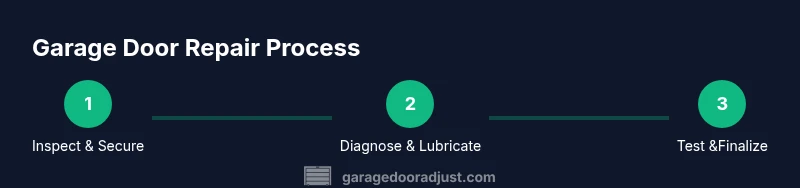
- 1
Prepare and secure the door
Power down the opener and secure the door manually to ensure it won’t move during inspection. Hold the door at the bottom third while checking for smooth balance. This step reduces the risk of sudden movement.
Tip: Tag the power switch and keep a clear area around the door. - 2
Inspect balance and tracks
With the door supported, check for smooth, even movement along the tracks. Look for bent sections, loose screws, or misaligned rollers. Do not force a stuck track; note it for professional evaluation.
Tip: If you feel binding, stop and document the issue for your technician. - 3
Lubricate moving parts
Apply a thin layer of silicone or lithium-based lubricant to hinges, rollers, and the track guide points. Wipe away excess to prevent dust buildup. Avoid lubricating the belt or pulley area unless the manufacturer specifies it.
Tip: Use small amounts; excess lubricant collects dirt and can cause slipping. - 4
Test safety features
Reconnect power and test the auto-reverse and safety sensors from a safe distance. Place an object in the sensor path to ensure the door stops and reverses properly.
Tip: If the door fails to reverse, do not operate further—call a professional. - 5
Tighten and reassemble
Tighten loose mounting screws on hinges, brackets, and tracks. Recheck hardware alignment and ensure the door sits level. Confirm the door’s bottom edge is parallel with the ground.
Tip: Misalignment at this stage often causes future wear. - 6
Final test and documentation
Open and close the door several times to confirm smooth operation. Note any noises or resistance for your service visit if needed. Document your observations for the technician.
Tip: Keep a simple repair log for reference. - 7
Plan next steps if issues persist
If symptoms persist after basic maintenance, plan a professional inspection. Some issues, especially torsion-spring or cable failures, require licensed technicians with appropriate safety equipment.
Tip: Avoid DIY attempts on high-tension components.
Got Questions?
Can I fix torsion springs myself?
Torsion springs are under high tension and pose significant injury risks. DIY replacement is not recommended for homeowners. Hire a licensed technician who adheres to safety standards and local codes.
Torsion springs should not be replaced by homeowners due to high tension and risk—contact a professional.
Why won’t my garage door open even though the opener is plugged in?
Check safety sensors, ensure the track is clear, and test manual operation. If the door is off balance or bound, inspect the tracks and limit switches before calling for service.
If the opener isn’t working, start with safety sensors and manual operation, then assess balance before scheduling help.
How long does a typical Fort Wayne garage door repair take?
Most standard diagnostics and simple parts replacement can take 1–2 hours, depending on accessibility and parts availability. Complex issues may require a follow-up visit.
Most repairs take a couple of hours, but it depends on your door’s condition and parts.
What maintenance can prevent future repairs?
Regular lubrication, weather-stripping replacement, and track cleaning reduce wear. Periodic balance checks help catch issues early, saving time and cost.
Keep the door lubricated and balanced to avoid bigger problems later.
Is it safe to use household lubricants on garage doors?
Use purpose-made garage door lubricants, not generic household products. Some oils can degrade plastics or attract dirt, causing more issues over time.
Use specialized garage door lubricants for best results and safety.
How can I find a reputable Fort Wayne repair service?
Look for local, licensed providers with clear warranties, written estimates, and positive customer reviews. Ask for references and a safety inspection before any work.
Choose a provider with good reviews, clear warranties, and safety-first practices.
Watch Video
Quick Summary
- Inspect safety features before any DIY work
- Balance and track condition determine repair scope
- Use proper lubricants and keep hardware tight
- Reserve high-tension work for professionals
- Maintain a simple maintenance log for longevity