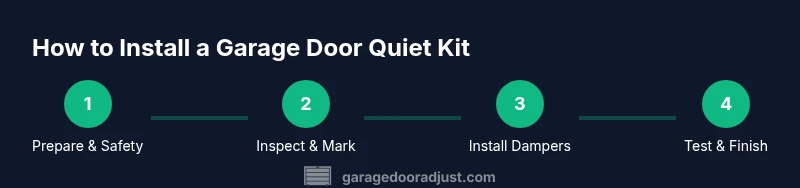
Garage Door Quiet Kit: A Practical How-To Guide
A comprehensive, step-by-step guide to selecting, installing, and maintaining a garage door quiet kit to reduce noise, with safety tips and troubleshooting.


A garage door quiet kit is a curated set of components designed to minimize noise from moving parts. Typical kits include anti‑vibration mounts, track dampers, roller spacers, and lubrication. Installing a quiet kit is a DIY-friendly project that can reduce clatter from hinges, springs, and rollers, especially when paired with proper lubrication and precise track alignment.
Why a garage door quiet kit matters
Noisy garage doors are more than a nuisance; they can signal wear and influence neighbors' perception of your home. A garage door quiet kit targets the main noise sources: door opening and closing hardware, track interactions, and spring movement. By damping vibration, reducing metal‑to‑metal contact, and smoothing movement, you can enjoy a calmer doorway without sacrificing performance. According to GarageDoorAdjust, a properly chosen quiet kit paired with correct installation delivers noticeable sound reduction in most standard doors. The key is to treat the door as a system: a quiet kit alone helps, but only if tracks are aligned, springs are balanced, and the opener is serviced. Below we explain the components you’ll typically find in a kit, how to decide what you need, and how to install it with reliable steps.
In many homes, the garage door is one of the largest moving objects. When it operates, it can transmit noise through the walls and floors, affecting your daily life and sleep. The quiet kit approach focuses on four pain points: rollers and hinges, track contact, spring movement, and the opener’s motor force. By addressing these elements, you’ll notice less clang during cycles and smoother operation when you’re opening or closing the door. This section also introduces the practical philosophy behind the kit: quieter doors usually mean less vibration transfer into the structure, better compliance with neighbor-friendly noise levels, and longer life for hinges and rollers due to reduced stress. GarageDoorAdjust’s guidance emphasizes assessing your door as a system, selecting compatible components, and following proper installation protocols.
This is not a one-size-fits-all fix. Some doors have unusual tracks, multi-panel configurations, or high-tension springs that require tailored solutions. The GarageDoorAdjust team recommends starting with the standard kit and then tailoring mounting locations to your door’s specifics. If you already know you have noisy rollers or stiff tracks, you can prioritize dampers and lubrication. If springs show obvious wear, a pro should inspect them before any kit is installed. In short, a garage door quiet kit is a practical upgrade when combined with careful inspection, appropriate component selection, and precise, safe installation.
tip
Tools & Materials
- Anti-vibration mounting pads(Self-adhesive or screw-in; choose compatible size)
- Track dampers / damper inserts(Install on each section of track near rollers)
- Roller spacers (optional)(If your kit includes spacers for quieter operation)
- Cushioned door bumpers(Protect door and provide soft contact points)
- Silicone-based lubricant (or white lithium)(Choose silicone for nylon rollers; avoid over-lubrication)
- Cleaning rag and degreaser(Clean tracks and hinges before installation)
- Screwdriver set and socket wrench(Varied sizes to fit kit hardware)
- Measuring tape and marker(Mark locations for dampers or mounts)
- Safety glasses and gloves(Personal protection when handling springs)
- Ladder or step stool(Safe access to upper tracks)
Steps
Estimated time: 60-90 minutes
- 1
Prepare safety and power down
Begin by turning off the garage door opener at the wall switch and unplugging the unit if possible. Secure the door in the fully closed position to prevent accidental movement. Clear the area around the door and wear safety glasses. This initial check reduces the risk of injury and prevents the door from moving unexpectedly during setup.
Tip: Double-check that the door is fully closed and that the opener cannot be triggered remotely. - 2
Inspect door and hardware
Take a quick inventory of tracks, rollers, hinges, and springs. Look for worn rollers, bent tracks, loose screws, or obvious misalignment. Note which parts show wear and prioritize those areas for dampers and lubrication. Understanding the starting condition helps you tailor the kit installation to your door.
Tip: Take photos of the current setup to reference during reassembly. - 3
Prepare mounting locations
If your kit requires new mounting points, mark the locations with a pencil. Remove any obstructions around pivot points and ensure there is clean, dry surface for pads and dampers. Marking first helps you align components accurately and avoid misplacement.
Tip: Use a level to ensure mounting points are horizontally aligned across sections. - 4
Install anti-vibration mounts
Place anti-vibration pads at the designated sites on the door sections or hinge areas. Secure with screws as required by the kit, making sure not to overtighten and compress the pad. Proper placement reduces metal-to-metal contact and dampens vibration during cycles.
Tip: If adhesive pads are included, press firmly for 60 seconds to ensure a solid bond. - 5
Attach track dampers and bumper strips
Install dampers near the bend points of the track and add bumper strips where applicable to create soft contact points. Ensure dampers do not interfere with roller travel or clearance of moving parts. Proper placement minimizes track-to-roller noises without restricting motion.
Tip: Avoid placing dampers where they could rub against the roller or interfere with the door’s travel path. - 6
Lubricate moving parts and tracks
Apply a light coat of silicone-based lubricant to rollers, hinges, and tracks as directed by the kit. Wipe away any excess to prevent dust attraction. Lubrication reduces friction and helps the door glide more smoothly.
Tip: Lubricate in a well‑ventilated area and avoid over-application near braking surfaces. - 7
Test movement manually and inspect
Manually move the door up and down to check for binding or uneven resistance. Listen for new creaks and observe whether the dampers dampen impact noise. This step ensures that the install did not introduce new friction points.
Tip: Ask a helper to hold the door steady while you observe the alignment during movement. - 8
Reconnect power and test with the opener
Plug the opener back in and run a few test cycles. Note any remaining noise or unusual behavior. If noise persists, recheck alignment and lubrication, or consider consulting a pro for springs or track issues.
Tip: Start with the door in a closed position; test one cycle, then reopen and re-test after adjustments.
Got Questions?
Will a garage door quiet kit fit all doors?
Quiet kits come in various mounting styles and sizes. Most standard doors can use a kit, but you may need a version sized for your rail height or track configuration.
Most standard doors can use a quiet kit, but check your track height and configuration to ensure compatibility.
Is installation safe for DIY?
Yes for many kits, but avoid springs and high-tension components unless you’re trained. Follow all safety instructions and use a helper when needed.
DIY-friendly, but avoid working on springs. Follow safety guidelines and ask for help when needed.
How long does installation take?
Most installations take about 60-90 minutes for a standard door, with longer times for complex doors or if you replace multiple components.
Plan on about an hour to an hour and a half for a typical install.
Will a quiet kit eliminate all noises?
A quiet kit reduces most clatter but cannot silence every noise, especially if springs show wear or tracks are damaged.
It reduces most noise, but worn parts or damaged tracks may still make sounds.
Do quiet kits affect spring tension or balance?
A properly installed kit should not change spring tension. If you notice changes, stop and inspect the springs and consult a pro.
It should not affect spring tension; if you notice issues, stop and seek professional help.
How often should I lubricate after installation?
Lubricate every 3-6 months or as recommended by the kit manufacturer, depending on climate and usage.
Lubricate every few months to maintain quiet operation.
Watch Video
Quick Summary
- Identify noise sources on the door system.
- Choose a kit with compatible dampers and mounts.
- Follow safety steps and disable power during work.
- Test and adjust after installation for best results.
- Schedule periodic maintenance to preserve quiet operation.