Garage Door Pick Up Today: Step-by-Step Guide
Learn how to plan, prepare, and safely execute a garage door pick up today. This practical guide covers tools, safety, and best practices for DIY moves or when to call a pro.


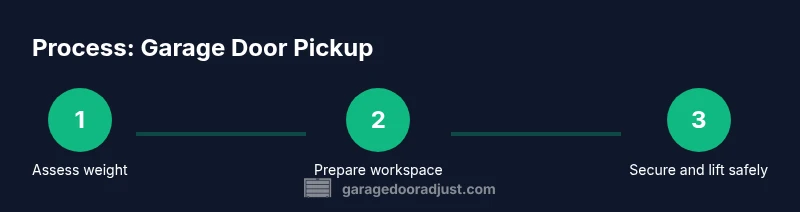
You can safely complete a garage door pick up today by following these steps and using the right safety gear. According to GarageDoorAdjust, planning starts with a clear workspace, proper lifting equipment, and a written plan. This quick guide highlights the essentials: confirm door type and weight, coordinate pickup with a pro or supplier, secure the path, and document each step for accountability.
Why planning a garage door pick up today matters
Moving a garage door is a heavy, complex task that demands planning, proper equipment, and a calm, focused approach. If you intend a garage door pick up today, plan accordingly to prevent surprises. You can safely complete a garage door pick up today by starting with a clear workspace, verified door type, and a realistic plan for help. The GarageDoorAdjust Team found that most injuries occur when people attempt to move sections without securing the door or without adequate helpers. A deliberate plan reduces risk and increases the chance of a smooth, damage-free move. In practice, you’ll outline roles, logistics, and a backup plan in case a part doesn’t cooperate. This section lays the groundwork for a safe, successful pickup, emphasizing preparation, communication, and patience. The goal is to move only what you can control, with room to pause and reassess as needed. GarageDoorAdjust emphasizes that every successful pickup starts with clarity and safety, not brute force. When you approach the task with a concrete plan, you’ll protect your door, your space, and your family. If you intend a garage door pick up today, plan accordingly to prevent surprises and set up the team for success.
trustNoteKeywords[]
noteOnly
Tools & Materials
- Safety gloves and eye protection(Protect hands and eyes from pinch points and sharp edges)
- Dolly or appliance cart(Move heavy sections with two-person lift if possible)
- Lifting straps or come-along(Distribute weight and keep door balanced)
- Wrench set (adjustable)(Loosen mounting bolts if needed)
- Plywood or sturdy planks(Plate to create a stable base on uneven floors)
- Measuring tape(Confirm dimensions and weight estimates)
- Moving blankets(Protect door panels during transport)
Steps
Estimated time: Estimated total time: 45-75 minutes
- 1
Identify door type and weight
Locate the manufacturer label or measure the door to determine whether it uses torsion springs or extension springs and estimate weight. This informs how many people are needed and which tools to bring. If you cannot locate a label, measure the door height and width, and note the door type (sectional, single panel, etc.).
Tip: If uncertain, assume heavier and secure more help. - 2
Prepare a safe workspace
Clear the area of obstacles, power cords, and vehicles. Lay moving blankets or a protective surface to prevent damage. Position a dolly and designate a spotter to guide the move and communicate hazards clearly.
Tip: Keep a clear exit path in case you need to retreat. - 3
Power down and unplug the opener
Unplug the automatic opener and disconnect any battery backup. Verify the opener cannot be activated during the move by testing the wall switch and remote control. If the garage has smart devices, disable automation to avoid unexpected operation.
Tip: Lock the switch or tape the control to avoid accidental use. - 4
Secure tracks and supports
Clamp tracks to prevent movement and brace the area away from springs. Do not place clamps near the torsion barrel or springs. Use temporary shims or wedges to stabilize components that might shift during lifting.
Tip: If you hear springs set or feel unusual tension, stop and call a professional. - 5
Attach lifting aids and begin controlled lift
Attach straps or position the dolly under the door panels. Lift slowly with a partner, keeping the load close to your body. Communicate any changes in weight distribution and pause if you notice binding or misalignment.
Tip: Move in small increments and communicate clearly. - 6
Move the door to a safe location
Roll the door onto the dolly and move slowly along a prepared path. Have a spotter guide corners and obstacles to prevent collisions. Maintain a low center of gravity and keep hands away from pinch points.
Tip: Take breaks if you feel resistance or strain. - 7
Document and secure hardware
Bag and label brackets, screws, and hinges. Photograph the setup for reference when reinstalling. Store all parts together in a labeled container to minimize loss during transport.
Tip: Keep track of screws and brackets for reassembly.
Got Questions?
Is it safe to move a garage door by myself?
Moving a garage door solo is risky due to weight, balance, and potential spring tension. If you must work alone, stick to ultra-light components and ensure the area is clear; otherwise, recruit a partner or hire a pro.
Moving a garage door by yourself is risky; consider getting help or a pro.
Do I need permits to move a garage door?
Typically no permit is required to move a residential garage door, but check local codes if you’re changing the door or structure. Always verify with your city or homeowners association.
Most moves don’t need a permit, but local rules vary.
What should I do if the door is off its tracks?
If the door is off its tracks, do not force it. Keep people out of the path and call a pro; move the door only after alignment is verified.
If the door is off its tracks, stop and call a professional.
How can I tell if the door uses torsion springs?
Look up the manufacturer label or measure the spring system. Torsion springs sit above the door on a central shaft; if in doubt, treat as dangerous and seek professional service.
Torsion springs are mounted above, on a central shaft; don’t attempt to adjust them yourself.
How long does a garage door pickup today typically take?
Actual lifting and transportation typically takes 45-90 minutes depending on door size, weight, and crew. Allow extra time for setup and securing the new location.
Most pickups take under two hours, depending on the door.
What tools are essential for the pickup?
Essential tools include protective gear, a dolly or lifting straps, clamps for tracks, a measuring tape, and a stable working surface. Plan for extra hands and enough time.
You’ll need PPE, a dolly, and lifting straps.
Watch Video
Quick Summary
- Plan safety-first before any lift
- Verify door type and weight early
- Use proper equipment and multiple helpers
- Power down and secure the area
- Document steps for reassembly