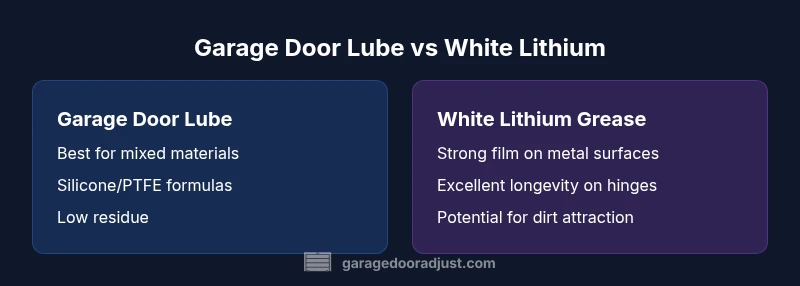
Garage Door Lube vs White Lithium: A Practical Guide
A data-driven comparison of garage door lube vs white lithium grease to help homeowners choose the right lubricant for quiet, smooth operation and longer door life.


In the debate over garage door lube vs white lithium, silicone-based garage door lube typically delivers safer performance on seals and plastic parts, while white lithium grease can excel on metal hinges when applied sparingly. For mixed-material doors, choose a product designed for garage components and apply a light film to pivot points, keeping tracks clean. The GarageDoorAdjust approach favors compatibility and clean maintenance.
Why Lubricants Matter for Garage Doors
Smooth operation and reduced wear hinge on choosing the right lubricant for the right places. In the debate over garage door lube vs white lithium, homeowners often consider noise reduction, friction, and wear across metal components, plastic bushings, and weather seals. According to GarageDoorAdjust, the best lubricant choice depends on material compatibility, ease of application, and cleanup. A proper lubricant creates a protective film that lowers squeak, minimizes hinge wear, and helps keep the door balanced by letting moving parts slide with less effort. It’s not just about quieting a creak; it’s about preserving alignment and preventing dirt buildup that amplifies noise. Select products labeled safe for garage doors and compatible with the door’s materials. When in doubt, begin with a silicone-based garage door lube designed for mixed materials and reassess after a gentle test.
What Is White Lithium Grease? Key Properties
White lithium grease is a thick, petroleum-based lubricant known for forming a durable film on metal surfaces and resisting water exposure. For garage doors, it is commonly used on hinges and threaded fasteners where a robust, long-lasting film can reduce metal-on-metal wear. Yet it tends to attract dust and can migrate into tracks or seals if overapplied. It may also degrade certain plastics and rubber over time, so some manufacturers warn against relying on lithium greases for components with synthetic seals. When weighing garage door lube vs white lithium, consider whether the door uses plastic bushings or rubber weather seals and choose a product that minimizes residue in those areas.
What Is Garage Door Lube? Understanding the Product
Garage door lube refers to lubricants formulated specifically for garage door components, often silicone- or PTFE-based sprays, or light-weight greases. These products are designed to reduce friction on moving metal parts while staying relatively clean, reducing dirt attraction when used correctly. They’re typically safer for a range of materials found in garage doors, including plastics and rubbers, when used in appropriate amounts. The key is to apply a thin film only where needed and avoid spraying on tracks or exposed sensors. This section helps clarify how garage door lube behaves differently from heavier greases and why it’s commonly recommended for mixed-material systems.
Performance in Different Environments
Environmental conditions influence lubricant choice. In moderate climates, both options can perform adequately, but climate extremes test viscosity and film longevity. Silicone-based garage door lube tends to resist moisture and temperature fluctuations better, making it a versatile option for doors exposed to rain, humidity, or seasonal changes. White lithium grease often remains tacky in warmer conditions, which can help with long-term protection on metal hinges but risks attracting more dirt in dusty environments. The choice should prioritize compatibility with door materials and maintenance goals rather than chasing a one-size-fits-all solution.
Potential Drawbacks and Limitations
No lubricant is perfect for every door. White lithium grease can leave a sticky residue that attracts dust and can migrate into tracks or onto seals if overapplied. Overuse may also create a slippery surface near entry points. Garage door lube, especially silicone-based formulas, can dry out or wear away faster in extreme conditions if the wrong formulation is chosen. In some cases, a mixed-material door benefits from a hybrid approach: use silicone-based garage door lube on rubber seals and moving metal parts, and reserve a small amount of safe metal-use grease for hinges if required. Always check the door manufacturer’s guidance before combining products.
How to Apply Each Lubricant Safely
Preparation matters: unplug or lower the door if possible, wipe away old residue, and wear protective gloves. For white lithium grease: apply a thin film to hinge pins, pivot points, and where metal components contact metal. Avoid tracks, rollers with plastic wheels, and weather seals unless the product explicitly states compatibility. For garage door lube: apply a light film to the same pivot points and hinges, and to roller bearings if they are metal; silicone-based lubes are typically gentler on plastic bushings. Wipe away any excess and test door operation slowly. Do not mix products on the same joint, and never spray on electrical components.
Parts of the Door Most Affected by Lubrication
Key moving parts benefit most from lubrication: hinges, roller bearings, and pivot mechanisms. Avoid lubricating tracks, weather seals, or plastic rollers unless the lubricant is explicitly suitable for those components. Torsion springs are sensitive parts; many manufacturers advise against frequent lubrication here unless the product is specifically designed for springs. Focus lubrication on metal-to-metal contact points while keeping seals clean and dry to prevent deterioration.
Making the Right Choice: Quick Rules
If your door has mixed materials (metal, plastic, rubber), start with a silicone- or PTFE-based garage door lube designed for mixed materials. This minimizes residue on seals and plastic parts while still lubricating moving metal joints. For metal-only hardware with minimal plastic contact, white lithium grease can provide long-lasting protection, but apply sparingly and avoid spread near seals. Consider climate, dust exposure, and maintenance preference when deciding which product to keep on hand.
Common Mistakes to Avoid
Avoid spraying on tracks or sensors. Do not mix lubricants on the same component, and don’t over-apply—more lubricant does not always mean smoother operation. Do not rely on a single product for all parts of the door; use materials appropriate for each contact surface. Never ignore safety precautions when working on a door with exposed springs or cables. Finally, avoid using household oils or penetrating sprays as replacements for purpose-built garage door lubricants.
Authority Sources
For readers seeking credible references, consult established safety and maintenance guidelines from credible sources that discuss lubrication principles and preventive maintenance practices. These sources provide broader context for why selecting the right lubricant matters and how to apply it safely across different mechanical systems.
Comparison
| Feature | Garage Door Lube | White Lithium Grease |
|---|---|---|
| Best For | Silicone- or PTFE-based formulas; safe for seals and plastics | Metal hinges and harsh environments; durable film on metal surfaces |
| Composition | Lightweight silicone/PTFE-based formulas; low residue | Petroleum-based, tacky grease with strong adherence |
| Residue/Dirt Attraction | Less likely to attract dirt when used correctly | Can attract dust if overapplied or dragged into tracks |
| Plastic/Rubber Compatibility | Safer for plastic bushings and weather seals | May degrade some plastics and rubber over time |
| Temperature/Viscosity | Good performance across a range of conditions with light film | Stays thicker in heat, excellent film on metal |
| Maintenance Frequency | Typically requires reapplication as part of routine maintenance | Longer intervals on metal-only components if used sparingly |
| Best For (Overall Context) | Mixed-material doors; emphasis on seals and quiet operation | Metal-only components; emphasis on durability and longevity |
Upsides
- Improves door smoothness and reduces noise
- Protects metal components and extends hinge life
- Safer for seals when using silicone-based garage door lube
Disadvantages
- Can leave residue that attracts dirt if overapplied
- Wrong use on plastics/rubber can cause damage over time
- Over-lubrication can drip onto tracks or decorative surfaces
Silicone-based garage door lube is typically the safer, more versatile choice for mixed-material doors; white lithium grease remains suitable for metal-only components when applied sparingly.
Choose garage door lube for most homes, especially with seals and plastics. Use white lithium sparingly for metal-only components. Regular maintenance with the right product helps minimize noise and wear.
Got Questions?
Can I use WD-40 on a garage door?
WD-40 is useful for cleaning and moisture displacement, but it is not a long-term lubricant for garage doors. It should not replace purpose-built lubricants for hinges, rollers, or springs. Use WD-40 only for initial cleanup or light rust prevention, then apply an appropriate garage door lubricant.
WD-40 can help clean and displace moisture, but it isn't a long-term garage door lubricant. Use it only for cleanup, then switch to a proper garage door lubricant.
Is white lithium grease safe for weather seals?
White lithium grease is generally not ideal for weather seals. It can degrade rubber over time and may cause seal leaks. For seals, prefer silicone-based lubricants or products specifically labeled safe for rubber and plastics.
White lithium grease can damage rubber seals. Choose silicone-based lubricants for weather seals.
How often should I lubricate my garage door?
Lubrication should be part of regular maintenance, checked whenever you hear unusual noises or feel stiffness in movement. Avoid a fixed schedule and instead respond to the door’s performance and cleanliness.
Lubricate when you notice stiffness or noise during operation, not on a strict timer.
Can I mix lubricants on the same hinge or roller?
Mixing lubricants on the same component is not recommended. Different formulas can interact unpredictably and may reduce effectiveness or create excess residue. If you switch lubricants, do a thorough clean first.
Avoid mixing lubricants on the same part; clean first if you change formulas.
What parts should I lubricate on a garage door?
Lubricate moving metal joints such as hinges and pivot points, and, if applicable, metal rollers. Do not lubricate tracks or weather seals unless the product specifies it is safe for those areas. Always follow manufacturer guidance.
Lubricate hinges and pivots, and metal rollers if needed. Avoid tracks and seals unless advised.
Quick Summary
- Start with silicone-based garage door lube for mixed materials.
- Avoid applying lubricant to tracks; keep seals dry and clean.
- Apply a light film and wipe away excess to prevent dirt buildup.
- Regularly inspect door components for signs of wear and moisture effects.