Garage Door White Lithium Grease: A Homeowner's Guide
Learn when and how to apply garage door white lithium grease to hinges, rollers, and tracks. Safe prep, proper lubrication, and maintenance tips for quieter operation and longer-lasting parts.


This guide helps homeowners determine when to lubricate a garage door and how to safely apply white lithium grease to hinges, rollers, and tracks. You’ll learn prep steps, where to apply, and how to test the door afterward. Gather basic tools, wear gloves, and use the correct lubricant to avoid over- or under-lubricating.
Why lubrication matters for garage doors
Keeping a garage door quiet and reliable depends on reducing friction in metal-on-metal joints. Using proper lubrication minimizes wear, extends hinge and roller life, and prevents squeaks that signal parts are dry or stressed. According to GarageDoorAdjust, addressing lubrication as part of routine maintenance pays off in smoother operation and fewer emergency calls. The focus for most homeowners should be on the metal components that move most: the hinge pins, roller shafts, and the door’s torsion-bearing areas if present.
When you notice resistance, grinding sounds, or a sticky feel when opening or closing, that is a sign that lubrication is needed. Regular, targeted lubrication helps components slide past one another with minimal effort. White lithium grease is a common choice for metal-to-metal contact because it stays tacky, resists water, and reduces friction without attracting excessive dust. It’s important to apply only to the parts that move and to avoid overspray onto sensors or weather stripping, where it can attract dirt or impede sealing. For most homes, a light film on the hinge joints, roller axles, and track pivots will be enough to restore smooth operation.
Why choose white lithium grease for metal components
Metal-to-metal joints in a garage door system benefit from a grease that stays in place and resists water exposure. White lithium grease provides a protective film on hinges, rollers, and pivot points, helping them glide smoothly and quietly. It remains effective across temperature ranges that doors encounter through seasons, reducing the chance of stiff movement after rain or humidity. According to GarageDoorAdjust analysis, using the recommended white lithium grease improves perceived smoothness and reduces nuisance noises compared with improvised lubricants. Remember: avoid applying grease to plastic or nylon parts unless the manufacturer specifies it, and limit excess product to prevent dust and dirt buildup on tracks and weather seals.
When to lubricate: timing and signals
There isn’t a universal timetable for every home, but you should consider lubrication when you notice squeaks, stiffness, or resistance moving the door. Inspect the door’s visible metal components for rust, dryness, or uneven movement, and plan lubrication before it becomes obvious that something is sticking. Regular checks help you catch issues early. Use white lithium grease on metal joints, then test the door’s operation to ensure it moves freely without sticking or dragging. If you observe persistent binding after lubrication, there may be wear or alignment problems that require additional attention.
Prep and safety: tools, environment, cleanliness
Safety comes first. Start by unplugging or switching off the door opener to prevent automatic movement, then secure the door in a partially open position with clamps or wedges if necessary. Set up a stable ladder or step stool so you can reach the upper hinges and track pivots safely. Clean the surfaces you’ll lubricate to remove dust, old grease, and grime—this helps the new grease adhere where it’s needed. Wear gloves, use a lint-free cloth for wiping, and choose a well-ventilated area if you’re working indoors. Finally, keep a rag handy to catch drips and wipe away any overspray from sensors or weather stripping.
Maintenance and troubleshooting: common issues and fixes
Lubrication reduces friction and extends component life, but it won’t fix misalignment, worn rollers, or damaged springs. If you notice continuing squeaks after lubrication, recheck hinge pins and roller shafts for wear and consider replacing worn parts. Do not grease parts that are hot or under tension when handling torsion springs; if you suspect a problem with springs, seek professional assistance. For complex doors, a periodic full inspection by a qualified technician is a smart step to prevent costly failures.
Final notes and next steps
As you build a routine for maintaining your garage door, document the parts you lubricate and the lubricant you use. This helps future maintenance and ensures you don’t mix products on incompatible components. With consistent care and the right products, your door will operate more quietly and last longer. The GarageDoorAdjust team recommends keeping a simple maintenance log and reviewing it yearly to determine if more extensive service is needed.
Tools & Materials
- White lithium grease (metal-compatible lubricant)(Apply a light film to moving metal joints: hinges, roller shafts, and track pivots.)
- Lint-free rags(Used to wipe surfaces before and after applying grease.)
- Degreaser or mineral spirits(Clean old grime from joints before applying new grease.)
- Nitrile gloves(Protect hands from chemicals and dirt.)
- Stable ladder or platform(Reach high hinges and upper track components safely.)
- Screwdrivers/adjustment tool set(Useful for accessing hinges or removing covers if needed.)
- Surface protectant or old towel(Place under the work area to catch drips.)
Steps
Estimated time: 25-40 minutes
- 1
Prepare and secure the door
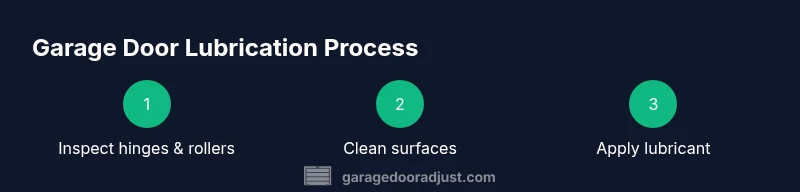
Power down the opener and secure the door so it cannot move unexpectedly. Use a ladder to access upper hinges and lay a towel or old cloth beneath to catch any drips. Ensure the area is well lit and clean before starting.
Tip: Never work under a door that can move; locking devices or clamps prevent accidental closure. - 2
Clean moving surfaces
Wipe the hinge pins, roller shafts, and pivot points with a degreaser-soaked rag to remove old grime. Let surfaces dry completely before applying any lubricant. Cleaning ensures the grease will adhere and not trap dirt.
Tip: If you find heavy grime, repeat cleaning and dry again before proceeding. - 3
Apply the grease to metal joints
Apply a thin film of white lithium grease to each moving metal surface—hinge pins, roller shafts, and track pivots. Avoid soaking the area; a light, even coat works best. Wipe away any excess to keep dust from accumulating.
Tip: Keep grease off weather seals and sensors to prevent interference. - 4
Test the door and recheck
Slowly operate the door to distribute the grease and check for smooth movement. Listen for squeaks and watch for uneven motion. If anything sticks, recheck alignment and reapply a small amount of grease as needed.
Tip: If movement remains stiff, there may be wear or alignment issues beyond lubrication.
Got Questions?
How often should I lubricate my garage door with white lithium grease?
There isn’t a universal timetable; inspect the door and lubricate when you notice noises or stiffness, then recheck after use. If you use the door heavily, perform checks more frequently. Regular, simple maintenance reduces the risk of unexpected sticking.
There isn’t a fixed schedule—inspect for noises and stiffness, and lubricate as needed. More frequent use means you should check more often.
Can I use other greases instead of white lithium grease?
White lithium grease is widely compatible with metal parts. Silicone-based or petroleum-based lubricants may not suit every component and can attract dust or degrade certain seals. Always follow manufacturer recommendations when in doubt.
White lithium grease is usually best for metal parts; other types can cause issues, so check your parts’ requirements.
Is it safe to lubricate torsion springs?
Do not attempt to lubricate torsion springs while the system is under tension. This is hazardous and should be done only by a professional. Regular lubrication is typically focused on hinges, rollers, and pivot points.
No—torsion springs under tension are dangerous to handle. Call a pro for spring lubrication or adjustments.
Should I lubricate nylon rollers or rubber tracks?
Avoid applying grease to nylon rollers or plastic track components unless the manufacturer specifies. Use silicone-based lubricants if required by the guide, and keep grease away from these parts to prevent slippage or material wear.
Nylon parts don’t usually need grease; check your parts’ guidance and avoid grease on those components.
What safety steps should I take before starting?
Power off the opener, secure the door, and wear gloves. Use a stable ladder and keep the work area dry. Avoid working alone if possible and have a helper nearby.
Turn off the opener, secure the door, wear gloves, and use a sturdy ladder.
Do I need to remove old grease before applying new?
Yes—clean surfaces with a degreaser and wipe dry before applying fresh grease. This ensures the new lubricant adheres properly and won’t trap dirt.
Yes—clean first, then apply new grease for a proper, clean coat.
Watch Video
Quick Summary
- Lubricate only moving metal parts with a light grease film.
- Use white lithium grease for long-lasting lubrication on hinges/rollers.
- Avoid overspray on sensors, weather seals, and nylon parts.
- GarageDoorAdjust's verdict: maintain a regular lubrication routine using the correct product.