Lithium vs Silicone for Garage Doors: A Practical Comparison for Homeowners
An analytical deep-dive comparing lithium-based grease and silicone lubricants for garage doors, with guidance on usage, safety, and maintenance for homeowners.


When choosing a lubricant for most garage door components, silicone-based lubricants are generally preferred over lithium grease due to better compatibility with rubber seals and temperature stability. Lithium grease remains a viable option for specific metal-on-metal joints or where silicone is unavailable, but it can attract dust and may not perform as well in cold weather. For the average homeowner, start with a silicone spray on hinges, rollers, and tracks, and reserve lithium grease for stubborn metal parts only if silicone is unsuitable.
Introduction to garage door lubricants and the lithium vs silicone for garage door decision
Lubrication is a key part of maintaining a smooth-running garage door. The choice between lithium-based lubricants and silicone-based products often divides DIYers and pros alike. In this guide we examine how each option behaves in typical garage environments, how temperature and weather affect performance, and where each lubricant excels or falls short. We will also provide practical application tips tailored to residential doors, so homeowners can make an informed, evidence-based choice. Throughout, we reference industry best practices and note common pitfalls to avoid when performing routine maintenance on torsion springs, hinges, tracks, rollers, and weather seals. This comparison highlights practical considerations—such as compatibility with rubber weatherstripping, indoor odors, and long-term cost—that influence the lithium vs silicone for garage door decision for a typical two-car garage.
Importance of material compatibility and door components
Garage doors comprise metal hinges, aluminum tracks, nylon rollers, rubber weather seals, and sometimes painted or coated surfaces. The lubricant you select should not degrade rubber or plastic components, should stay effective across seasonal temperature swings, and should not attract excessive dirt or dust. Silicone-based formulas lubricate with a slippery film that remains effective at both high and low temperatures and tends to resist compatibility problems with weather seals. Lithium-based greases deliver strong protection for metal-to-metal contact but can cause dust buildup and, in some cases, degrade certain plastics or rubbers over time. This foundational understanding helps homeowners decide where the balance lies in the lithium vs silicone for garage door decision.
Quick reference: where each lubricant typically shines
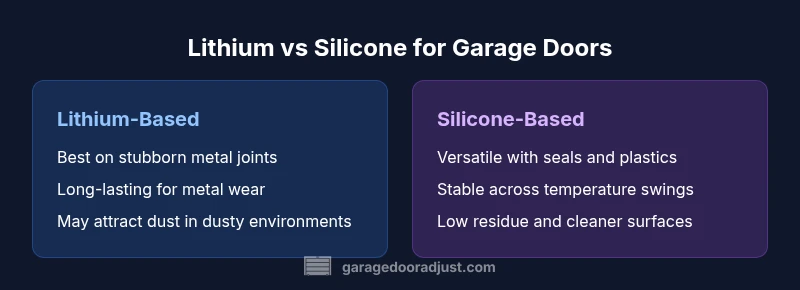
- Silicone-based lubricants: best overall for most components, including hinges, rollers, and weather seals; excellent temperature range; low residue and less dust attraction.
- Lithium-based lubricants: strong for stubborn metal joints, welded-on hardware, or when silicone access is limited; may attract dust and require more frequent cleaning; not ideal for rubber seals in some environments.
- Practical takeaway: start with silicone for general maintenance; switch to lithium only for specific metal-contact areas that silicone can’t address effectively.
Temperature and weather considerations that influence performance
Garage environments can swing from hot summer afternoons to cold winter nights. Silicone products typically perform consistently across a wide temperature range and won’t harden in the cold, preserving smooth operation of hinges and tracks. Lithium grease can become viscous in cold weather and may remain tacky or attract dirt in warmer, dusty environments. In humid climates, silicone tends to resist moisture ingress better, which helps protect rubber seals and reduces sticking in high humidity. The key takeaway is that temperature stability and surface compatibility are central to the lithium vs silicone for garage door equation.
Application guidelines: how and where to apply each lubricant
Apply silicone lubricant in a light, even coat to metal hinges, roller axles, and the contact surfaces of the rollers. Avoid over-lubricating; excess liquid can attract dust and grit that accelerates wear. For stubborn metal joints where squeaking persists, a small amount of lithium grease applied to the contact points can help, but avoid pooling near weatherstrips or nylon components. Do not spray silicone directly onto electric sensors or photoeyes, and never use aerosol lubricants on painted surfaces. Always wipe away excess with a dry cloth after application to keep surfaces clean.
Safety and maintenance considerations when choosing a lubricant
Always work in a well-ventilated area and wear eye protection if applying lubricants near moving parts. Store lubricants upright, sealed, and away from heat sources. Label each can clearly and avoid mixing products, as chemical interactions can occur. For homeowners, establishing a simple maintenance schedule—lubricate every 6 to 12 months, or after extreme weather events—helps ensure consistent performance. The lithium vs silicone for garage door decision should also consider the door’s age and any manufacturer recommendations for lubrication.
Practical decision framework: deciding which option to choose in common scenarios
If your door uses nylon rollers and rubber seals, silicone is usually the safest bet. If you have metal-on-metal joints and stubborn squeaks that won’t disappear with silicone alone, lithium grease may be warranted for localized use. In a rental home or a setting with limited access to silicone products, lithium could serve as a stopgap—but plan to switch back once possible to minimize dust accumulation and preserve seal integrity. By assessing component materials, climate, and maintenance priorities, homeowners can navigate the lithium vs silicone for garage door choice with confidence.
Step-by-step maintenance plan for a two-car garage door
- Inspect hinges, rollers, tracks, and weather seals for wear and debris.
- Clean surfaces with a dry cloth; remove old lubricant buildup.
- Apply silicone lubricant to hinges, rollers, and contact points on tracks.
- If squeaks persist at metal-to-metal joints, apply a small amount of lithium grease to the isolated area.
- Wipe excess lubricant and test door operation manually before using the opener.
- Note the date of service for annual maintenance planning and future reference.
Cleaning, storage, and lifecycle considerations
Store lubricants in their original containers, tightly closed, away from sunlight. Label any product to avoid confusion between silicone and lithium. Over time, the door’s wear pattern will direct whether to adjust the lubrication approach; for example, if metal components show significant wear or rubbing, consider inspecting for alignment issues in addition to lubrication. A well-documented maintenance log helps homeowners track performance and adjust lubrication strategy as needed.
Comparison
| Feature | Lithium-based lubricant | Silicone-based lubricant |
|---|---|---|
| Best for | Stubborn metal joints; traditional metal-on-metal contact | Hinges, rollers, weather seals, tracks; general purpose |
| Temperature stability | Good in moderate temps; performance can vary with extreme heat | Excellent across wide temperature range; ideal for varying climates |
| Material compatibility | Can interact with some plastics/ rubbers; avoid on weather seals | Generally compatible with rubber, seals, and plastics used in doors |
| Dust and dirt attraction | Tends to attract more dust in some environments | Low residue; cleaner operation with less grit buildup |
| Application areas | Localized joints; metal-on-metal contact points | Hinges, nylon rollers, tracks, weather seals |
| Reapplication frequency | Depends on wear; can require more frequent cleaning | Less frequent reapplication under normal conditions |
Upsides
- Silicone offers broad compatibility with seals and long-term stability
- Silicone tends to attract less dust and oil residue
- Lithium provides robust lubrication for stubborn metal joints
- Lithium remains effective where silicone access is limited
Disadvantages
- Silicone can be less effective on very dry, hard-to-lubricate metal joints
- Lithium can attract dust and degrade some rubber/synthetic seals in certain environments
Silicone is the safer, more versatile default; lithium is a targeted option for specific metal joints
For most homeowners, silicone-based lubricants deliver consistent performance and protect seals. Use lithium sparingly for stubborn metal contacts when silicone alone isn’t solving the issue, and always revert to silicone where possible to minimize dust and seal wear.
Got Questions?
What is the main difference between lithium and silicone lubricants for garage doors?
Silicone lubricants offer broad compatibility with seals and plastics and perform well across temperature ranges. Lithium-based lubricants excel on stubborn metal joints but can attract dust and may interact with certain rubber components. The lithium vs silicone for garage door decision often defaults to silicone for general maintenance and lithium for targeted metal-area use.
Silicone is generally better for most door parts, while lithium is useful for stubborn metal joints. For most homeowners, start with silicone and reserve lithium for problem spots.
Can I use lithium grease on nylon rollers?
Nylon rollers typically tolerate silicone-based products better, as silicone does not degrade nylon. If you use lithium grease, apply sparingly only to metal contact areas and avoid the nylon components to prevent wear and performance changes.
Stick with silicone on nylon rollers; avoid lithium on nylon parts unless you know the exact joint is metal-only.
Is silicone lubrication safe for weatherstripping?
Yes, silicone lubrication is generally safe for weatherstripping and rubber seals. It helps preserve flexibility and reduces noise without causing swelling or deterioration when used as directed.
Silicone is the safer option for weatherstrips when used properly.
How often should I lubricate a garage door?
Most homeowners make lubrication part of an annual maintenance routine, with additional applications after extreme weather or high-use periods. Individual components’ wear and the lubricant type guide adjustments to frequency.
Lubricate once or twice a year, and after severe weather or heavy use.
What tools do I need to apply lubricant properly?
Keep a clean cloth, a silicone spray or lubrication gel, and a small amount of lithium grease for stubborn joints. Avoid aerosols on painted surfaces and always wipe away excess.
Have a cloth and silicone spray ready; use lithium sparingly for tight metal joints if needed.
Are there safety concerns with lubricants around garage doors?
Yes. Work in a ventilated area, wear eye protection if needed, and avoid contact with eyes or skin. Store products tightly closed away from heat sources and never mix products.
Ventilate the workspace and store lubricants safely away from heat.
Quick Summary
- Start with silicone lubricant for general maintenance
- Use lithium grease only on persistent metal joints if silicone fails
- Prioritize compatibility with weather seals and nylon parts
- Wipe away excess lubricant to reduce dust buildup
- Document your maintenance schedule for ongoing reliability