How to Fix a Garage Door That Goes Down Too Far
Diagnose and fix a garage door going down too far with a step-by-step plan. Quick checks, limit adjustments, sensor alignment, and professional help when needed. Guidance from GarageDoorAdjust for homeowners.


The most common cause is a misadjusted down travel limit on the opener. Quick fix: locate the travel-limit screws or DIP settings, reset the down limit to stop the door at the correct position, and test with several cycles. If it remains off, verify door balance and sensor alignment. According to GarageDoorAdjust, small limit changes and careful testing usually restore proper travel.
Symptom overview and safety
When the door is going down too far, you’re dealing with a safety-sensitive situation that can damage tracks, the door itself, or the opener mechanism. The exact phrase you might hear or read about is the symptom: the garage door is going down too far. In most homes, this points to a misadjusted down travel limit, a sagging balance caused by spring wear, or a misaligned safety sensor. The GarageDoorAdjust team emphasizes safety first: disconnect power before any inspection, keep hands clear of moving parts, and never bypass safety features. This section outlines how to identify the most likely cause and what to check first, using a logical, homeowner-friendly sequence.
Quick safety checks you can perform safely
Before you touch any adjustment screws, perform these safety checks:
- Unplug the opener or switch off the circuit to disable automatic operation.
- Use the emergency release to manually operate the door only if necessary, keeping feet clear of the hinge area.
- Clear the work area of obstacles, and keep children and pets away.
- Check that the door remains balanced by lifting it about halfway; it should stay in place or require a little effort, not drift downward on its own.
- Reconnect power after you finish safety checks, and test the opener with the wall control and remote to confirm behavior.
How travel limits affect downward travel
Modern garage door openers rely on travel limit settings to determine where the door stops. The down-limit defines how far the door can travel toward the floor. If the limit is set too aggressively downward, the door will stop too far from the floor, or it may continue past the floor and strike the ground. This is often due to a small misadjustment or a recent door strain that shifted the carriage or belt. The correct approach is to reset the down-limit slightly upward, then cycle the door several times to confirm consistent stopping points. Trust but verify with multiple cycles and note any changes in behavior. The GarageDoorAdjust guidance highlights that even small changes can fix the issue without replacing parts.
Balance and spring considerations
Door balance is a major factor in how a door travels. A door that feels heavy or requires the opener to work unusually hard may indicate worn torsion or extension springs, weak cables, or binding rollers. When springs lose tension, the door can drop more quickly or unevenly, causing the bottom to hit the floor too hard or go lower than intended. If you notice sticky movement, unusual noises, or obvious sagging, do not attempt spring work yourself. Balance checks are best performed with the door disconnected from the opener, manually lifting to the halfway point and observing whether it stays put. If it falls or rises unexpectedly, schedule a professional inspection.
Safety sensors and obstruction checks
Misaligned or dirty safety sensors can cause the opener to reverse or misjudge travel, which may be interpreted as the door going down too far. Check the two infrared sensors near the floor on each side of the door track. Ensure lenses are clean, free from condensation, and aligned so the beams meet in the middle. If you see a persistent error light, realign and retest with the door opening and closing. Small obstructions in the track can also impact travel; clear any debris from the tracks and inspect for bent sections or loose rollers.
Diagnostic flow: symptom → diagnosis → practical fixes
A concise diagnostic approach helps homeowners quickly isolate the cause. Start with the easiest checks (limit settings and sensor alignment), then progress to balance and track issues, and finally investigate hardware wear if the door still travels too far. This flow mirrors professional troubleshooting and minimizes unnecessary repairs. If you reach a point where wiring, springs, or major components seem compromised, contact a qualified technician. The goal is a safe, reliable door that stops at the intended floor level.
Step-by-step overview of the most common fix (high level)
The most common fix is adjusting the down travel limit and verifying that the door remains balanced after the correction. This section gives a high-level plan you can follow, without diving into heavy mechanical work. After adjusting the limit, test with multiple cycles, check the floor alignment, then re-check sensor alignment to ensure full, safe operation. Always proceed incrementally and stop if you notice sudden changes or abnormal resistance. The GarageDoorAdjust team recommends verifying every adjustment with careful testing before concluding.
Preventive maintenance to avoid future issues
Regular maintenance reduces the odds of future downward travel problems. Schedule a quarterly quick check: tighten hardware, lubricate moving parts, inspect tracks for damage, and confirm limit settings remain correct after heavy door use or weather changes. Keep sensors clean and aligned, and replace worn components before they fail. A short monthly inspection can save a larger repair bill later and keeps your garage door functioning safely.
When to call a professional and what to expect
If you observe persistent mistravel after basic adjustments, call a professional. A trained technician can safely recalibrate limits, test balance, inspect springs, and address any structural wear without risking personal injury. Expect a diagnostic visit to include a balance test, spring evaluation, sensor alignment check, and a detailed report with recommended parts and a repair timeline. Remember, some fixes—especially spring work—require specialized tools and expertise.
Steps
Estimated time: 60-90 minutes
- 1
Disconnect the opener and test manually
Power off the opener and use the emergency release to operate the door manually. Open the door slowly to halfway and release; observe whether it stays put, drops slowly, or falls. This establishes a baseline for balance and safety.
Tip: Always keep hands clear of the hinges and tracks while testing. - 2
Locate the down travel limit setting
On most openers, the down limit is adjusted with a small screw near the header console or via DIP switches. Consult your model’s manual if you’re unsure. Make sure the unit is unplugged when you access controls.
Tip: Use a flashlight and work slowly; small adjustments have big effects. - 3
Make a small adjustment to the down limit
Turn the down-limit screw a quarter-turn at a time, then test with the door’s full cycle. Reconnect power and run 3-5 cycles to verify it stops at the correct height.
Tip: Record how many turns you made so you can revert if needed. - 4
Re-test balance and safety sensors
With the door under power, test the safety beam by waving an object in front of the sensors to ensure the door reverses properly. Confirm manual balance still holds after reattachment to the opener.
Tip: If the door feels heavy, stop and reassess balance before proceeding. - 5
Inspect tracks, rollers, and hinges
Look for bent tracks, loose screws, or worn rollers. Tighten or replace components as necessary to ensure smooth travel and proper alignment.
Tip: Use only manufacturer-recommended parts and avoid forcing components. - 6
Reconnect and test with cycles
Reconnect power, then run multiple cycles (open, close, and stop at different heights) to confirm consistent performance. Check floor clearance and ensure the door doesn’t drift down when stopped.
Tip: Document results and next steps if any issue remains.
Diagnosis: Garage door is going down too far
Possible Causes
- highTravel limit misadjustment
- highDoor balance problem due to spring wear
- mediumSensor safety beam misalignment or dirty
- lowLoose or damaged hardware in tracks or hinges
Fixes
- easyAdjust the down travel limit screw or DIP switch to increase stopping position
- hardTest door balance by disconnecting the opener and lifting halfway; if it drifts, springs/hardware may be worn
- mediumRealign or replace misaligned safety sensors and clear any obstructions in the path
- mediumTighten track/hinge hardware or replace worn rollers
Got Questions?
What causes a garage door to go down too far?
Most commonly, the down travel limit is misadjusted. Other causes include worn springs or misaligned safety sensors. A quick check of limit settings and safety beams will usually reveal the issue.
Usually it’s the down limit being set too aggressively. Check the safety beams and the door balance if the limit doesn’t fix the problem.
Can I fix this myself without a professional?
Yes for simple limit adjustments and safety sensor realignments. Avoid spring work and any components that store tension. If you’re unsure, contact a professional.
You can handle limit adjustments and sensor alignment, but avoid springs or cables if you’re not experienced.
How do I adjust the travel limits on a typical opener?
Power off, access the limit controls (usually near the opener’s rail or control panel), turn the down-limit slightly toward 'increase' and test with several cycles. Recheck after a few adjustments.
Open the opener, tweak the limit settings a little, then test again to see if it stops at the right height.
What safety signs mean I should call a pro?
If the door still travels too far after limits adjustments, if it feels heavy, or if you hear grinding or see damaged parts, call a professional.
If you still have issues after basic checks or hear unusual noises, it’s time to call a pro.
Will replacing springs fix the problem?
Not always. Springs affect balance; if they’re worn, the door can travel unevenly or drop too far. A pro should assess spring condition and balance.
Springs can fix the travel issue, but only a professional should replace them.
How often should I perform maintenance?
Do a quick check every month and a full safety inspection every 3–6 months, including limit tests, sensor alignment, and track inspection.
Do quick checks monthly and a thorough safety check every few months.
Watch Video
Quick Summary
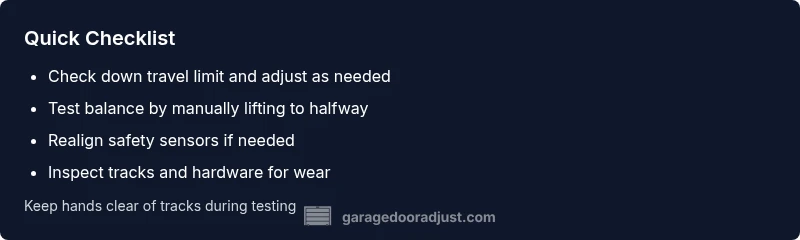
- Check travel limits first and adjust if needed
- Test with multiple cycles to confirm proper stopping height
- Balance and springs affect travel; inspect if the door feels heavy
- Align and test safety sensors to ensure reversal on obstruction
- Call a professional for springs or structural issues
- Perform regular preventive maintenance to avoid future problems