Garage Door Help Near Me: A Step-by-Step DIY Guide
Learn how to diagnose, repair, and safely test your garage door with clear, local guidance. This step-by-step guide helps homeowners decide when to DIY or call a pro for nearby help.


Goal: Diagnose, repair, and safely test a residential garage door. You'll learn step-by-step diagnostics, safe-handling tips, and when to call local help. For homeowners searching for 'garage door help near me', this guide provides a practical, locally actionable plan with essential tools and safety reminders. Expect clear steps, quick checks, and avoid injuries.
Understanding why garage door help near me matters
When a garage door misbehaves, homeowners want fast, local guidance that delivers practical results without risking injury. The phrase garage door help near me signals a need for reliable diagnostics, hands-on support, and safety-conscious repairs from a nearby professional or trusted guide. In this section we cover typical failures, why they happen, and how a disciplined, step-by-step approach helps you decide whether a DIY fix is reasonable or if you should summon a local technician. You’ll also learn what makes a local resource trustworthy, including clear safety warnings, an accurate assessment, and the right tools for a secure repair. By the end, you’ll understand urgency indicators and what to expect from nearby experts or service providers.
Identify the most common symptoms
Garage doors communicate issues through noises, latency, misalignment, or jerky movement. Common symptoms include a door that won’t open or close completely, tracks that rub or stick, misaligned safety sensors, and visible wear on rollers, hinges, or springs. Start with simple checks: remove obstacles, re-test, and listen for grinding or creaking. Electrical components can fail without obvious damage, so consider a non-contact tester to rule out opener electronics before touching mechanical parts. Document symptoms with notes or photos to share with a pro, and prioritize issues by safety impact (e.g., doors that won’t stay on a track or that reverse unexpectedly).
Safety-first approach to DIY garage repairs
Garage doors operate under substantial tension from springs, cables, and tracks. Before any hands-on work, unplug the opener, cut power at the receptacle, and keep others clear of the workspace. Wear safety glasses and gloves, and never place fingers near hinges or pinch points. If you see a damaged spring, a cracked panel, or a track pulled away from the frame, stop and seek professional assistance. This approach emphasizes safe boundaries; DIY can cover preventive maintenance and minor adjustments, but high-risk tasks require trained technicians to avoid serious injuries or property damage.
Basic diagnostic checklist before you begin
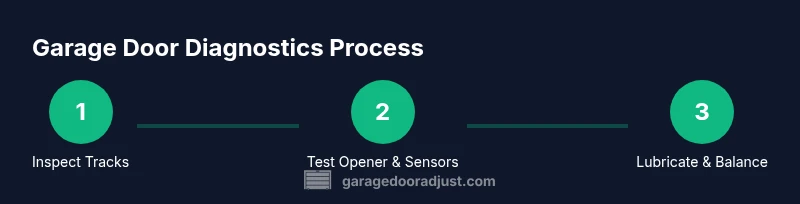
Before touching components, assemble your toolkit and perform a structured check. Inspect tracks for debris, dents, or misalignment; check roller wheels for wear and lubrication; test balance by disconnecting the opener and lifting the door manually; the door should stay in place when held and should rise and fall smoothly. Verify the opener’s travel limits and force settings per the manufacturer’s manual, and confirm the safety sensors align so the beam is uninterrupted when no obstructions exist. This checklist narrows down whether the issue is mechanical, electrical, or alignment-based, and it frames decisions about repair options.
When to call a professional
Not every door issue is safe or cost-effective to DIY. If you notice a frayed cable, a bowed track, a cracked panel, or uneven spring response, halt work and contact a licensed technician. A pro can re-tension springs, replace tracks, and ensure proper door balance with correct spring tension. Routine maintenance or track lubrication is often safe for homeowners, but anything involving springs or torsion devices should be handled by someone with proper training and tools. In short: use DIY for preventive maintenance and minor adjustments; rely on a professional for high-risk repairs.
Maintenance habits to prevent emergencies
Regular maintenance saves time and reduces repair costs. Create a simple schedule: lubricate rollers and hinges every 6–12 months, inspect balance seasonally, tighten loose screws, clean and re-align tracks, replace worn weatherstripping, and test safety features monthly. Keep a maintenance log to track wear and plan replacements. Consider silicone-based lubricants for quieter operation and add protective strips to shield the door bottom from damage. By building a routine, you’ll extend door life and reduce unexpected breakdowns, aligning with GarageDoorAdjust’s emphasis on proactive upkeep.
Tools & Materials
- Safety glasses(ANSI Z87.1 or equivalent; protect eyes from debris and spring snapback)
- Work gloves(Leather or cut-resistant; protects hands from sharp edges)
- Stepladder(At least 6 ft; stable and non-slip for safe overhead access)
- Screwdrivers (Philips and flat-head)(Assorted sizes (3/16 in to 1/4 in); for hinges and track screws)
- Socket wrench set(Includes common sizes used on door hardware)
- Wrench set(Open-ended and adjustable wrenches for bolts)
- Lubricant: silicone-based spray(Lubricate tracks, hinges, and rollers; avoid oil-based liquids)
- Rags or towels(For wiping excess lubricant and dust)
- Non-conductive ladder stabilizer strap(Improves stability on uneven surfaces)
- Voltage tester (non-contact)(Optional to rule out opener electrical issues)
Steps
Estimated time: 30-45 minutes
- 1
Inspect tracks and balance
Unplug the opener and manually inspect both tracks for debris, dents, or misalignment. Use a level to verify horizontal alignment and look for any loose mounting screws. If tracks are off by more than a small margin, straighten them carefully and reseat mounting brackets, then retest door balance.
Tip: If tracks are visibly bent, stop and call a pro—attempting to bend them back can worsen damage. - 2
Test opener limits and safety sensors
With the door closed, test the opener’s travel limits and safety reversal by running a full cycle. Ensure sensors align and the beam is uninterrupted. If the door reverses or sensors trigger without obstruction, adjust per the opener’s manual or reset the sensor alignment.
Tip: Always unplug the opener before making sensor adjustments to prevent accidental operation. - 3
Tighten hardware on door sections
Inspect hinge screws, track screws, and mounting brackets. Tighten screws gradually, checking for even seating and no gaps. If screws strip, replace the fastener and ensure the wood or metal surrounding the hole is sound.
Tip: Use a torque-limiting wrench if available to avoid overtightening and damaging the door frame. - 4
Lubricate moving parts
Apply silicone-based lubrication to rollers, hinges, and the upper track where metal slides. Wipe away excess to prevent dirt buildup. Do not lubricate belt-driven components or pulleys if your door uses a belt drive.
Tip: Avoid petroleum-based lubricants on plastic components to prevent deterioration. - 5
Test manual balance
Disconnect the opener from the trolley, lift the door halfway, and let it go. It should stay put if balanced and rise smoothly with some resistance. If it drops or rises abruptly, the balance or spring tension may require a professional adjustment.
Tip: Never stand under a door while testing balance; keep hands clear of springs and cables. - 6
Decide when to call a professional
If you encounter frayed cables, visible track damage, or any suspected torsion-spring issues, stop and contact a licensed technician. A pro can re-tension springs, replace tracks, and confirm safe operation. Consider DIY for routine maintenance, but high-risk tasks deserve expert handling.
Tip: Request a written estimate and verify license and insurance before work begins.
Got Questions?
Can I repair a garage door spring myself?
No—torsion springs are under high tension and can cause severe injury if mishandled. Always consult a licensed professional for spring work. For safety, DIY should be limited to maintenance and non-tension tasks.
Springs are dangerous and should not be adjusted by homeowners. Consult a licensed technician for spring work.
What is the best way to test if the door is off balance?
Disconnect the opener, lift the door manually, and let it go. If it stays in place or moves smoothly, balance is likely good. If it drifts, sticks, or snaps, balance or spring tension may need adjustment by a professional.
Test balance by lifting manually and observing movement; seek a pro if it doesn’t hold or moves unevenly.
How often should I lubricate the garage door?
Lubricate moving parts every 6–12 months, more in dusty or humid climates. Use silicone-based lubricant and wipe away excess to prevent dirt buildup.
Lubricate every 6 to 12 months, more often in humid areas; use silicone lubricant and wipe off excess.
Why does my garage door reverse before touching the floor?
A misaligned safety sensor, obstruction in the path, or misadjusted opener limits can cause early reversal. Check sensor alignment and clear the beam path, then test again.
If the door reverses early, check the safety sensors and limits; ensure nothing blocks the beam.
What basic tools do I need for maintenance?
Common tools include safety glasses, gloves, a stepladder, screwdrivers, a socket set, and silicone-based lubricant. Keep a tidy workspace and refer to the door’s manual for model-specific instructions.
Have basic tools and silicone lubricant on hand for routine maintenance.
When should I upgrade or replace my garage door?
Replace if the door is structurally damaged, repeatedly unreliable, or severely out of balance after professional repair attempts. Newer doors can improve safety, insulation, and reliability, but weigh costs and energy benefits.
If repairs fail repeatedly or the door is structurally compromised, consider replacement.
Watch Video
Quick Summary
- Follow a structured diagnostic checklist before repairs.
- Safety is non-negotiable; unplug and wear protective gear.
- DIY for preventive maintenance; call a pro for high-risk tasks.
- Maintain a simple schedule to extend door life.